What Is DHI Hair Transplant Turkey?
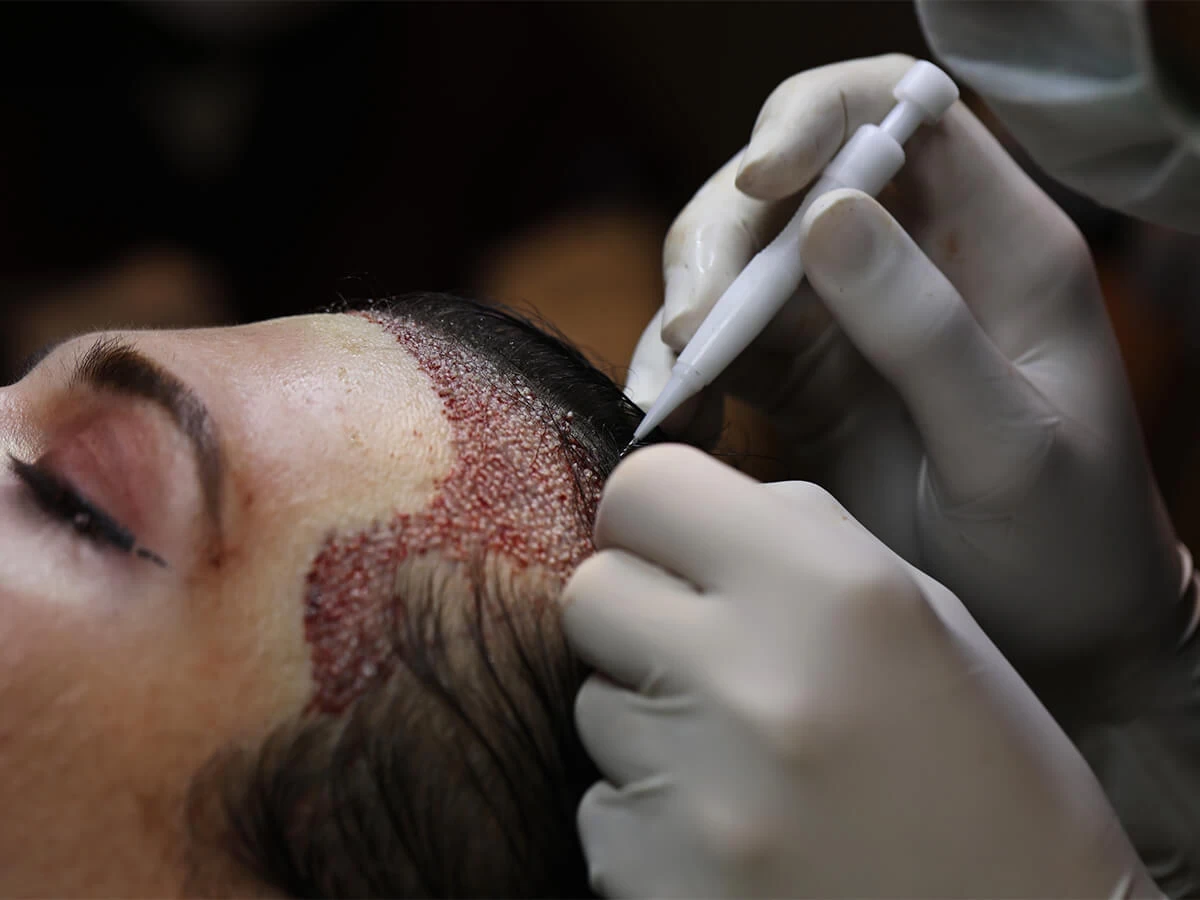
DHI stands for Direct Hair Implantation and it is the way extracted hair grafts are put into the recipient area. The procedure generally begins with harvesting of individual follicular units from the donor area. This stage is performed in accordance with FUE hair transplantation principles.The medical team then prepares the follicular units for grafting. A graft-specific implanter pen is used to position the graft. The device creates an opening for the recipient and inserts the follicular unit into the opening. This is compared to techniques in which recipient channels are created before graft placement. DHI therefore is not a completely different harvesting technique. It mainly changes the implantation stage of modern hair transplantation. This is important when comparing clinics. Both clinics may be using FUE to remove the grafts but different methods to place them.
What is DHI Hair Transplant Method?
A DHI hair transplant takes place in a series of interconnected steps: diagnosis and hairline design, extraction, implantation and post-operative care. The process begins with an assessment of hair loss, donor density, scalp condition, and projected future hair loss. Next is hairline planning after this evaluation. Design should take into account facial proportions, donor supply and long-term progression. The follicular units are then individually removed from the donor area, usually under local anesthesia. The team then evaluates and readies these grafts for implantation. Graft handling is still important as follicles may be damaged by mechanical or dehydration.The implanter device is ready for each graft prepared. The practitioner then controls the direction of placement, angle and depth of penetration. DHI can deliver precise control in the frontal hairline or in areas with existing hair. But the device cannot make up for poor planning. Equally important is the quality of extraction, graft preservation and donor management.
DHI or FUE Hair Transplant: What’s the Difference?
Since DHI and FUE are different stages of hair transplantation, it can be misleading to compare them as completely different procedures. FUE is extraction of individual follicular units using small punches. DHI will normally use the same FUE extraction process. The practical difference is in recipient site preparation and implantation. Many procedures marketed as standard FUE create the recipient channels first. Prepared grafts then pass into these channels in a separate placement stage.DHI employs an implanter to make an opening and insert a graft in one movement. Neither workflow is guarantyd to be better just because of its name. Current evidence supports careful patient selection, controlled harvesting, appropriate graft handling and structured post-operative care . Technique alone does not guaranty success. One should be critical of claims that DHI will always produce higher survival or density.
Who is an Ideal candidate for DHI Hair Transplant?
Ideal DHI candidates typically have transplantable hair loss, enough donor follicles and realistic expectations of coverage achievable. Androgenetic alopecia continues to be one of the most common indications for hair transplantation. But diagnosis must come before choice of technique.Why does a strong donor area matter?
Because transplanted follicles can only be harvested from a limited biological supply. Very thin individuals may need more grafts than the donor area can provide in a safe manner. Progressive hair loss also involves long-term planning. A transplant in one area does not imply that untreated native hair in other areas will thin. Diffuse hair loss is particularly difficult in terms of assessment. Some patients may not have sufficient stable donor density to undergo surgery. Active inflammation or scarring may also impact candidacy for transplant. These conditions may require treatment prior to planning surgery. DHI must therefore follow diagnosis, not replace it.Cost of DHI Hair Transplant in Turkey in 2026
Published 2026 The average cost of DHI packages in Turkey is usually between €2,000 and €5,000 for one treatment session. This range is for planning guidance and is not an official national price. Published offers currently extend both below and above this range. The quoted price may vary according to graft requirements, practitioner involvement, facility standards and the complexity of implantation. International patient packages may include accommodation, airport transfers, local transport, medication or post-operative support.These services should not be taken for granted. Patients should compare written package contents, not headline prices. A €2,500 package with hotel accommodation and transfers is a long way from a €2,500 procedure-only quote. Limits on graft are also worth considering. Unlimited graft advertising is not unlimited donor capacity. The safe number depends on the donor density, the hair characteristics, previous procedures and the planned distribution. Therefore, price should be considered in conjunction with medical planning, not apart from it.
How Many Grafts Can Be Transplanted By DHI?
The number of DHI grafts required is determined by the recipient area, donor capacity, hair characteristics and long term restoration plan. There is no magic number of grafts that will make a DHI procedure successful. The number of grafts needed for a smaller frontal restoration is less than a combined frontal, mid-scalp and crown treatment. Visual coverage is also affected by hair caliber. Thicker hair can provide greater apparent density than finer hair for similar numbers of grafts. The amount of hairs each follicular unit contains is also important. One graft is not always one hair. The more grafts you have, not necessarily the better the result will be. Overharvesting can reduce donor density and restrict future choices. Recipient density must also be consistent with scalp characteristics and blood supply.Older implanter research in a small study found that density affects graft survival. The treatment plan should therefore balance coverage with donor preservation.
Can DHI Hair Transplantation Be Done Without Shaving?
DHI can accommodate certain minimally shaved or unshaven procedures, however shaving requirements vary depending on the overall surgical plan. Sometimes during the implant the existing hair is left in the recipient area. This makes DHI a potential candidate for localized density work. The donor area however needs to be accessible for follicular unit extraction. Some use partial shaving, concealed by longer hair around the shaved area. In other cases, more extensive trimming may be required.DHI is not the only kind of unshaven transplantation. In selected patients long-hair FUE techniques can be used to preserve greater length of hair. So patients should be asking what unshaven actually means. It may refer to the area of recipient, area of donor or both. These differences affect the length of the procedure and the practical recovery.
What to Expect in the DHI Hair Transplant Recovery Timeline?
The first DHI regrowth is the healing of the scalp, then a temporary loss, and then a slow growth of hair over several months. In the early healing stages, you might see small crusts and redness around the transplanted follicles. The donor area also needs time to heal from individual extraction sites. It is common for transplanted hairs to shed during the first postoperative weeks. The transplant follicle does not necessarily disappear with shedding. Hair follicles undergo normal hair growth cycles, so new growth takes longer. Published clinical observations have shown that the shedding occurs within several weeks and regrowth begins several months later. The visible density increases gradually, not abruptly. Results should be judged over months not the early post operative period.What Are the Results of DHI Hair Transplant?
DHI is able to regrow hair in selected areas, but the final outcome depends more on the planning and the biology than on the implanter himself. The design of the hairline is a key element in the naturalness of a result. Direction and angle are important because frontal hairs usually leave the scalp in certain directions. Visual density is also dependent on the graft distribution. It may be more important to use the available follicular units strategically than to try to maximize the number of grafts.Donor characteristics remain as important. Perceived coverage is influenced by hair caliber, curl, follicular grouping, and contrast with scalp skin. Hair transplantation involves the redistribution of existing follicles. It doesn’t create a new unlimited supply of. The procedure does not inhibit the biological process that causes the androgenetic alopecia in the untreated native hair. Long-term planning should therefore take into account both transplanted and non-transplanted hair.
Risks of DHI Hair Transplant
Despite the use of small instruments and minimally invasive follicular unit extraction, surgical risks are associated with DHI. Complications may include post operative swelling, folliculitis, temporary shock loss, donor area depletion, infection and poor cosmetic growth. Poor harvesting may also make donor thinning obvious.The problem of overharvesting is especially acute when there is a demand for large numbers of grafts. Recipient-site complications are less common but may have clinical importance. Hair transplantation may result in recipient site tissue injury and necrosis. Patient factors can also affect risk. Smoking, medical conditions, medications, and scalp disease can affect planning or recovery. The DHI device does not remove these factors. Careful assessment, surgical technique and postoperative management remain at the core of reducing preventable complications.
How to Choose DHI Hair Transplant Clinic in Turkey?
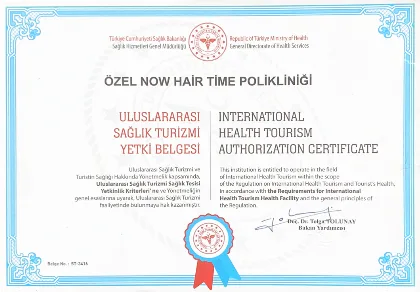
A DHI clinic should be evaluated for medical responsibility, authorization, donor planning and documented treatment scope. Clarify the following before agreeing to treatment:- Make sure the treatment center is licensed for hair transplantation and for international patients.
- Ask about who performs the donor harvesting, recipient site preparation, implantation and medical oversight.
- Request a graft estimate based on donor assessment, not an unlimited graft promise.
- Ask how future hair loss will affect the suggested hairline and graft placement.
- Request the total package cost and separate costs for hotel, transfers, medication and follow-up.
- Review of similar patients with similar hair loss patterns, donor characteristics and treatment areas.
- Ask if another technique would save the donor area or better fit the treatment area.
- Turkish rules currently govern hair-transplant units and define the professional responsibilities during treatment. Under these rules, only eligible physicians can create recipient channels. International patients can also verify if a healthcare provider is on the current authorized facility list. The official list was updated in August 2026. This verification is more important than labels like premium DHI, max density or advanced Choi technique.
DHI Hair Transplant in Turkey: Is it right for you?
DHI hair transplant in Turkey can be a good option if the advantages of implantation meet a patient’s real restoration plan. The technique allows grafts to be placed accurately and can be used for fine work around the hairline or for transplanting in existing hairs. However, DHI should not be the starting point for treatment decisions.Priority number one should be diagnosis, donor capacity, future hair loss and practitioner responsibility. So the most useful comparison is not just DHI vs FUE. Patients should look at the entire plan of treatment, including harvesting, implantation, donor preservation, medical oversight and long term strategy. A careful procedure with an appropriate technique is worth than the choice of treatment based on a technique name alone.
Medically reviewed by Dr. Deniz Dağdelen, Board-Certified Dermatologist — Turkish Board of Dermatology and Venereology (2019), European Board Certified in Dermatology and Venereology, UEMS-EBDV (2023).