Modern hair transplantation involves two main stages: extracting the hair follicles and implanting them. The follicles are harvested with the FUE technique, in which a micromotor removes grafts one by one from the donor area at the back of the head, where the hair is genetically more resistant to loss. For the implantation stage, two methods are used: the Sapphire FUE method and the DHI method.
FUE, Sapphire FUE and DHI
In the Sapphire FUE method, the channels into which the grafts are placed are opened using special pens tipped with sapphire blades. With this method, both the donor area and the recipient area are shaved.
The DHI technique is mostly preferred by people who have regional thinning, who want to bring their hairline forward, or who do not want the recipient area to be shaved. The grafts are loaded one by one into a special implanter pen and placed directly into the thinning area without opening separate channels, so the recipient area does not need to be shaved.
What Is the Fi Technique?
Some patients have both extensive baldness on the front or crown and thinning in other areas. A single method often cannot address both at once: Sapphire FUE is well suited to opening channels in completely bald areas, but in regions where the existing hair is only thinning, opening channels there could damage the healthy follicles — and the DHI method is more appropriate for those areas.
The Fi technique solves this by using Sapphire FUE and DHI together within the same operation, applying each method to the area where it works best, according to the individual needs of each region. This way, the patient is not limited to a single technique.
What Is the Fio Technique?
The Fio technique builds on the Fi technique by adding hyperbaric oxygen therapy (HBO) as a supporting step after the operation. In the Fio protocol, oxygen therapy is applied in sessions in the days following the procedure to support healing.
Hyperbaric oxygen therapy involves breathing high-concentration oxygen under increased pressure. This increases the amount of oxygen dissolved in the blood plasma, so the tissues are supplied with extra oxygen in addition to the oxygen carried by hemoglobin. Because the operated area receives more oxygen, it can heal faster, which in turn supports the growth and quality of the newly transplanted hair.
What Is Hyperbaric Oxygen Therapy?
Hyperbaric oxygen therapy is a treatment in which the patient breathes 100% oxygen under 2 to 3 atmospheres of pressure. It has been used in medicine for many decades to support healing in a wide range of conditions; in Turkey, it has been applied in specialist centers since the 1980s.
How Is Hyperbaric Therapy Applied?
The patient is taken into a pressurized chamber and can be treated either sitting or lying down. Air is added to the chamber gradually so that the internal pressure rises to 2–3 times the outside pressure, and the patient breathes 100% oxygen through a special mask. The increased pressure allows the blood to carry more oxygen to the tissues. The duration and number of sessions depend on the condition being treated.
Why Oxygen Is Important for Healing
- It supports the immune system,
- helps the body eliminate harmful substances,
- promotes the growth and formation of new cells,
- and plays an important role in skin regeneration and skin quality.
When tissues do not receive enough oxygen — for example because circulation is reduced after an injury or infection — the natural healing process slows down. Oxygen deficiency can lead to slower wound healing and poorer tissue recovery. By increasing the oxygen available to the cells, hyperbaric oxygen therapy supports the body's natural healing process, helps wounds heal faster, and supports the cells responsible for the body's defenses.
Conditions Hyperbaric Oxygen Therapy Is Used For
Beyond its supportive role in healing, hyperbaric oxygen therapy is used in medicine for a range of conditions, including:
- carbon monoxide and cyanide poisoning and acute smoke inhalation,
- wounds that are slow to heal (including diabetic wounds),
- thermal burns,
- chronic refractory osteomyelitis,
- sudden hearing loss and sudden vision loss,
- crush injuries and acute traumatic ischemia,
- decompression sickness, air or gas embolism, and gas gangrene,
- necrotizing soft-tissue infections,
- radiation injury, and skin flaps and grafts at risk of failure.
How Does Hyperbaric Oxygen Therapy Help After a Hair Transplant?
In every hair transplant, regardless of the technique used, small wounds form in the recipient area — either from the channels opened before implantation or from placing the grafts. These wounds heal over time, and how well they heal affects how securely the transplanted follicles take hold. By supporting faster and healthier healing of the recipient area, hyperbaric oxygen therapy can help reduce post-operative issues and support the survival and growth of the transplanted follicles. This is the benefit that the Fio technique aims to provide as an additional step after the operation.
Fi and Fio at Now Hair Time
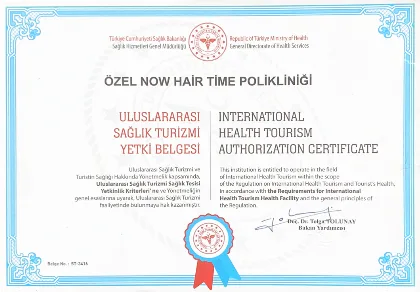
The Fi and Fio techniques are signature methods of Now Hair Time, developed for patients who have both extensive baldness and thinning and who may not get the result they want from a single technique. By combining Sapphire FUE and DHI in one operation (Fi), and by adding hyperbaric oxygen therapy to support healing (Fio), Now Hair Time offers a treatment that is tailored to the individual needs of each area of the scalp.