What is an Afro hair transplant?
An Afro hair transplant is a specialized type of hair transplant for people with naturally curly, coily, or Afro-textured hair. The defining feature is the shape of the follicle: the visible hair curls above the skin, and the follicle may also curve beneath the skin. That curvature affects how grafts are extracted, prepared, and implanted. In a standard hair transplant, healthy follicles are moved from a donor area to a recipient area where hair is thinning or absent.In an Afro hair transplant, the same principle applies, but the surgeon must account for curl angle, follicle fragility, hairline design, and the way Afro hair creates visual density. A small number of grafts can sometimes create a fuller appearance because coiled hair occupies more visual space, but the procedure must still be planned conservatively and realistically. The term does not refer to one single technique. Instead, it describes a transplant approach adapted to Afro-textured hair. The method may involve follicle-by-follicle extraction, strip-based harvesting, or a combination of planning techniques depending on the person’s donor area, scalp health, hair loss pattern, and goals.
Defining characteristics of Afro-textured hair restoration
Afro hair restoration is different because the hair’s structure influences almost every stage of treatment. A clinic may offer hair transplants generally, but that does not automatically mean it is well prepared for Afro hair. The procedure needs a detailed assessment of texture, curl direction, donor quality, scalp condition, and the patient’s expectations. Key characteristics include:- Curved follicles beneath the scalp: The curl is not only visible above the skin. The follicle can curve under the surface, making extraction more delicate.
- Distinct hairline patterns: Afro-textured hairlines often require softer, carefully staggered placement rather than a harsh or overly straight outline.
- Visual density from curl volume: Coiled hair can give the appearance of fullness when placed strategically, but graft survival and spacing still matter.
- Higher handling sensitivity: Grafts may be more vulnerable to trauma if extraction and implantation are rushed or poorly angled.
- Scalp and skin considerations: Some patients may be prone to scarring changes, irritation, ingrown hairs, or inflammation, which should be discussed before treatment.
- Individual variation: Afro hair is not one uniform category. Curl tightness, shaft thickness, density, and scalp behavior vary from person to person.

How does an Afro hair transplant work?
An Afro hair transplant works by moving healthy hair follicles from a donor zone into areas affected by thinning, recession, or hair loss. The transplanted follicles are placed at carefully chosen angles so that, once they grow, they blend with the surrounding Afro-textured hair. The process is usually done under local anesthesia, and the final cosmetic result develops gradually as transplanted hairs shed, rest, and regrow. The procedure generally follows several stages:- Consultation and scalp evaluation The clinic examines the hair loss pattern, donor area, scalp condition, medical history, and restoration goals. For Afro-textured hair, this stage should also include discussion of curl pattern, preferred hairstyle, hairline expectations, and any history of scarring or scalp sensitivity.
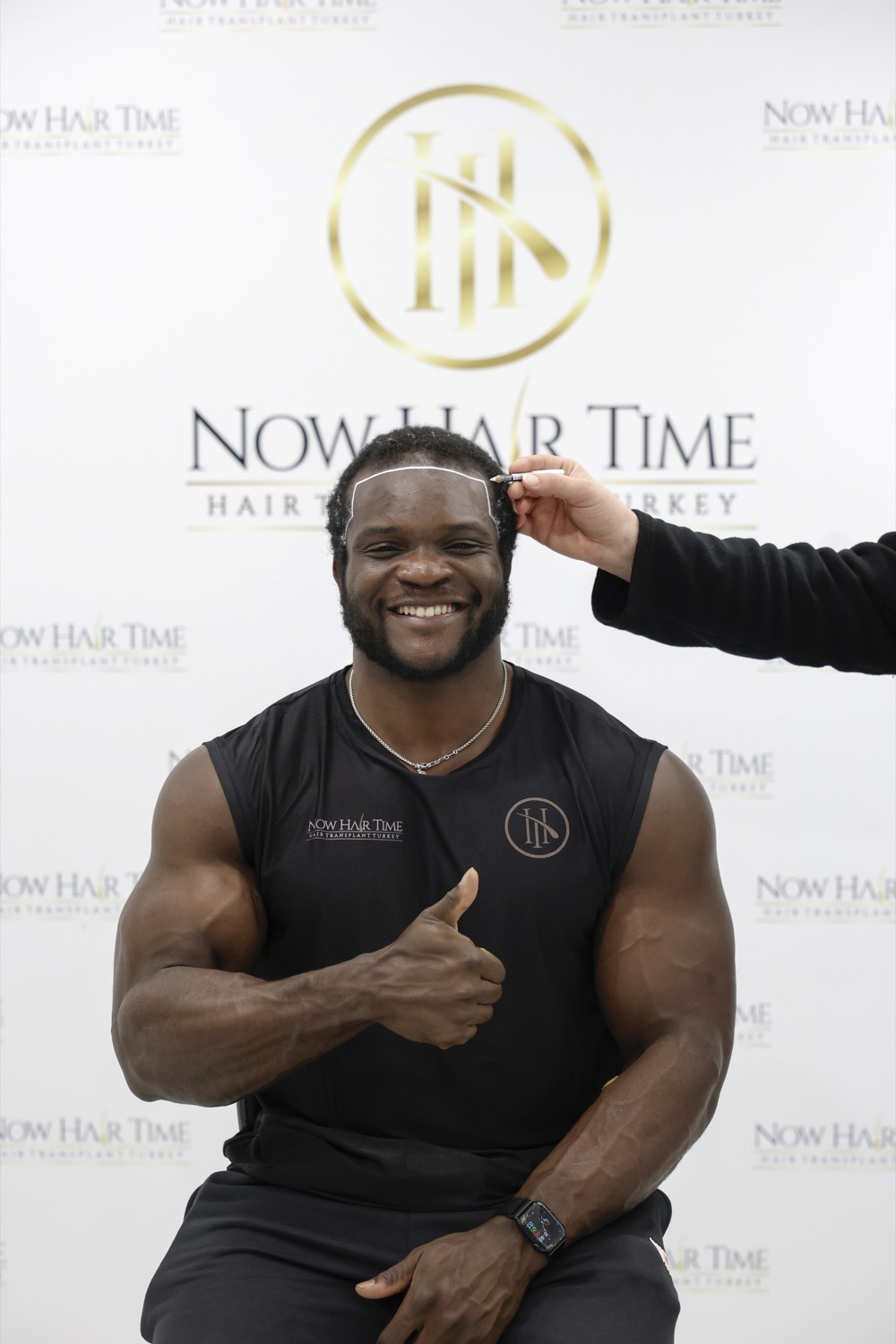
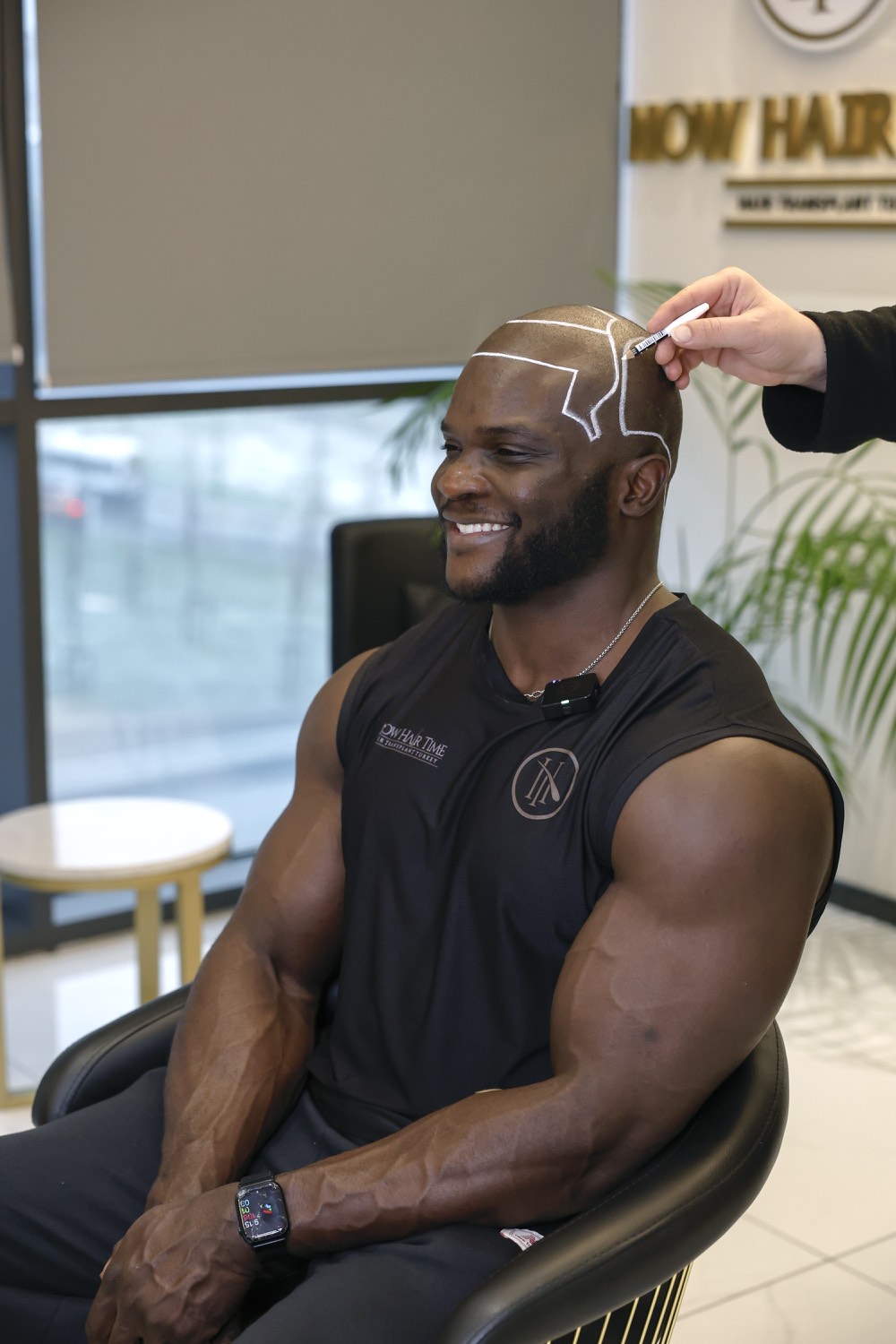
- Hairline and density planning The hairline is designed before surgery. A natural result depends on age, facial proportions, existing hair, and future hair loss risk. With Afro hair, the front hairline often needs irregular micro-variation so it does not look drawn on or artificial.
- Donor graft harvesting Follicles are taken from the donor area. The challenge with Afro hair is following the follicle’s curve beneath the skin. If the extraction angle is wrong, the follicle may be damaged before it is implanted.
- Graft sorting and preparation The harvested grafts are checked, cleaned, and organized. Gentle handling is important because graft quality influences growth potential. The team may separate grafts by size so single hairs can be used at the front and fuller grafts can be placed behind.
- Recipient site creation Tiny openings are made in the thinning area. The angle, direction, depth, and spacing of these sites determine how the hair will emerge. Afro-textured hair must be placed to mimic natural curl direction and avoid an unnatural pattern.
- Implantation The grafts are placed into the recipient sites. This stage requires patience and consistency. Overpacking grafts can harm blood supply, while underplanning can leave the result looking thin.
- Healing and regrowth The scalp heals over days and weeks, but visible growth takes time. Early shedding can occur and does not necessarily mean the transplant has failed. New growth typically appears gradually, with texture and density becoming clearer as the hair matures.
Techniques used for Afro hair transplants
Afro hair transplants may use different surgical approaches. The right method depends on the person’s follicle shape, donor area, hair loss stage, skin behavior, and willingness to accept certain types of scarring. No technique is automatically best for every patient. Follicular unit extraction removes individual follicular units from the donor area. It can avoid a linear scar, but Afro-textured follicles may be harder to extract because of their curved shape. The extraction tool must follow the follicle accurately, which makes experience with coily hair especially important.Strip harvesting removes a narrow strip of tissue from the donor area, from which grafts are dissected under magnification. It may allow the team to see follicle direction more clearly during preparation, but it leaves a linear scar. This may or may not be acceptable depending on hairstyle preferences, healing tendencies, and how short the patient wears their hair. Combined or adapted planning may be used when a clinic believes one approach alone is not ideal. The important point is that the method should be chosen after examination, not sold as a universal solution. A responsible consultation should explain why a technique is being recommended and what trade-offs come with it.
Why Turkey is considered for Afro hair transplantation?
Many people explore Turkey for hair restoration because the country has a large medical tourism market for cosmetic hair procedures. Patients often look there for clinic availability, package-style treatment planning, and teams that regularly perform hair transplant procedures. However, popularity alone does not guarantee that every clinic is experienced with Afro-textured hair. For an Afro Hair Transplant in Turkey, the key question is not whether the destination is known for hair transplants. The key question is whether the specific medical team understands Afro follicle structure and can show thoughtful planning for coiled hair.A clinic that performs many straight-hair procedures may still need different tools, pacing, and extraction strategy for tightly curled follicles. Travel also adds practical considerations. Patients should think about consultation quality, communication, aftercare access, recovery time before flying home, and what happens if they need follow-up support later. A lower-friction treatment journey is valuable, but it should never replace careful medical judgment.
Who is a good candidate?
A good candidate is someone with stable or diagnosable hair loss, enough healthy donor hair, realistic expectations, and a scalp condition suitable for surgery. The person should understand that a transplant redistributes existing hair rather than creating unlimited new hair. For Afro-textured hair, a good candidate also needs a plan that respects curl pattern, future styling habits, and the possibility of visible scarring if the donor area is cut very short. A consultation may be especially useful if you have:- Receding temples or a mature hairline that feels too high
- Thinning at the crown or mid-scalp
- Traction-related hair loss from tight hairstyles, extensions, braids, or weaves
- Patchy loss after previous scalp irritation or styling damage
- A previous transplant that did not match Afro-textured hair well
- Hairline concerns after cosmetic or reconstructive procedures
Does Afro Hair Provide Better Visual Density?
Afro-textured hair can create strong visual scalp coverage because curl and hair-shaft geometry increase the amount of space each hair occupies. This can be advantageous when donor supply is limited. A transplanted curly shaft can overlap neighboring hairs and obscure more visible scalp than a very fine, straight shaft. That does not mean every patient with Afro-textured hair automatically needs fewer grafts. Donor density, hair caliber, follicular-unit composition, recipient surface and contrast between the scalp and hair still determine the result.Can Afro Hair Transplant Treat Traction Alopecia?
Hair transplantation can be considered for longstanding traction alopecia when the damaging traction has stopped and permanent follicular loss has become stable. Traction alopecia commonly affects the frontal, temporal and preauricular hairline because these regions receive substantial tension from certain hairstyles. Earlier stages may retain viable follicles and can sometimes improve when damaging practices are stopped. Later scarring stages can leave areas where follicles no longer recover. Surgery should therefore not be the automatic first response to every receding edge.Does Afro Hair Require Fewer Grafts?
Afro-textured hair can sometimes create strong coverage with fewer grafts than fine straight hair, but there is no universal graft reduction that applies to every patient. Curl increases visual volume, but other factors can work in the opposite direction. A donor region may have lower follicular density. Some patients may have predominantly single-hair follicular units, while others have stronger multi-hair groupings.What Should Be Evaluated Before an Afro Hair Transplant?
An Afro Hair Transplant in Turkey should be planned after evaluating both the cause of hair loss and the anatomical characteristics that influence surgery. Important points include:- The diagnosis and stability of the hair-loss condition
- Donor density and follicular miniaturization
- Degree of follicular curvature beneath the scalp
- Hair shaft caliber and curl pattern
- History of traction hairstyles or chemical processing
- Evidence of CCCA or another scarring alopecia
- Personal history of keloid or hypertrophic scars
- Previous FUE, FUT or other scalp surgery
- Size and priority of the recipient zones
- Realistic donor reserve after the planned procedure
Risks and limitations to understand
Every hair transplant has risks, and Afro-textured hair may add specific considerations. These do not mean the procedure is unsafe for everyone, but they do mean the patient should be properly assessed. A careful clinic will discuss risks before treatment rather than presenting the procedure as simple or guaranteed. Possible risks and limitations include:- Poor growth if grafts are damaged or the scalp environment is not suitable
- An unnatural hairline if placement is too straight, dense, or uniform
- Visible scarring in the donor area, especially with very short hairstyles
- Temporary swelling, redness, tenderness, or crusting
- Ingrown hairs or irritation during regrowth
- Shock loss of nearby existing hair
- Infection or delayed healing
- Need for future procedures if hair loss progresses
- Mismatch between desired density and available donor supply