Hamilton Norwood Scale Explained: Hair Loss Stages and What to Do

Hair loss can feel confusing and unpredictable, but understanding its progression is the first step toward effective management. The Hamilton Norwood Scale provides a standardized way to classify male pattern baldness, showing the typical stages of thinning and recession over time. Before exploring treatment options or considering a hair transplant, it's important to first understand the specific stages of hair loss.
Identifying where you fall on the spectrum helps to make informed care decisions. This process involves understanding each stage, recognizing the specific patterns of thinning or recession, and exploring the treatment options available at every point along the scale.
What is the Hamilton Norwood Scale?
The Hamilton Norwood Scale is a widely used system for classifying the progression of male pattern baldness. Developed by Dr James Hamilton in the 1950s and later refined by Dr O'Tar Norwood in the 1970s, it provides a clear framework for identifying the different stages of hair loss, from minimal recession to advanced thinning. Knowing your stage on this scale allows you to track changes accurately, anticipate future hair loss patterns, and determine the most appropriate strategies for managing or restoring hair.
Hamilton Norwood Scale Chart: Overview of All Hair Loss Stages
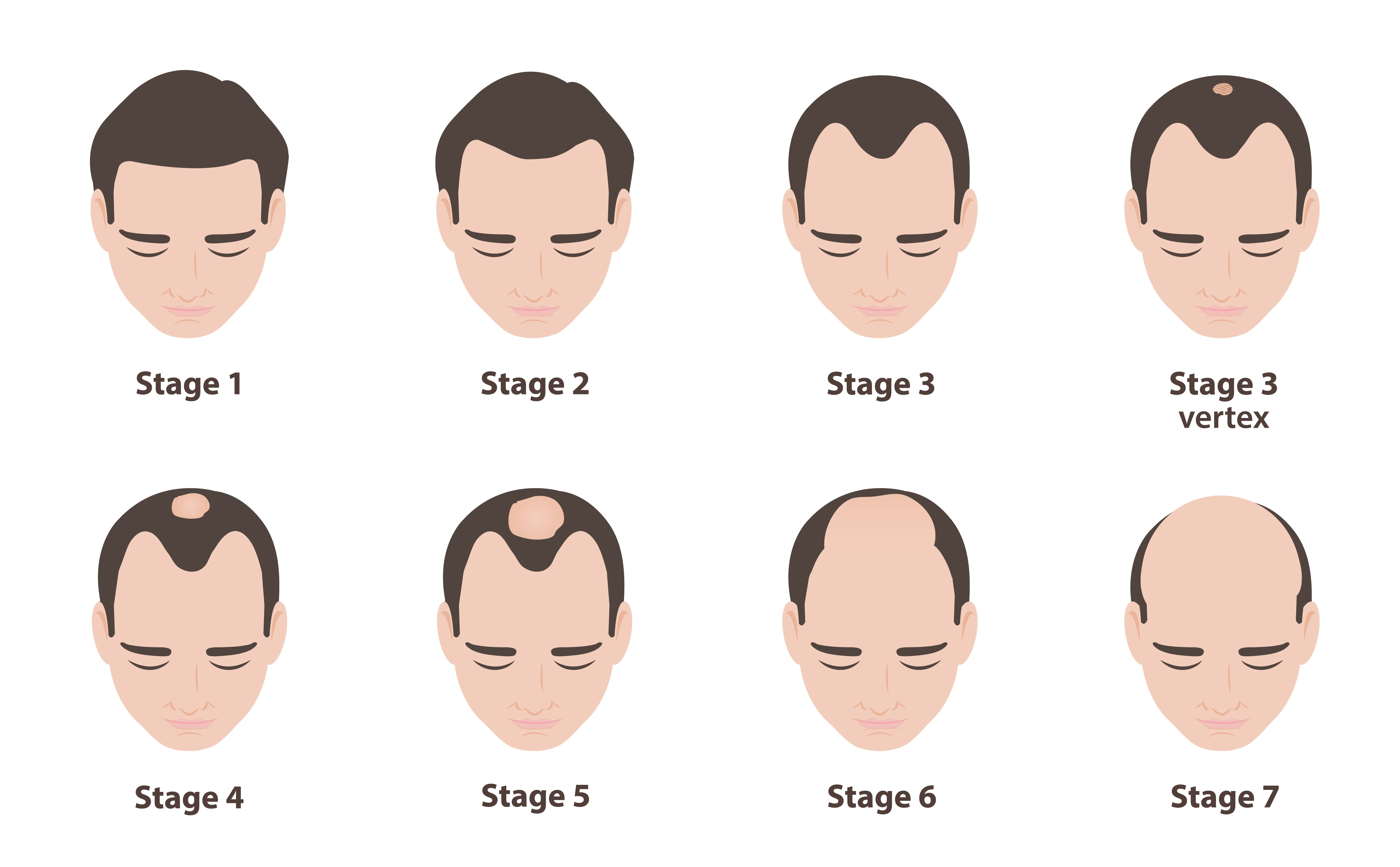
Also known as the Norwood Scale, this chart indexes and outlines the typical progression of male pattern baldness across seven main stages, with some variations and subcategories to capture subtle differences in hair loss patterns. It starts with minimal recession at the hairline and gradually progresses to extensive thinning at the crown and frontal areas. A visual framework of stages (1–7) makes it easier to understand how hair loss progresses.
Norwood 1–2: Early Hairline Changes
The early stages involve minimal hair loss and subtle changes along the hairline.
- Norwood Stage 1: There is little to no visible recession.
- Norwood Stage 2: At Norwood 2, individuals typically present a slight, symmetrical recession at the temples.
At this point, hair density is largely preserved. Early interventions, such as topical treatments, lifestyle adjustments, and monitoring of progression, may help maintain existing hair.
Norwood 3: The First Stage of Visible Balding
This stage marks the first point at which hair loss is considered clinically significant. At Norwood 3, recession at the temples becomes more pronounced, often forming a deeper 'M' shape along the hairline, and some individuals may also begin to experience thinning at the crown. The hairline may appear uneven or noticeably higher than before, and in some cases, early thinning can also begin at the crown.
Norwood 4–5: Progressive Hairline and Crown Thinning
At these midrange stages, hair loss becomes more noticeable as both the hairline and crown continue to thin.
- Norwood Stage 4: A larger bald area may develop at the crown while the frontal hairline recedes further, usually leaving a band of hair separating the two areas.
- Norwood Stage 5: This band begins to narrow as thinning progresses.
As hair loss continues to progress, these separate thinning areas can eventually merge, leading to the more advanced stages of the Hamilton Norwood Scale.
Norwood 6–7: Advanced Male Pattern Baldness
At these advanced stages, hair loss becomes extensive across the top of the scalp.
- Norwood Stage 6: The band of hair that once separated the crown and frontal hairline disappears, leaving a large connected area of baldness.
- Norwood Stage 7: At Norwood 7, hair remains only along the sides and back of the head, forming a horseshoe-shaped pattern, while the top of the scalp is largely bare.
Understanding these advanced stages raises the importance of early monitoring and proactive management, as options for restoring density become more complex once hair loss reaches this level.
How to Identify Your Hamilton Norwood Scale Stage
Determining your stage involves a careful assessment of hairline shape, temple recession, crown thinning, and overall scalp coverage. Visual comparison with the scale's standard stages can help pinpoint where you currently fall, while tracking changes over time allows for more accurate monitoring of progression. By combining self-assessment with professional evaluation, you will have a more reliable understanding of your hair loss pattern to inform the most appropriate treatment strategies.
Hairline vs Crown Hair Loss Patterns
When identifying your Norwood stage, it's important to distinguish between hairline recession and crown thinning, as these patterns progress differently.
- Hairline Changes: The hair along the front of the forehead and temples is often used to determine the shape of the face, and hair loss here may begin at the temples, forming an 'M' shape that gradually recedes.
- Crown Thinning: This area refers to the upper back portion of the scalp; hair loss here starts as a small bald spot that can expand over time.
Evaluating both areas together provides a more complete picture of your hair loss stage and helps guide treatment planning.
Comparing Photos Over Time
Tracking hair loss using regular photographs is one of the most effective ways to monitor hair loss progression. Taking clear, consistent photos from multiple angles, such as frontal, side, and top views, helps highlight subtle changes in hairline recession and crown thinning. Over time, these comparisons provide a visual record that can guide treatment decisions and allow both you and your specialists to assess the effectiveness of interventions.
Treatment Options Based on Your Norwood Stage
Hair loss management is most effective when tailored to the specific Norwood stages. Early stages may benefit from preventive measures and medical therapies. Meanwhile, more advanced stages often require combination approaches, including surgical options.
Understanding your stage helps determine the most appropriate interventions to slow progression, restore density, and achieve natural-looking results.
Evidence-Based Medical Treatments
For early to mid-stages of hair loss, medical therapies offer proven ways to curb progression and support hair regrowth. In clinical studies, treatments include topical and oral medications proven to strengthen existing hair and reduce further shedding. However, consistent, long-term use is key to maintaining results, and these options are often most effective when started at the first signs of thinning.
Minoxidil and Other Adjunct Treatments
Combined approaches can help slow hair loss and promote regrowth, especially when implemented during the early to mid-stages of thinning.
Common hair loss treatments include:
- Minoxidil: A topical solution that stimulates hair follicles, prolongs the growth phase, and can improve overall hair density when used consistently.
- Low-Level Laser Therapy (LLLT): Uses red light to stimulate hair follicles and improve circulation, encouraging hair growth.
- Platelet-Rich Plasma (PRP): Involves injecting concentrated platelets from your own blood into the scalp to promote follicle activity and strengthen existing hair.
- Microneedling: Uses tiny, controlled needles to create micro-injuries in the scalp, triggering healing and enhancing absorption of topical treatments.
Combining multiple therapies often delivers the most effective results, as it targets hair follicles using different treatment mechanisms while supporting both growth and overall scalp health.
When a Hair Transplant Becomes an Option
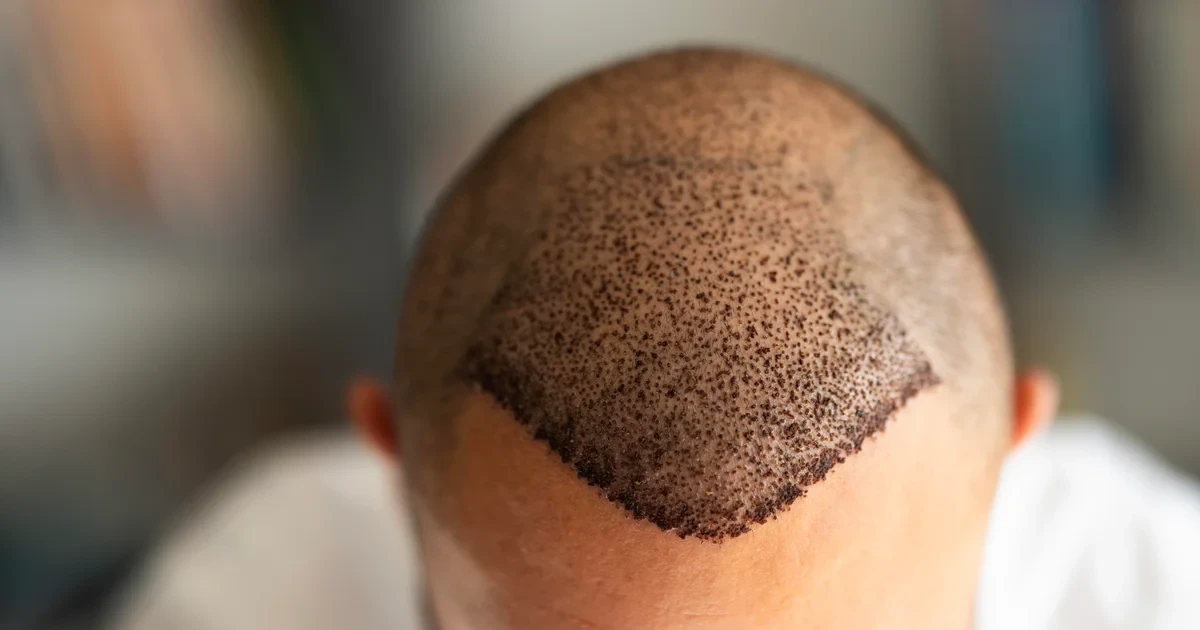
A hair transplant is usually considered when medical therapies and lifestyle interventions are no longer sufficient to maintain or restore hair density. This is most common in advanced Norwood stages (6–7), or in cases where hair loss has stabilized, but thinning remains significant. There are some techniques that allow for precise transplantation of healthy follicles, offering a long-term solution for restoring natural-looking hair in both the hairline and crown.
Popular and effective transplant techniques include:
- Follicular Unit Extraction: Commonly known as FUE Hair Transplant, is a modern technique where individual hair follicles are extracted from donor areas and implanted into thinning regions, leaving minimal scarring and allowing for an authentic-looking hairline.
- Direct Hair Implantation: Also referred to as DHI Hair Transplant, is the most recently developed method that directly implants follicles using a specialized tool without pre-made recipient sites, which can improve graft survival and reduce recovery time.
Hamilton Norwood Scale vs Other Hair Loss Scales
The Hamilton Norwood Scale is the most widely recognized system for classifying male pattern baldness into seven stages, focusing on hairline recession and crown thinning. Other hair loss scales are primarily used to assess female pattern hair loss and may emphasize diffuse thinning or overall density, rather than defined hairline patterns.
Other notable hair loss scales include:
- The Ludwig Scale: Named after Dr E. Ludwig, the Ludwig Scale measures the severity of female pattern hair loss in three distinct stages (mild, moderate and severe), highlighting diffuse thinning on the crown while often preserving the frontal hairline.
- The Savin Scale: Named after Dr Richard Savin, this scale provides a more granular assessment of female hair loss, with subdivisions divided into finer increments for density reduction and crown thinning, helping track subtle progression over time.
Comparing these scales helps clinicians choose the most appropriate framework for evaluation, diagnosis, and treatment planning based on your sex and specific hair loss pattern.
What to Do Next: Consultation Checklist
Before meeting a hair restoration specialist, it helps to prepare a clear picture of your hair loss history and overall health. A structured consultation checklist makes sure the appointment is productive and that the specialist has all the information needed to assess your condition accurately. Key items include documenting hair loss patterns, noting family history, listing medications and supplements, and tracking any lifestyle or health factors that could impact hair growth.
Medical Disclaimer: This content is intended for educational purposes only and should not be considered a substitute for professional medical advice. Self-assessment of hair loss can be inaccurate, and individual results may vary. Always consult a certified dermatologist or hair restoration specialist for a thorough evaluation, personalized diagnosis, and guidance on safe and effective treatment options.
Frequently Asked Questions (FAQ)
What is Norwood 3?
Norwood 3, or Stage 3 on the Hamilton Norwood Scale, marks the first stage of noticeable male pattern baldness. It is characterized by a pronounced recession at the temples, often forming a deeper 'M' shape, and in some cases, early thinning may appear at the crown. This stage is considered the onset of moderate hair loss, where monitoring and early intervention can help slow further progression.
Can Norwood 2 be reversed?
Yes, at Norwood Stage 2, hair loss is mild and often reversible or stabilizable with timely intervention. Treatments such as topical minoxidil, oral finasteride, or supportive therapies like microneedling can help maintain existing hair and promote regrowth, particularly in the temple areas. Early action at this stage generally yields the best outcomes and can slow further recession.
When is a hair transplant recommended?
Hair transplants are recommended when hair loss has stabilized and medical or non-surgical treatments are no longer sufficient to restore density. Ideal candidates must have adequate healthy donor hair, which can lead to realistic expectations for coverage and outcomes. This procedure offers a long-term solution for genetic or pattern hair loss, rather than addressing temporary shedding or hair loss from short-term factors.
How do I know my Norwood stage?
You can know your Norwood stage by observing patterns of hair loss at the temples, hairline, and crown, and comparing them to the seven Hamilton Norwood Scale stages, where Stage 1 is minimal, and Stage 7 is severe. Combining visual assessment with professional evaluation guarantees a more accurate determination of your hair loss stage.