Hair Transplant Repair: Fixing a Failed or Botched Hair Transplant

A hair transplant repair is a corrective procedure that fixes the problems left behind by a failed, poorly planned, or "botched" earlier transplant — such as an unnatural hairline, visible scarring, or thin results. With careful planning by an experienced team, most disappointing outcomes can be meaningfully improved.
At Now Hair Time in Istanbul, we regularly meet patients who are living with results that don't look or feel right — and who often feel embarrassed or stuck. This guide explains, in plain English, what goes wrong, why, and how modern repair techniques can restore a natural appearance and your confidence.
What is a failed or "botched" hair transplant?
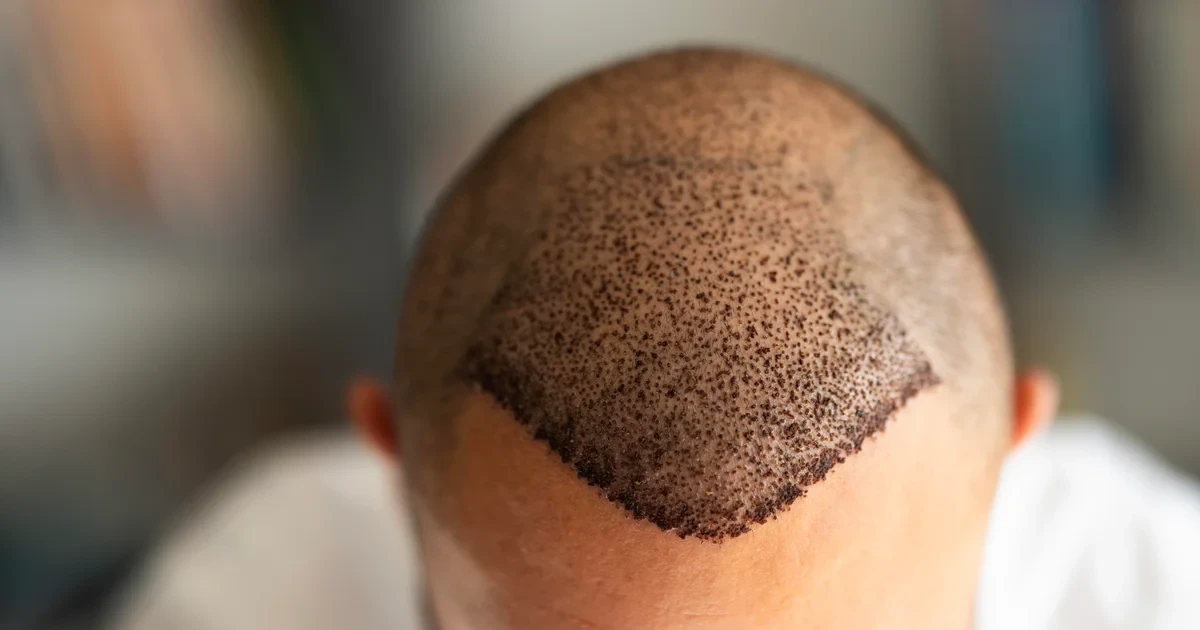
A failed or botched hair transplant is one that produces an unnatural, disappointing, or disfiguring result rather than the natural-looking density the patient expected. Common signs include an unnatural or too-low hairline, "pluggy" tufts of hair at the front, wrong growth angles, patchy density, visible scarring, and a depleted donor area.
Not every imperfect result is "botched." Some patients simply continue to lose native hair around their transplant over time, which can make an otherwise good procedure look thin years later. A genuinely poor transplant, however, usually shows tell-tale technical errors that an experienced surgeon can identify immediately on examination.
The most recognisable problem is the "pluggy" or "doll's hair" look — clusters of three or four hairs emerging from a single point, a hallmark of older or rushed techniques. Combined with a hard, straight, or overly aggressive hairline, this creates an obviously "transplanted" appearance instead of the soft, irregular pattern of natural hair. Other patients are troubled less by the front and more by what's left behind on the back and sides: an over-harvested donor that looks moth-eaten, or a wide linear scar that shows whenever the hair is cut short.
If any of the signs below sound familiar, it doesn't necessarily mean your case is hopeless — but it is worth a professional assessment. You can compare realistic outcomes in our hair transplant before and after gallery to calibrate what a natural result should look like.
| Sign of a bad transplant | What it looks like | Why it happens |
|---|---|---|
| Unnatural hairline | Too low, too straight, or "wall-like" across the forehead | Poor design, ignoring the natural ageing pattern |
| "Pluggy" grafts | Tufts of 3–4 hairs from one point at the front | Outdated technique or large grafts placed in the hairline |
| Wrong angles/direction | Hair sticks up or grows the wrong way | Careless implantation without respecting natural flow |
| Poor density | See-through or patchy coverage | Too few grafts, poor graft survival, or uneven placement |
| Visible scarring | A linear strip scar or scattered white dots | Wide FUT closure or oversized/over-harvested FUE punches |
| Depleted donor | Thin, patchy back and sides | Over-harvesting beyond the safe donor supply |

Why do hair transplants fail or go wrong?
Hair transplants usually fail because of human error rather than the technique itself. The most common causes are an inexperienced surgeon or poorly supervised technicians, flawed hairline design, over-harvesting of the donor area, mishandling of grafts, inadequate aftercare, and an unrealistic plan that promised more than the patient's donor could deliver.
Modern FUE and DHI are reliable, well-established methods — when performed correctly. The single biggest variable is the team. In many high-volume clinics, much of the actual work is delegated to technicians, and the difference between a beautiful result and a botched one often comes down to their skill and how closely the surgeon directs the case. Artistry matters as much as surgery: designing a hairline that suits the face, age, and likely future hair loss is a genuine craft.
Over-harvesting is one of the most damaging and least reversible mistakes. The donor area at the back and sides of the head contains a finite number of permanent grafts. Taking too many — to inflate graft counts or cover too large an area at once — permanently thins the donor and leaves little in reserve for the future. Graft survival is equally critical: grafts that are cut clumsily, left out too long, or allowed to dry out simply won't grow, producing thin coverage no matter how many were "implanted."
Finally, aftercare and patient factors play a role. Poor post-operative instructions, infection, smoking, or knocking the grafts in the first days can all reduce survival. A responsible clinic screens candidates honestly and will sometimes advise against surgery, or recommend a more conservative plan, rather than overpromising.
Can a bad or failed hair transplant be repaired?
Yes — in most cases a bad or failed hair transplant can be significantly improved. Corrective (repair) surgery can soften an unnatural hairline, add density, remove or disguise pluggy grafts, and camouflage scars. The realistic goal is a natural, much-improved appearance rather than flawless perfection, especially when donor supply is limited.
Repair is one of the most rewarding areas of hair restoration precisely because patients arrive feeling hopeless and leave looking natural again. That said, honesty is essential. The right answer depends on what went wrong, how much usable donor hair remains, and the condition of the scalp. A thorough, in-person or photo-based assessment is the only way to know what's achievable in your specific case.
It's also worth knowing that not every fix requires more surgery. Some problems — particularly scarring or mild thinness — can be addressed or complemented with non-surgical options. The best repair plans often combine techniques rather than relying on a single approach. If you're unsure where you stand, the simplest first step is to book a free consultation and have your case reviewed by an experienced team.
What repair techniques are used to fix a failed transplant?
The main repair techniques are FUE to add density and redesign the hairline, surgical excision to remove or redistribute "pluggy" grafts, scar revision to camouflage or excise linear and dot scarring, and scalp micropigmentation to disguise scars or create the illusion of density. These are frequently combined for the best result.
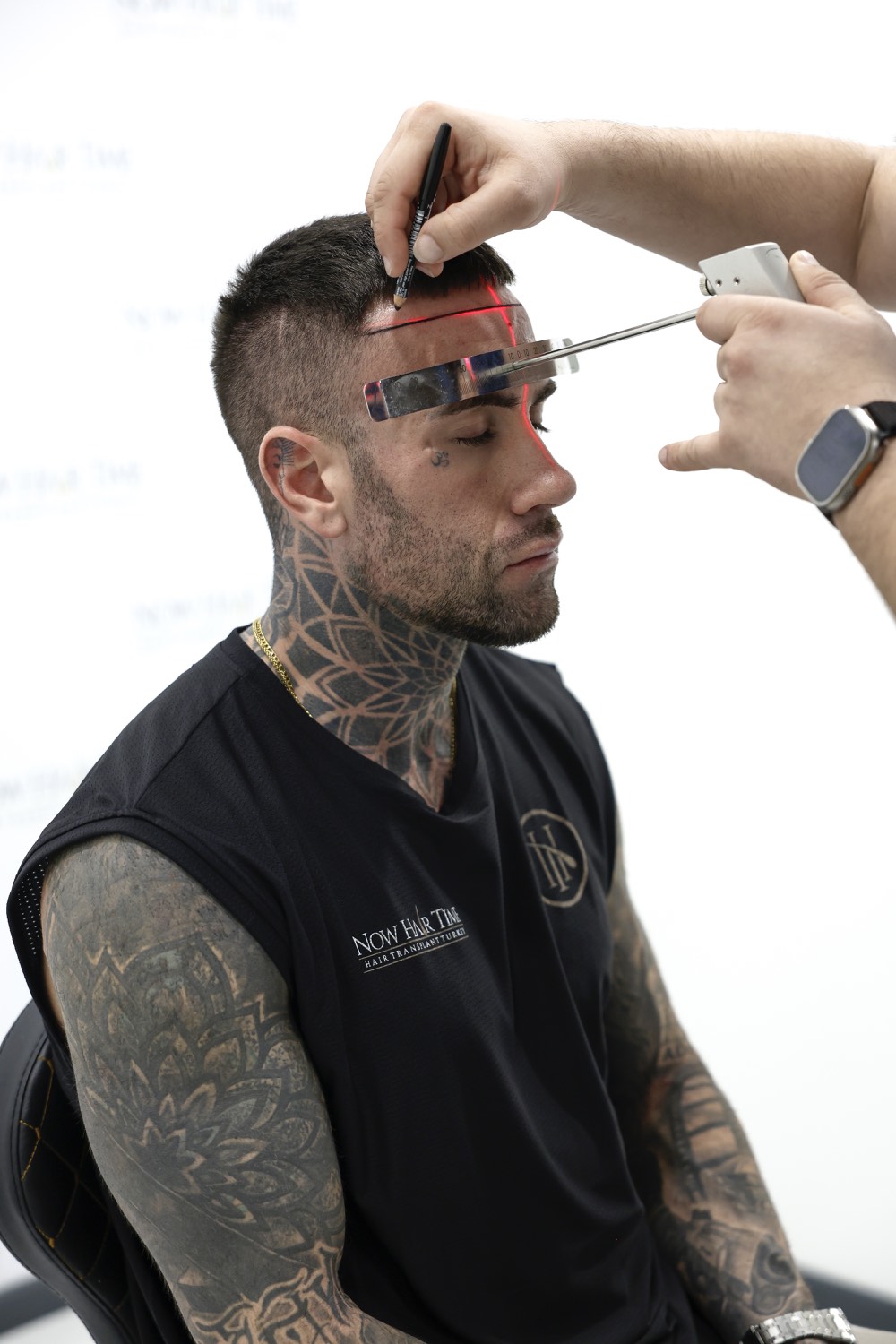
Adding density and refining the hairline. The workhorse of modern repair is FUE (Follicular Unit Extraction), often using a DHI implantation approach for precise angle and depth control. By placing single-hair grafts in front of older, coarser work and filling gaps behind it, a surgeon can soften a hard hairline and break up the "pluggy" look without necessarily removing the original grafts. Careful attention to angle and direction makes previously transplanted hair blend into a natural whole.
Removing or redistributing problem grafts. Where grafts are too large, too low, or facing the wrong way, they can be excised — surgically removed — and, when healthy, dissected into smaller single-follicle units and re-implanted correctly. This "graft recycling" is delicate, time-consuming work but it can transform an unsalvageable hairline while making the most of limited donor hair.
Scar revision. A visible linear (strip/FUT) scar can sometimes be made narrower through surgical revision, or camouflaged by transplanting FUE grafts directly into and around it (where the scar tissue will accept them). Scattered white dots from over-aggressive FUE are harder to excise but can be disguised. Scalp micropigmentation (SMP) — covered in our guide to scalp micropigmentation (SMP) — uses tiny pigment deposits to mimic hair follicles, blending scar tissue into the surrounding hair or adding the visual impression of density between grafts. It is especially useful when donor hair is too scarce for further surgery.
| Repair option | What it fixes | Surgical? |
|---|---|---|
| FUE / DHI density work | Thin coverage, weak hairline, gaps between old grafts | Yes |
| Hairline redesign | Too-low, too-straight, or unnatural hairline shape | Yes |
| Graft excision & redistribution | "Pluggy" multi-hair grafts, wrong angles/position | Yes |
| Scar revision (excision) | Wide linear FUT/strip scar | Yes |
| FUE into scar tissue | Camouflaging linear or dot scars with real hair | Yes |
| Scalp micropigmentation (SMP) | Disguising scars; illusion of added density | No |
Is repairing a transplant harder than a first one?
Yes, repair is generally more difficult than a first-time transplant. The surgeon must work around scar tissue, contend with a reduced donor supply, and carefully undo or blend in previous work — all while managing higher expectations. Repair demands more planning, artistry, and experience than a straightforward primary case.
Several factors raise the difficulty. Previous surgery often consumes a meaningful share of the donor area, leaving fewer grafts to correct a larger problem. Scar tissue has a poorer blood supply, so grafts placed into or near scars can be more challenging to keep alive and may need to be placed more conservatively. And every existing graft is a constraint the surgeon must design around rather than a blank canvas.
This is exactly why choosing an experienced repair team matters so much. Correcting someone else's work — sometimes a result of an earlier "bargain" procedure abroad — requires both technical command and aesthetic judgement. It is rarely a job for an inexperienced clinic, and getting the repair right the first time protects the donor hair you have left.
How long should you wait before getting a repair?
In most cases you should wait until your first transplant has fully matured before pursuing a repair — generally around 12 to 18 months. Transplanted hair grows in gradually, density improves for many months, and redness or shock loss resolves over time, so the final result is often better (and the problem smaller) than it first appears.
It's natural to want a fix immediately, especially in the early months when results can look thin, patchy, or uneven. But operating too soon risks correcting a "problem" that would have resolved on its own — and wastes precious donor hair in the process. Allowing the result to settle gives an accurate picture of what truly needs fixing.
There are exceptions. Obvious design errors, such as a clearly malpositioned or far-too-low hairline, may be assessed sooner because they will not improve with time. The scalp also needs to heal adequately between procedures. The right timeline is best confirmed with a surgeon who can review your photos and history rather than relying on a fixed rule.
How can you avoid ever needing a repair?
The best way to avoid a repair is to choose the right clinic and surgeon the first time. Prioritise a clinic's experience and reputation over the lowest price, review genuine before-and-after results, understand who actually performs the procedure, and insist on a realistic plan that respects your donor supply and long-term hair loss.
Ask direct questions before committing. How experienced is the surgeon, and what is their personal role in your procedure versus the technicians'? Can they show consistent, natural results for cases like yours? Do they discuss your future hair loss and design a hairline that will still look right in ten or twenty years? A clinic confident in its work will answer openly and won't pressure you with one-day-only discounts.
Be wary of offers that sound too good to be true — extremely high graft counts, suspiciously low prices, or guarantees of perfection. Hair transplants in Istanbul can offer excellent value, but value should come from efficient, high-quality care, not from cutting corners on the things that determine your result for life. You can read more about what genuinely drives hair transplant cost in Turkey to understand where price differences really come from.
Donor supply and realistic expectations for repair
Your donor area is the single biggest factor in what a repair can achieve. Because the supply of permanent grafts is finite — and a previous transplant has already used some of it — realistic expectations are essential. A skilled repair can deliver a natural, greatly improved appearance, but not unlimited density.
During assessment, the surgeon evaluates how much usable hair remains at the back and sides (and sometimes the beard or body as supplementary sources), the quality of that hair, and the size of the area needing correction. When donor reserves are very limited, priorities matter: it often makes sense to focus available grafts on the most visible, highest-impact zones, such as softening the frontal hairline, and to use SMP to support density elsewhere.
Good repair work is as much about restraint and planning as it is about adding hair. A conservative, natural result that you can build on later is almost always better than an aggressive one that exhausts your donor and creates new problems. An honest surgeon will tell you what is realistically achievable for your specific scalp — even when that means managing expectations.
What affects the cost of a hair transplant repair?
The cost of a repair depends on the complexity of the case — what needs correcting, how many grafts and which techniques are required, whether scar revision or SMP is involved, and the experience of the surgical team. Because every case is unique, a personalised quote after assessment is the only accurate way to know the cost.
Repairs are often more involved than first-time procedures, since they may combine graft excision, redesign, density work, and scar treatment in a single plan. That complexity, and the experience required to do it well, is reflected in the planning rather than in any fixed "per-graft" figure. For a tailored estimate based on your photos and goals, simply book a free consultation with our team.
Real patient results
A selection of patients treated at Now Hair Time in Istanbul. Individual results vary from person to person.
Frequently Asked Questions
Can a failed hair transplant really be fixed?
In most cases, yes. Corrective surgery can soften an unnatural hairline, add density, remove or blend pluggy grafts, and camouflage scars, while scalp micropigmentation can disguise scarring or add the illusion of density. The achievable result depends on your remaining donor supply and scalp condition, so a personal assessment is the best starting point.
How do I know if my hair transplant was botched?
Common signs include an unnatural or too-low hairline, tufts of three or four hairs ("pluggy" grafts) at the front, hair growing at the wrong angle, patchy or see-through density, visible linear or dot scarring, and a thinned-out donor area. If any of these sound familiar, have your case reviewed by an experienced clinic before deciding what to do.
How long should I wait before getting a repair?
Generally, wait until your first transplant has fully matured — around 12 to 18 months. Transplanted hair thickens for many months, and early thinness often improves on its own. Operating too soon can waste donor hair fixing a problem that would have resolved. Obvious design errors may sometimes be assessed sooner.
Is a repair more expensive than a first transplant?
It can be, because repairs are often more complex and may combine several techniques — graft removal, redesign, density work, and scar treatment — in one plan. Cost depends on what your case requires rather than a fixed rate. The most accurate way to find out is a personalised quote after assessment.
Will I have enough donor hair for a repair?
That depends on how much was used in your previous procedure and the quality of the hair that remains at the back and sides. Some cases also allow beard or body hair as a supplementary source. When donor supply is limited, grafts are prioritised for the most visible areas, and SMP can help support overall density.
Can pluggy or "doll's hair" grafts be removed?
Yes. Oversized or poorly placed grafts can be surgically excised and, when healthy, divided into smaller single-follicle units and re-implanted at natural angles. This "graft recycling" is delicate work, but it can dramatically improve an unnatural hairline while making efficient use of limited donor hair.
Can a hair transplant scar be removed?
A wide linear (strip) scar can sometimes be made narrower through surgical revision, or camouflaged by transplanting FUE grafts into and around it. Scattered dot scars from aggressive FUE are harder to excise but can be disguised. Scalp micropigmentation is also highly effective for blending scars into the surrounding hair.
Is FUE or DHI better for a repair?
Both can be used, and the choice depends on your case. FUE is the foundation of most repairs, while a DHI implantation technique offers precise control over the angle and depth of each graft — useful when placing hairs among existing work or into delicate areas. Your surgeon will recommend the most suitable approach after assessment.
Does scalp micropigmentation help with a failed transplant?
It can. SMP deposits tiny points of pigment that mimic hair follicles, which is excellent for camouflaging scars and creating the visual impression of greater density between grafts. It is non-surgical and especially valuable when donor hair is too limited for further transplantation. It is often combined with corrective surgery.
Where can I get a hair transplant repair?
Now Hair Time in Istanbul provides corrective and repair procedures for patients unhappy with previous results, including those done elsewhere. Istanbul is a well-established destination for hair restoration, combining experienced teams with strong value. To find out what's achievable in your case, book a free consultation and have your photos reviewed.