Crown (Vertex) Hair Transplant: Grafts, Swirl Pattern & What to Expect
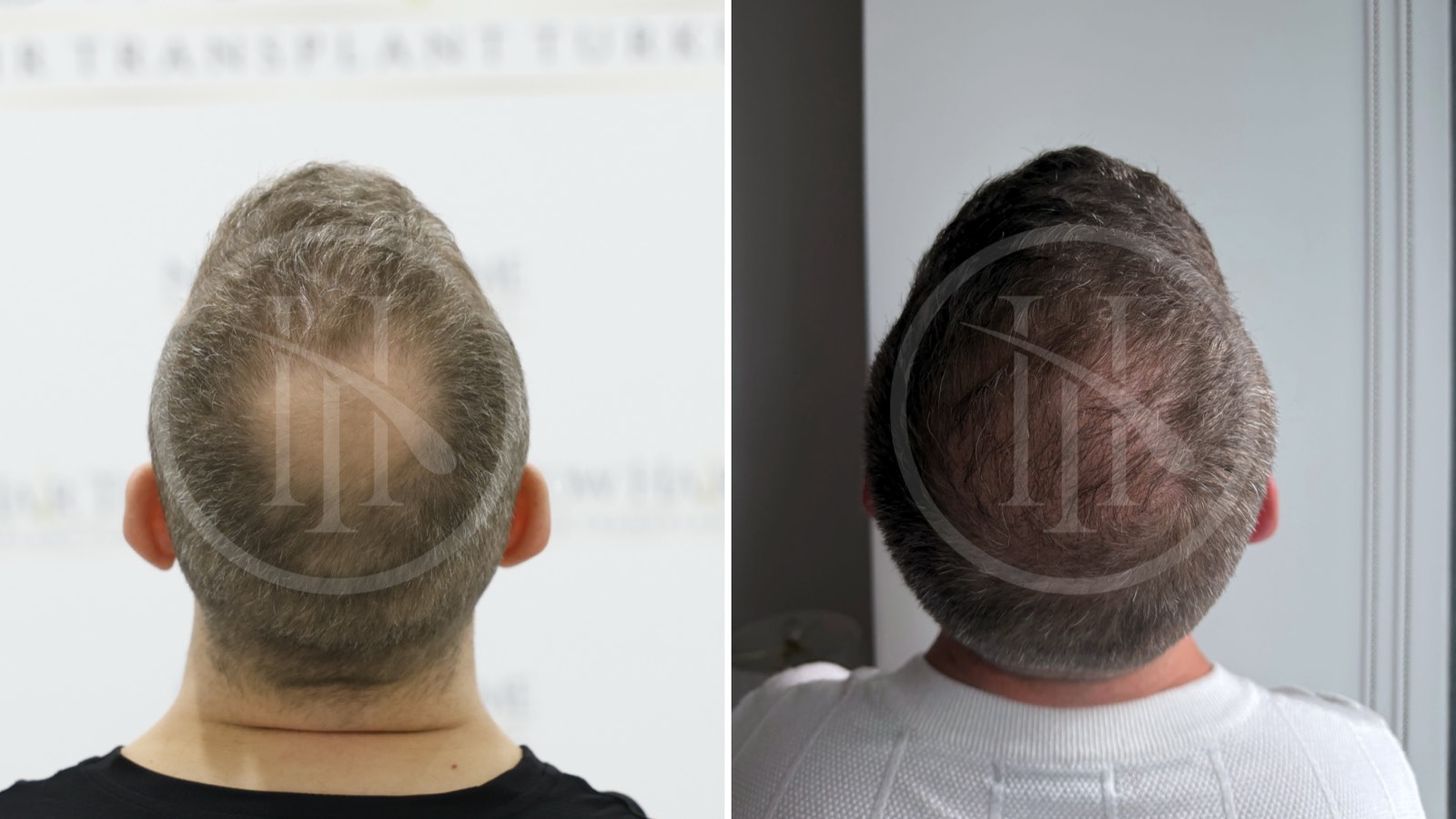
A crown (vertex) hair transplant restores hair to the spiral "swirl" at the back-top of the head, one of the most technically demanding areas to make look natural. Because the crown grows in a circular whorl and reflects light, success depends far more on the surgeon's angle and direction control than on raw graft numbers.
At Now Hair Time in Istanbul, the crown is treated as a long-term, whole-scalp decision rather than a quick fix. This guide is an evergreen, in-depth resource: how the crown is rebuilt, how many grafts it may need, why it heals more slowly than the front, how staging works, and how to protect your result for years. None of the numbers below are promises — every plan depends on a personal assessment, and you can book a free consultation to get yours.
What is a crown (vertex) hair transplant?
A crown or vertex hair transplant is a procedure that implants follicular grafts into the spiral whorl at the back-top of the scalp to restore coverage and density. It uses the same FUE or DHI techniques as any other area, but the surgeon must recreate the natural circular hair-growth pattern so the result blends seamlessly.
The crown — also called the vertex — is the rounded area where the top of the scalp meets the back of the head. Unlike the front, where hair generally flows forward in one direction, crown hair radiates outward from a central point in a spiral (the whorl), usually clockwise. When this area thins, it shows scalp through the centre of the swirl and can spread outward over time. A crown transplant aims to fill that circle convincingly, which is as much about reproducing direction and angle as it is about adding hair.
It is worth understanding where the crown sits on the overall pattern of hair loss. On the Norwood scale, crown involvement typically appears from stage 3 (vertex) onwards, and in higher stages the crown and the front can merge into one large bald area. Knowing your Norwood stage helps the surgeon plan whether the crown is treated alone, alongside the hairline, or as part of a multi-stage strategy.
Why is the crown the hardest area of the scalp to transplant?
The crown is the hardest area because of three combined factors: hair grows in a circular whorl rather than one direction, the scalp is curved like a dome, and the area catches and reflects light. A small error in angle or direction is far more visible here than anywhere else, and the curved surface means a given number of grafts covers less apparent density.
Think about the geometry. On the flat front of the scalp, hairs lean forward at a shallow angle and visually overlap, so they cover a lot of skin. On the domed crown, the surface curves away in every direction, so hairs fan out and the same density looks thinner. Light hits this convex surface directly, which is why a thinning crown reflects and "shines" — and why even a well-grafted crown can need more hair to defeat that light reflection and read as full.
Then there is the whorl itself. Recreating a spiral that turns in the correct direction, with a believable centre point, demands real artistry. If the angles are too steep, the crown looks like a bristle brush; if the swirl turns the wrong way or has no clear centre, the eye immediately senses something is off. This is why the crown is widely regarded as the truest test of a hair transplant surgeon's skill, and why experience with the vertex specifically matters when you choose a clinic.
How is the natural crown swirl and hair direction recreated?
The surgeon recreates the swirl by first identifying or designing a central point, then implanting each graft so its angle and direction follow the spiral as it radiates outward. Channels (or DHI implanter placements) are made at progressively changing angles around the centre, mimicking the natural clockwise or anticlockwise flow so the transplanted hair lies in the same pattern as native hair.
In practice the surgeon studies any remaining native hairs around the crown to read the original whorl direction and centre. If native hair is gone, the whorl is designed to look anatomically typical for that person. Each graft is then placed with deliberate control over three things: the exit angle (how flat the hair lies against the scalp), the direction (which way it points), and the rotation as you move around the spiral. Getting these to change smoothly point-by-point is what makes the difference between a crown that swirls naturally and one that looks planted.
Single-hair grafts are often used right at the centre of the whorl, where the parting of the spiral is finest, with multi-hair grafts placed outward to build density. Because so much depends on angle and direction control, both FUE and DHI can produce excellent crowns — the technique matters less than the hand guiding it.
Can you transplant only the crown?
Yes, an isolated crown transplant is possible and is sometimes the right choice — for example when the hairline and mid-scalp are stable and only the vertex has thinned. However, it is not always advisable, because crown loss often continues to spread, and treating the crown in isolation can leave a gap if surrounding native hair keeps receding.
Regional crown work makes the most sense when the loss is well-defined, the patient is older with a more stable pattern, and the donor area is healthy. In those cases, filling the crown alone can restore a natural look efficiently. The surgeon will still feather the edges of the transplant into the surrounding hair so there is no hard border between grafted and native zones.
It becomes less appropriate when the patient is young with aggressive, progressing loss. The crown can expand outward over years, and native hairs bordering a freshly grafted crown may thin on their own schedule. If that happens, an island of transplanted hair can end up surrounded by a widening bald ring — the "halo" problem discussed later. This is why a responsible surgeon assesses the whole scalp and your likely future loss before agreeing to treat the crown on its own, rather than just filling what is bald today.
How many grafts does a crown transplant need?
The number of grafts a crown needs depends on the size of the thinning area, the degree of baldness, your hair characteristics and your density goal — so only a personal assessment gives a real figure. As a broad guide, the crown is graft-hungry because it is a wide, curved surface, and larger or fully bald crowns can require a substantial portion of a donor's available grafts.
The calculation logic works roughly like this: the surgeon estimates the surface area to be covered, decides on a target density (hairs per square centimetre) that is realistic for your donor supply, and translates that into a graft count. Because the crown is convex and reflects light, it often needs more grafts than the same surface area on the flatter front to achieve a comparable visual result. A modest, early-stage swirl is far less demanding than a large, fully bald vertex.
Crucially, no honest clinic can guarantee an exact graft number sight unseen, and you should be cautious of anyone who quotes a precise figure before examining your scalp. Your hair calibre (thick hairs cover more than fine ones), colour contrast against your skin, and how curly your hair is all change the maths. To understand the general principles of graft planning across the whole scalp, see our guide on how many grafts you need for a hair transplant, and treat any number you read online as a starting point, not a promise.
Crown restoration when your donor area is limited
When donor supply is limited, crown restoration calls for conservative planning: prioritising the most visible areas, accepting a softer "shading" of density rather than full coverage, and sometimes using body or beard hair as a supplementary donor. The crown is a large surface, so spending a scarce donor entirely on the vertex can compromise the rest of the scalp.
The donor area on the back and sides of the head is finite, and every graft taken from it is gone for good. Because the crown can consume a lot of grafts for a relatively modest visual gain (due to its curve and light reflection), surgeons often counsel a measured approach: cover the crown enough to break up the reflective bald patch and reduce scalp show, rather than chasing youthful density that may exhaust the donor and leave the hairline or mid-scalp under-served.
Where the scalp donor cannot supply enough, a body hair transplant (BHT) using beard or body hair can add grafts to the crown specifically. Beard hair in particular is thick and has good survival, which suits the density-building role the crown needs, and because the crown is not the fine front edge, the slightly different texture of body hair is far less noticeable there. Conservative planning today also protects your options for tomorrow — leaving donor reserve in case loss progresses is itself part of a good crown strategy.
FUE or DHI for the crown — which technique is more successful?
Both FUE and DHI work well for the crown, and neither is universally "more successful." What matters most is the surgeon's control over the angle and direction of each graft within the whorl. DHI's implanter pen can give very fine control over placement and density, while FUE is highly versatile for covering larger crown areas — the right choice depends on your case and your surgeon's expertise.
| Consideration | FUE for the crown | DHI for the crown |
|---|---|---|
| Angle & direction control | Strong, set by channel creation | Very precise, set at implantation |
| Large bald crowns | Well suited to wide coverage | Possible, can be slower over big areas |
| Density in defined zones | Good | Excellent for tight, dense placement |
| What matters most | Surgeon's whorl skill | Surgeon's whorl skill |
With FUE, the surgeon first opens channels at the chosen angles and directions, then places grafts into them — a method that gives excellent control and copes well with the broad surface of a bald crown. With DHI, the graft is loaded into an implanter pen and the channel is made and the graft placed in one motion, which can allow very precise, dense placement and fine angle control. Both can reproduce a convincing swirl in skilled hands.
The honest answer many patients dislike is that the technique is secondary to the operator. A masterful FUE crown will beat a careless DHI crown every time, and vice versa. Rather than choosing a clinic by the acronym it markets, choose by its demonstrated results in the crown specifically — that is the variable that actually predicts your outcome.
Can the crown be covered in one session, or is a second session needed?
Many crowns can be substantially improved in a single session, but large or progressing crowns are often staged across two procedures. Staging lets the surgeon use the donor responsibly, see how the first pass grows and how the surrounding hair behaves, then add density where it is needed rather than over-committing grafts up front.
A smaller, well-defined vertex thinning can often be addressed in one sitting. But a large bald crown may need more grafts than it is wise to place at one density in a single session — both to protect the donor and because packing too densely can compromise graft survival. In those cases, the surgeon builds a foundation first, allows roughly a year for it to mature, and then performs a second session to thicken the result.
Staging is also a smart hedge against ongoing loss. If a patient is still actively losing hair around the crown, doing everything at once risks chasing a target that keeps moving. By staging, the surgeon can see the true extent of loss after the first result settles and the future pattern becomes clearer, then plan the second pass with better information. Far from being a setback, a planned two-stage approach is often the sign of a conservative, results-focused surgeon.
Why is the hairline usually prioritised before the crown?
The hairline is usually prioritised because it frames the face and has the biggest impact on how you look to others, and because it is a more donor-efficient investment. The crown is a large, curved, light-reflecting surface that consumes many grafts for a modest visual return, so spending the donor on the face-framing hairline first generally delivers more visible benefit per graft.
This is fundamentally a question of donor economics. You have a fixed lifetime supply of donor grafts, and the front third of the scalp — the hairline and forelock — does the most work in framing your face and restoring a youthful appearance in photographs and conversation. People see your hairline; they rarely see the top-back of your head. When the donor is limited, putting it where it changes your appearance most is simply the higher-yield decision.
That does not mean the crown is unimportant — for many people, especially those whose crown is their main concern, the vertex is exactly where they want their grafts. It means the trade-off should be a conscious one. A good surgeon will lay out how covering the crown affects what is left for the hairline and mid-scalp, both now and in the future, so you can decide with full information rather than discovering the constraint later.
Why does crown hair grow back more slowly than the front?
Crown hair commonly appears to grow back more slowly because the vertex tends to be one of the last areas to show visible results — often it lags the front by months. The grafts themselves grow on a similar biological timeline, but the crown's curved surface, lower starting density and light reflection mean the same amount of new hair takes longer to "read" as visible coverage.
Here is what is actually happening so you do not panic. After surgery, the transplanted hairs shed within the first weeks (this is normal — see shock loss below), and the follicles then rest before pushing out new hairs. New growth usually begins around months three to four, thickens through months six to nine, and continues maturing up to a year or beyond. That sequence is similar across the scalp.
The reason the crown seems slow is perception, not biology. Because the vertex curves away and catches the light, early, thin, growing hairs are far less able to mask the scalp there than the same hairs would be at the front. So while your hairline may look transformed at six months, your crown may still look sparse — and only fill in convincingly by twelve to eighteen months. Many patients who think their "crown didn't take" are simply judging it too early. Patience is part of the treatment.
Crown hair transplant timeline: month-by-month healing
A crown transplant heals in predictable stages: scabbing and redness in the first days, shedding of the transplanted hairs in the first weeks, a quiet resting phase, then new growth from around month three that thickens over the rest of the year. The crown typically shows its final result later than the front — often around twelve to eighteen months. The timeline below is a general guide, not a guarantee.
| Time after surgery | What generally happens at the crown |
|---|---|
| First few days | Tiny scabs around each graft, redness, mild swelling; gentle care only |
| Around 2 weeks | Scabs have cleared with careful washing; grafts settled |
| Around 1 month | Transplanted hairs begin shedding — expected and temporary |
| 2–3 months | Shedding complete; a "quiet" resting phase, crown may look sparse |
| 3–4 months | First new hairs start to emerge, fine and thin at first |
| 4–6 months | Noticeable growth begins; coverage slowly improving |
| 6–9 months | Hairs thicken; the swirl pattern becomes more visible |
| 12 months | Most of the result is in; the crown is still maturing |
| 12–18 months | Final density and full whorl typically realised at the crown |
Two things make the crown's timeline feel different from the front. First, the resting phase between shedding and regrowth can be unnerving because the crown can look thinner before it looks better — this dip is normal. Second, because the crown is the last area to fully express its result, the twelve-month mark that often counts as "final" for the hairline is closer to a twelve-to-eighteen-month milestone for the vertex. Keep dated photos under consistent lighting so you can track real progress rather than relying on the mirror, where the crown is hard to judge.
When does shock loss start after a crown transplant, and how long does it last?
Shock loss of the transplanted hairs usually starts around two to four weeks after surgery and is completely normal and temporary. The visible hair shaft falls out while the implanted follicle stays safely in place and enters a resting phase. The follicles then regrow new hairs from around month three, so this shedding is a sign the process is working, not failing.
It surprises many patients, so it is worth being clear: when grafts are moved, the hairs they carry are typically shed in the weeks after surgery. This is the follicle "resetting" before it begins a fresh growth cycle. Losing those hairs does not mean the graft has died — the part that matters, the follicle, remains. The shed hairs are replaced by new growth over the following months.
This transplanted-hair shedding is different from shock loss of your existing native hairs, which is covered next. Both are usually temporary, but they have different causes. Understanding that the bald-again look at one month is expected — and that the crown is naturally slower to refill — prevents a lot of unnecessary worry during the quiet middle months.
Can a crown transplant damage your existing hair?
Implanting into a thinning crown can trigger temporary shock loss of the surrounding native hairs, which can look alarming but is usually reversible — most of those hairs regrow within a few months. The risk is real but generally short-lived, and a skilled surgeon minimises it through careful technique, sensible density and protecting the existing follicles during channel creation.
When you place new grafts among existing miniaturising hairs, the local trauma and inflammation can push some native hairs into a resting phase, so they shed. Because the crown is often grafted into an area that still has weak native coverage, this effect can be more noticeable there. The encouraging news is that healthy native follicles typically recover and regrow over the following months, so the loss is usually temporary rather than permanent.
An experienced surgeon reduces this risk in several ways: making channels precisely so as not to transect existing follicles, choosing a density that does not overcrowd surviving hairs, and assessing how stable your native crown hair really is before implanting. It is also why the medication discussion matters — supporting native hairs (a clinician's decision) can help them weather the procedure. Always raise this with your surgeon so you know what to expect at your particular stage of loss.
Progressive crown loss and the "halo" risk
The "halo" risk is when a grafted crown is surrounded by native hair that keeps thinning, leaving a ring of baldness around the transplanted island. It happens because crown loss is often progressive, so the area you treat today is not the whole area you may lose tomorrow. Planning for future loss is the way to avoid it.
Picture a crown filled neatly at age thirty. If that person's pattern is still advancing, the native hairs bordering the transplant can recede over the following years while the grafted centre stays put. The result is a doughnut: a covered middle ringed by an expanding bald zone. This is one of the strongest arguments against treating a young, progressing crown too aggressively or in isolation.
Surgeons manage the halo risk by anticipating where loss is heading, by feathering the transplant's outer edge so any future recession blends rather than creates a hard line, by reserving donor for later touch-ups, and by discussing medication to slow native loss around the graft. For younger patients especially, a conservative, future-proofed plan beats maximum coverage now — because the crown you build has to still look right in a decade.
What role does medication play in protecting crown results?
Medications in the finasteride and minoxidil category may help slow ongoing hair loss and support native hairs around the crown, which can protect the longevity of a transplant result. Whether they are suitable, and at what dose, is strictly a clinician's decision based on your health, age and pattern of loss — they are not something to start on your own.
A hair transplant relocates resistant follicles, but it does not stop the underlying process that thinned your native hair in the first place. If the surrounding non-transplanted hairs continue to miniaturise, your overall density can fall even while the grafts thrive — and that is precisely how a halo or a "thinner again" look develops over years. This is why medical management is often discussed as a partner to surgery rather than an afterthought.
The finasteride/minoxidil category works on different mechanisms and is widely used to slow loss and, in some cases, improve existing hair, particularly at the crown. But these are medical decisions with individual considerations and potential side effects, so they must be prescribed and monitored by a qualified clinician. The takeaway for crown patients is simply this: protecting your native hair is part of protecting your transplant, and that conversation belongs in your consultation.
6 factors that affect the success of a crown transplant
Crown transplant success comes down to six main factors: the blood supply (vascularity) of the crown, your donor supply and quality, the degree and progression of your loss, the surgeon's skill with angle and whorl design, your hair characteristics and colour contrast, and how realistic your density goals are. Strength in these six is what separates a natural crown from a disappointing one.
- Blood supply to the crown (vascularity) — arguably the most important biological factor. The vertex has a less dense network of small blood vessels (capillaries) than other areas of the scalp, so its blood circulation is naturally lower. Because transplanted grafts depend on a good blood supply to survive and grow, the crown's reduced vascularity makes it a more demanding area and can affect how well the grafts take.
- Donor supply and quality — the crown is graft-hungry, so a healthy, dense donor that can spare grafts without compromising the rest of the scalp is foundational. A limited donor calls for conservative goals or supplementary body hair.
- Degree and progression of loss — a small, stable swirl is far easier to restore well than a large, actively spreading bald crown. Future loss must be planned for, not ignored.
- Surgeon's angle and whorl skill — recreating the spiral with correct direction, angle and a believable centre is the single biggest determinant of a natural-looking crown.
- Hair characteristics and colour contrast — thick, wavy hair and low contrast between hair and skin cover the scalp more effectively; fine, dark hair on light skin (or vice versa) shows the scalp more and may need more density.
- Realistic density goals — aiming for the soft, "good coverage" the crown can genuinely deliver, rather than teenage thickness across a wide curved area, is what keeps patients satisfied long term.
Notice that two of these six are about expectations and planning, not surgery itself. That is deliberate: many "failed" crowns are actually well-executed procedures judged against an unrealistic target or undermined by unmanaged ongoing loss. Getting the plan right is as decisive as getting the grafts right.
"My crown transplant didn't take" — 3 mistakes to avoid
Most "my crown didn't take" worries trace back to three avoidable mistakes: judging the result too early because the crown is genuinely slow to fill, ignoring ongoing native-hair loss and the medication conversation, and expecting youthful density across a wide, curved area. Avoid these and your assessment of your own result becomes far more accurate.
Mistake 1 — judging too early. The crown is the last area to mature, often only reaching its final look at twelve to eighteen months, with a disheartening "quiet" dip in the middle months. Patients who panic at four or six months are frequently looking at a result that is simply not finished. Track dated photos and give the vertex the full timeline before drawing conclusions.
Mistake 2 — ignoring native loss and medication. If the hair around your grafts keeps thinning and the medical side is left unaddressed, your overall density can slip even though the transplant succeeded. Surrounding loss, not graft failure, is a common reason a crown looks thin again later — which is why the finasteride/minoxidil discussion (a clinician's decision) belongs in the plan from the start.
Mistake 3 — expecting youthful density on a wide area. The crown is a large, light-reflecting dome, and a finite donor cannot always recreate dense teenage coverage there. A realistic goal — breaking up the bald reflection and restoring natural-looking, softer density — usually produces a result the patient is genuinely happy with, whereas an impossible target guarantees disappointment regardless of surgical quality.
Crown aftercare: what to pay attention to
Crown aftercare follows the same principles as any transplant — gentle washing, careful sleeping, and protecting the grafts from sun, sweat and impact in the early days — with one extra challenge: you cannot easily see your own crown, so it is the area most likely to be knocked or neglected. Extra mindfulness here protects your investment.
| Do | Avoid (early healing) |
|---|---|
| Wash gently as instructed by your clinic | Rubbing, scratching or picking scabs at the crown |
| Sleep so the crown does not press on the pillow | Lying directly on the back of your head |
| Keep the crown out of direct sun; cover loosely if advised | Sweating heavily (intense exercise, saunas) too soon |
| Be aware of low doorways, car roofs, overhead shelves | Bumping or knocking the crown — easy to do unseen |
Because the crown sits where your head meets pillows, headrests and doorframes, it is uniquely exposed to accidental contact you will not feel coming. Pulling tops on and off over your head, hats that rub, and sleeping position all deserve special care in the first couple of weeks. Sweat and sun are also concerns: heavy sweating can irritate fresh grafts, and the crown gets direct overhead sun, so loose protection when outdoors is wise.
A practical tip: ask someone to take photos of your crown every few days in the early phase, or use a second mirror, so you can actually monitor healing rather than guessing. Follow your clinic's specific washing and activity instructions precisely — generic advice is no substitute for the protocol your surgeon gives you for your particular procedure.
Crown hair transplant vs scalp micropigmentation (SMP): which should you choose?
Choose a crown transplant if you want real, growing hair and have the donor supply to support it; choose scalp micropigmentation (SMP) if you want the look of density and shading without adding hair, or if your donor is very limited. They are not mutually exclusive — SMP is often combined with a transplant to make a grafted crown look fuller.
| Aspect | Crown transplant | Scalp micropigmentation (SMP) |
|---|---|---|
| What it does | Adds real, growing hair to the crown | Tattoos tiny dots to mimic density/shadow |
| Texture | Actual hair you can feel and grow | Visual only; no physical hair added |
| Donor needed | Yes — uses your finite donor supply | No donor hair required |
| Best for | Restoring true coverage and feel | Reducing scalp/hair contrast, adding apparent fullness |
| Combined use | SMP under or alongside a transplant can make a grafted crown look denser | |
The fundamental difference is real hair versus the illusion of hair. A transplant relocates living follicles that grow, can be styled, and provide genuine coverage — but it draws on a limited donor and the crown is demanding of it. Scalp micropigmentation deposits pigment to create the appearance of closely shaved stubble or to darken the scalp so thin hair looks denser, with no donor cost — but it adds no actual hair and does not grow.
For the crown specifically, the two often work beautifully together. SMP placed beneath transplanted hair reduces the contrast between hair and scalp, so the light-reflecting vertex reads as fuller for a given number of grafts. If your donor is genuinely limited, SMP alone can disguise crown thinning convincingly. The right answer depends on your donor supply, your goals and your tolerance for maintenance — a consultation will weigh these for your case.
How much does a crown transplant cost?
The cost of a crown transplant depends on factors such as how large the thinning area is, how many grafts are required, the technique used and whether more than one session is needed — so a meaningful price comes only after assessment. We do not quote fixed figures online, because an honest estimate has to reflect your individual scalp and goals.
The main cost drivers are the extent of the crown loss and the resulting graft requirement, the chosen approach (FUE or DHI), and whether your plan calls for staging or supplementary donor sources. A small, defined swirl naturally differs from a large, fully bald vertex that may need two sessions. Because these variables are so individual, any single advertised number is more marketing than estimate.
For general context on what shapes pricing for hair restoration in Turkey, see our overview of hair transplant cost in Turkey. The most reliable way to understand your own cost is to book a free consultation, share photos of your crown, and receive a plan based on what your scalp actually needs rather than a generic figure.
What results can you realistically expect?
Realistically, a well-planned crown transplant can restore natural-looking coverage that breaks up the bald, light-reflecting patch and significantly improves how the vertex looks — but it may not recreate the dense hair of your youth across the whole area, and the crown takes longer than the front to show its result. Realistic expectations are central to satisfaction.
The crown can be made to look genuinely natural, with a correctly turning swirl and density that suits your donor and hair type. For most people that means a vertex that no longer shows scalp through a shiny bald patch, blends with the surrounding hair, and looks appropriate for their age — a result they are happy to have photographed from behind. What it usually does not mean is teenage thickness over a wide dome, especially where the donor is finite.
Set against the right benchmark, the crown is one of the most satisfying areas to restore precisely because it bothers people so much when bald. Give it the full twelve-to-eighteen-month timeline, support your native hair as your clinician advises, and judge the outcome by natural appearance rather than maximum density. To plan a crown result that is both natural and durable, arrange your free consultation with Now Hair Time and bring clear photos of the back of your head.
Real patient results
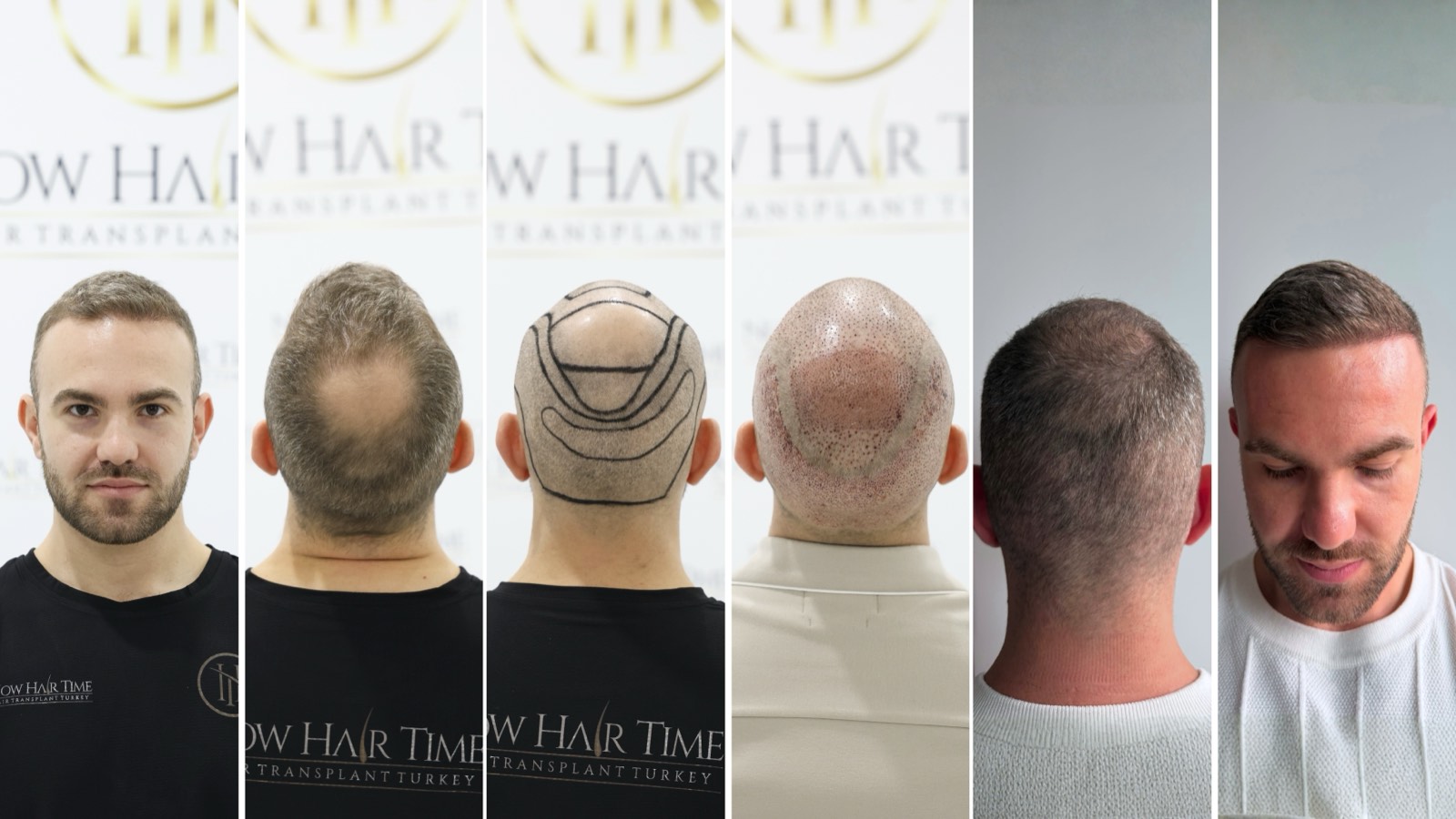
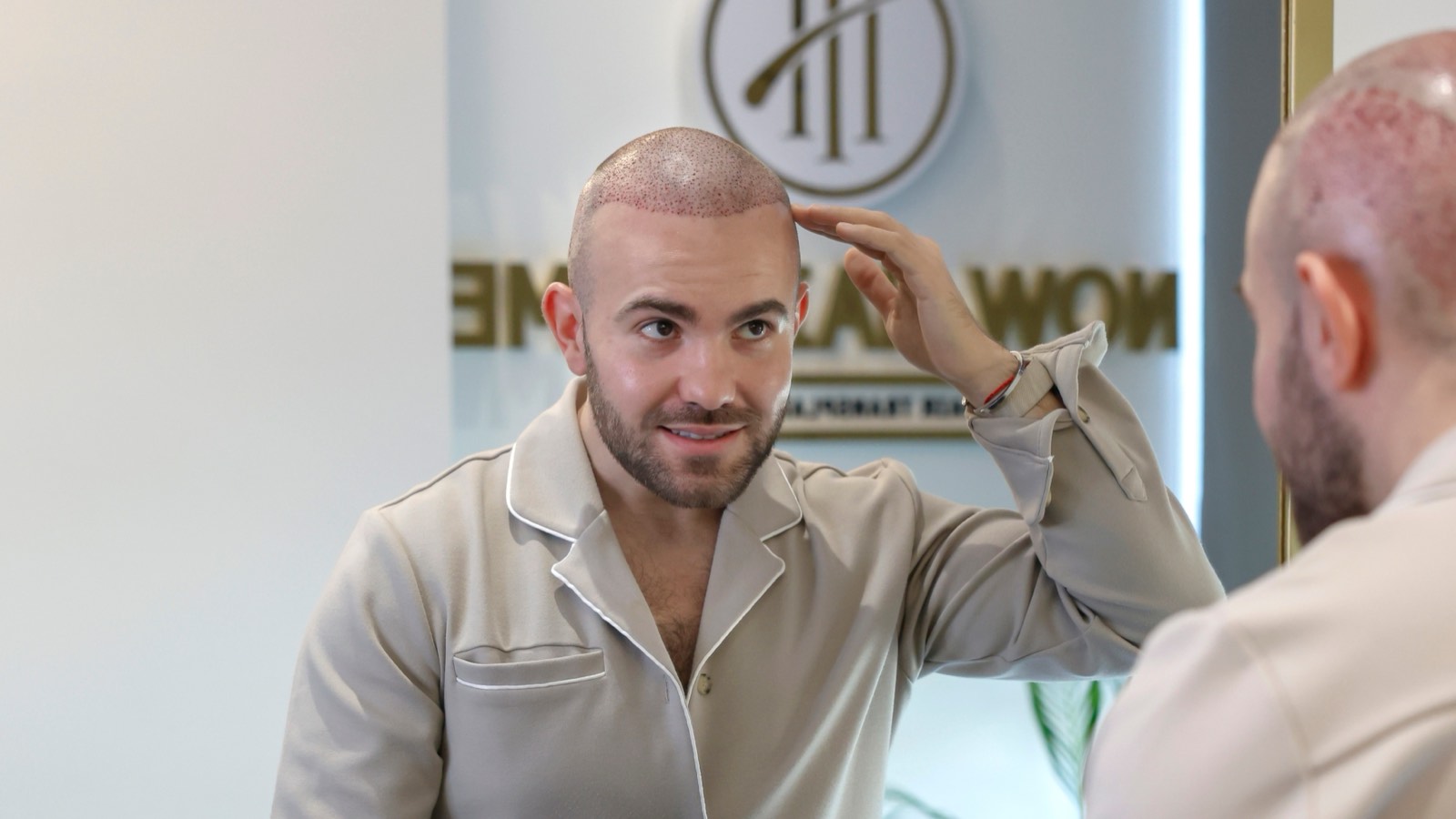
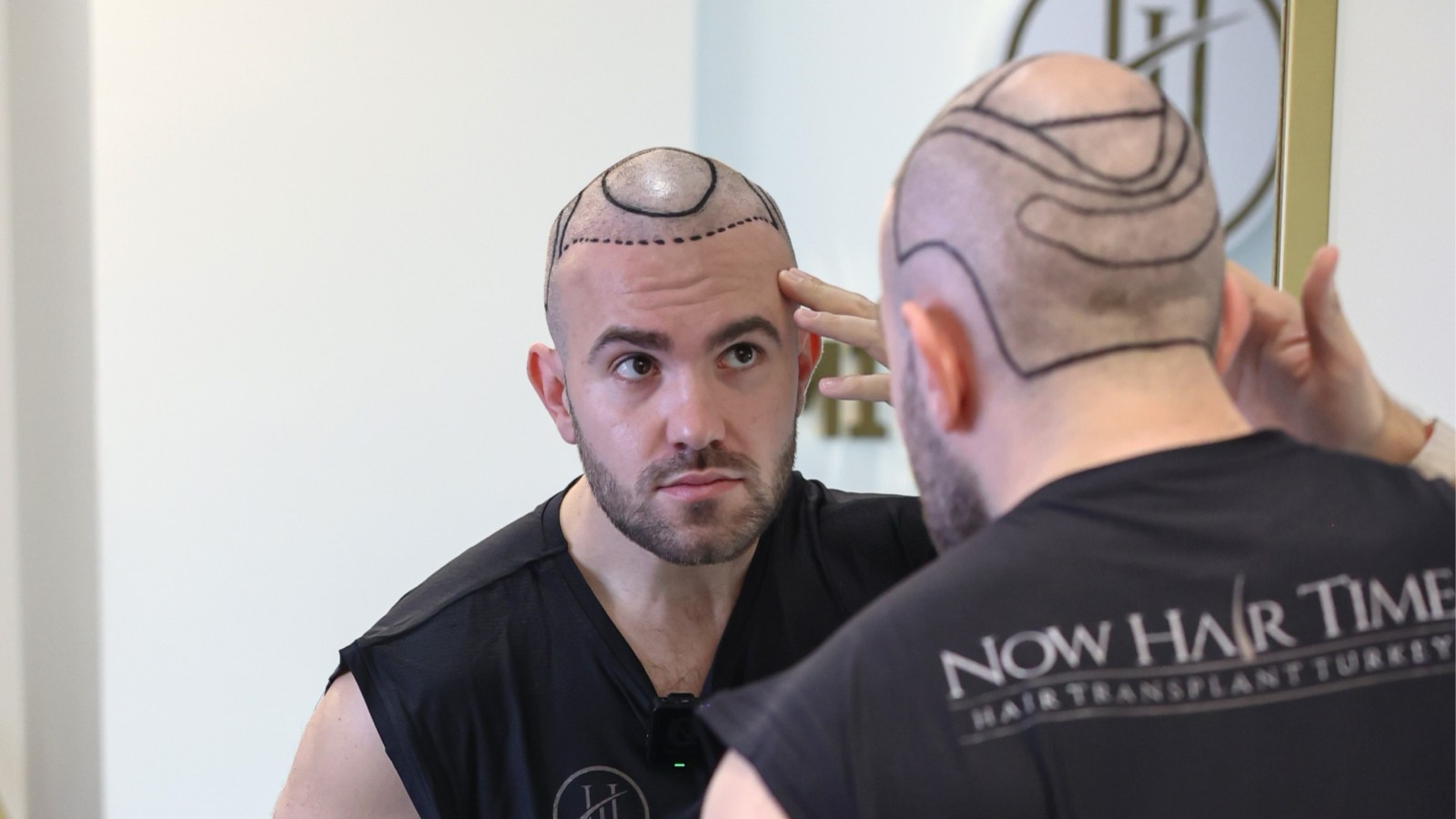
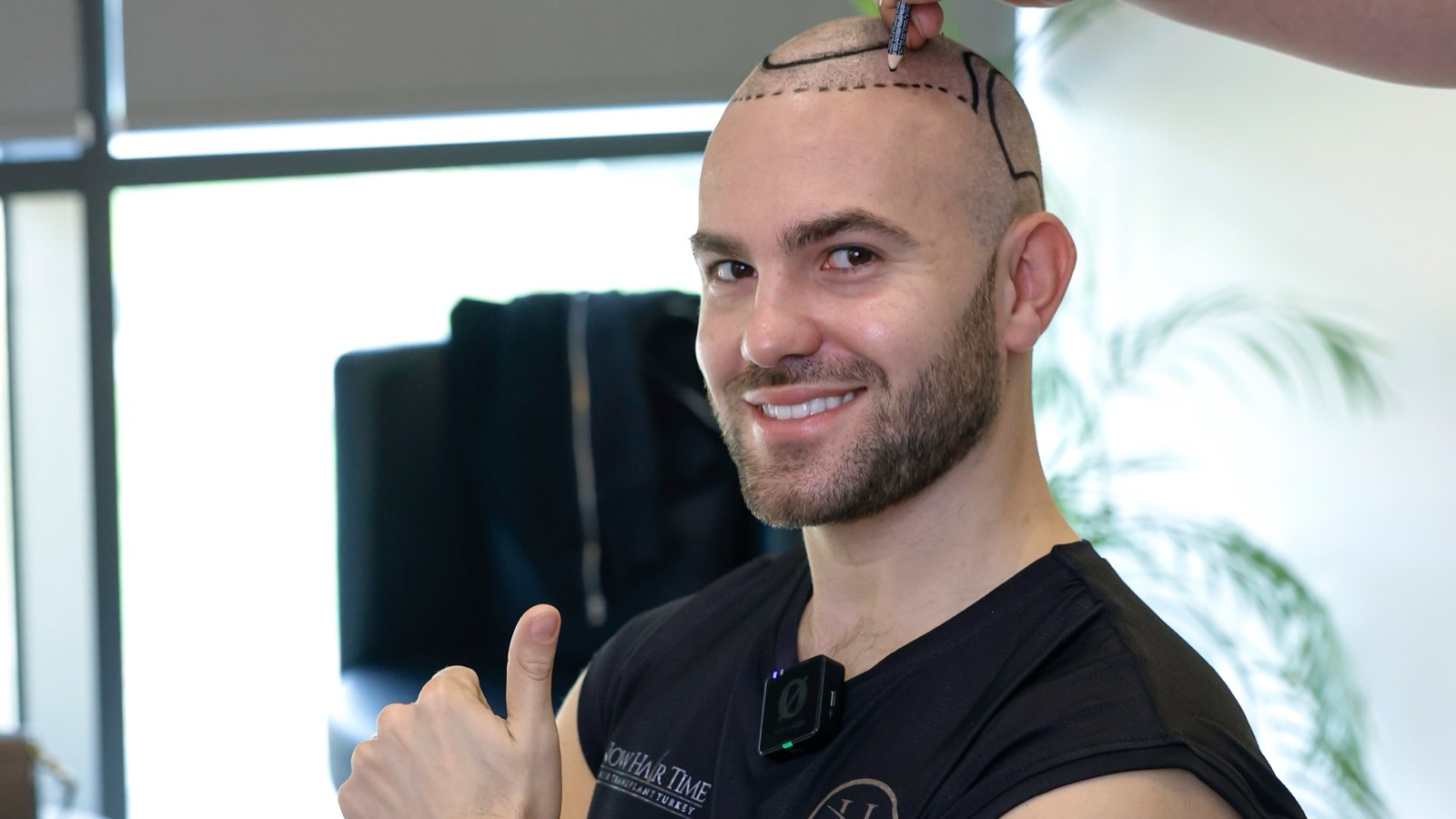
These are real photos from a crown (vertex) hair transplant at Now Hair Time — from the pre-operative design through to the final result.





Frequently Asked Questions
What is a crown (vertex) hair transplant?
It is a procedure that implants follicular grafts into the spiral whorl at the back-top of the scalp to restore coverage, using FUE or DHI while recreating the crown's natural circular hair-growth pattern.
Why is the crown so hard to transplant?
Because hair grows in a circular whorl, the scalp is curved like a dome, and the area reflects light. Small errors in angle or direction show easily, and the curve means a given density looks thinner than on the front.
How many grafts does a crown transplant need?
It depends on the size of the thinning area, the degree of loss, your hair type and your density goal. The crown is graft-hungry, but only a personal assessment gives a real figure — be wary of exact numbers quoted before examination.
Can I transplant only my crown?
Yes, an isolated crown transplant is possible when the hairline and mid-scalp are stable. It is less advisable for young patients with progressing loss, because spreading native loss can leave a bald ring around the graft.
Is FUE or DHI better for the crown?
Both work well; neither is universally better. The surgeon's control over the angle and direction of each graft within the whorl matters far more than the technique itself.
Why does my crown grow back so slowly?
The follicles grow on a normal timeline, but the curved, light-reflecting crown is the last area to look full. New growth starts around month three to four, and the crown often reaches its final result at twelve to eighteen months.
When does shock loss happen after a crown transplant?
The transplanted hairs usually shed around two to four weeks after surgery. This is normal and temporary — the follicles stay in place and regrow new hairs from about month three.
Can a crown transplant make my existing hair fall out?
Implanting into a thinning crown can cause temporary shock loss of nearby native hairs, which usually regrow within a few months. A skilled surgeon minimises this with careful technique and sensible density.
Will my crown need a second session?
Smaller crowns can often be improved in one session, but large or progressing crowns are frequently staged across two procedures to use the donor responsibly and add density once the first result has matured.
Why is the hairline usually done before the crown?
The hairline frames the face and gives the most visible benefit per graft, while the crown consumes many grafts for a modest visual return. With a limited donor, the face-framing front is often prioritised.
What is the crown "halo" effect?
It is a ring of baldness that can form around a grafted crown when the surrounding native hair keeps thinning. It is avoided by planning for future loss, feathering the edges and managing native hair medically.
Should I take medication after a crown transplant?
Medications in the finasteride/minoxidil category may help slow ongoing loss and protect your result, but suitability and dosing are strictly a clinician's decision based on your health and pattern of loss.
Is SMP better than a crown transplant?
They do different things: a transplant adds real growing hair, while scalp micropigmentation adds the look of density without using donor hair. They can be combined to make a grafted crown look fuller.
How much does a crown hair transplant cost?
It depends on the area size, graft requirement, technique and whether staging is needed, so a meaningful price follows an assessment. Book a free consultation with photos of your crown for an individual plan.