Beard & Facial Hair Transplant: The Complete Guide
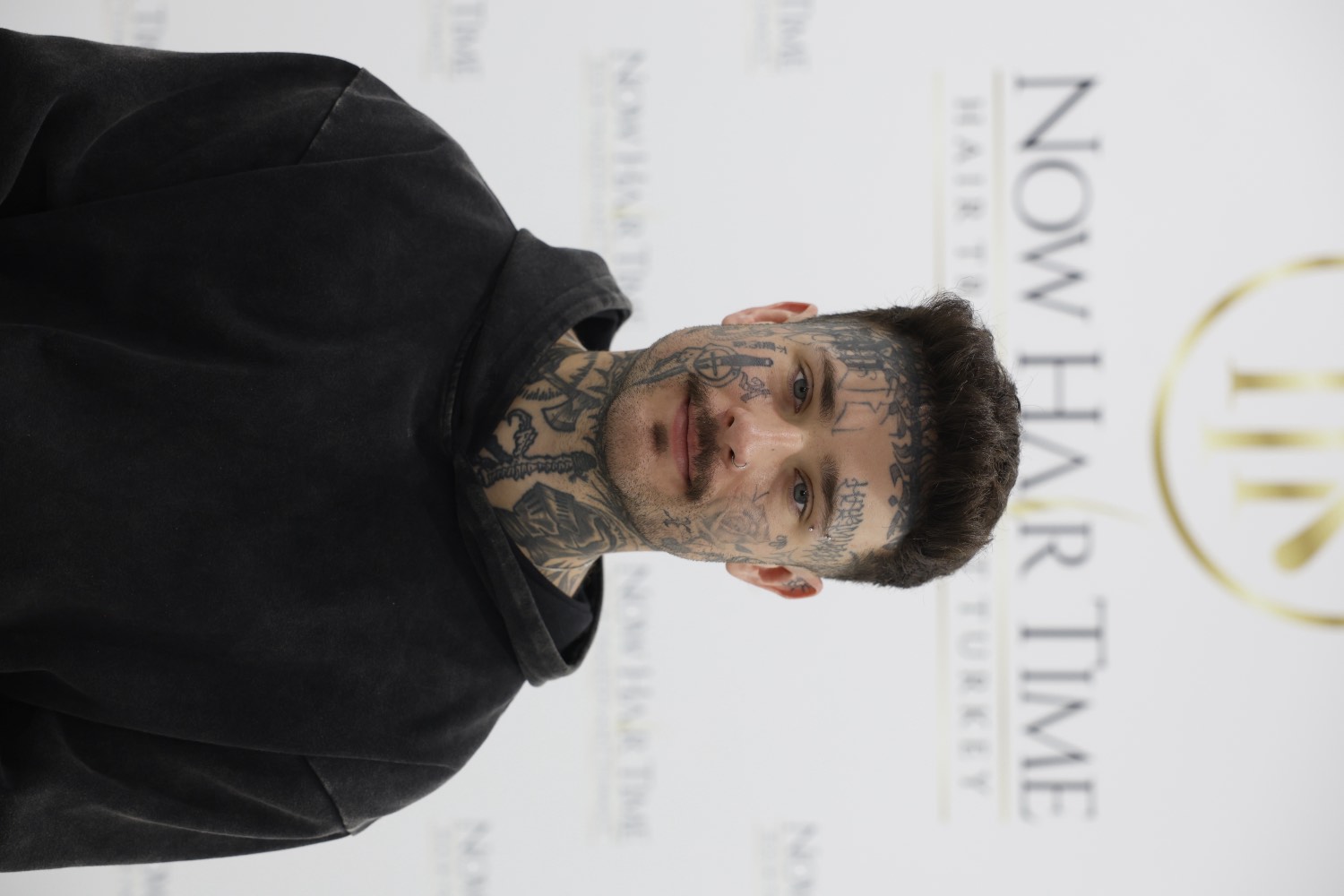
A beard or facial hair transplant is a minor surgical procedure that moves permanent hair follicles from the scalp donor area to the face, filling in a patchy beard, thin cheeks, a weak moustache, sparse sideburns, or scars. Once the transplanted hairs settle and regrow over the following months, they behave like natural facial hair — growing continuously and needing regular trimming.
At Now Hair Time in Istanbul, facial hair restoration is one of the most requested procedures we perform alongside scalp work. This complete guide walks you through everything — how the technique works, which areas can be treated, the healing timeline, what a natural result really involves, and how to know whether you're a good candidate. Wherever a precise figure depends on your individual face and goals, we'll point you toward a free, no-obligation consultation rather than guess.
What is a beard or facial hair transplant?
A beard or facial hair transplant is a cosmetic procedure in which individual hair follicles are harvested from a donor area on the scalp and implanted into the face to create or thicken facial hair. It permanently restores beard, moustache, cheek, jawline, or sideburn areas where hair grows sparsely, patchily, or not at all.
Unlike temporary solutions such as topical lotions, fibres, or makeup, a transplant relocates real, living follicles that take root in their new home. Because these follicles are genetically programmed to keep producing hair, the result is permanent and grows like the rest of your facial hair once it matures.
Facial hair transplantation uses the same core follicular-unit techniques as scalp restoration, but the artistry is considerably more demanding. The face is a highly visible, expressive area where hair grows at sharp, flat angles and in specific directional patterns. A millimetre of imprecision in angle or placement is far more noticeable on a cheek than on the crown of the head, which is why experience and an aesthetic eye matter enormously here.
Men seek facial hair transplants for many reasons: genetics that never produced a full beard, patchy growth that resists every grooming trick, thinning with age, scarring from acne or injury, or a desire to reshape and define the jawline and beard line. For transgender men, facial hair restoration can also be an important part of masculinising features.
How does a beard transplant work?
A beard transplant works by extracting individual follicular units from the scalp donor area and implanting them one by one into the facial skin at precise angles and directions. The two main methods are FUE (follicular unit extraction) for harvesting and DHI (direct hair implantation) for placement, both of which avoid a linear scalpel incision.
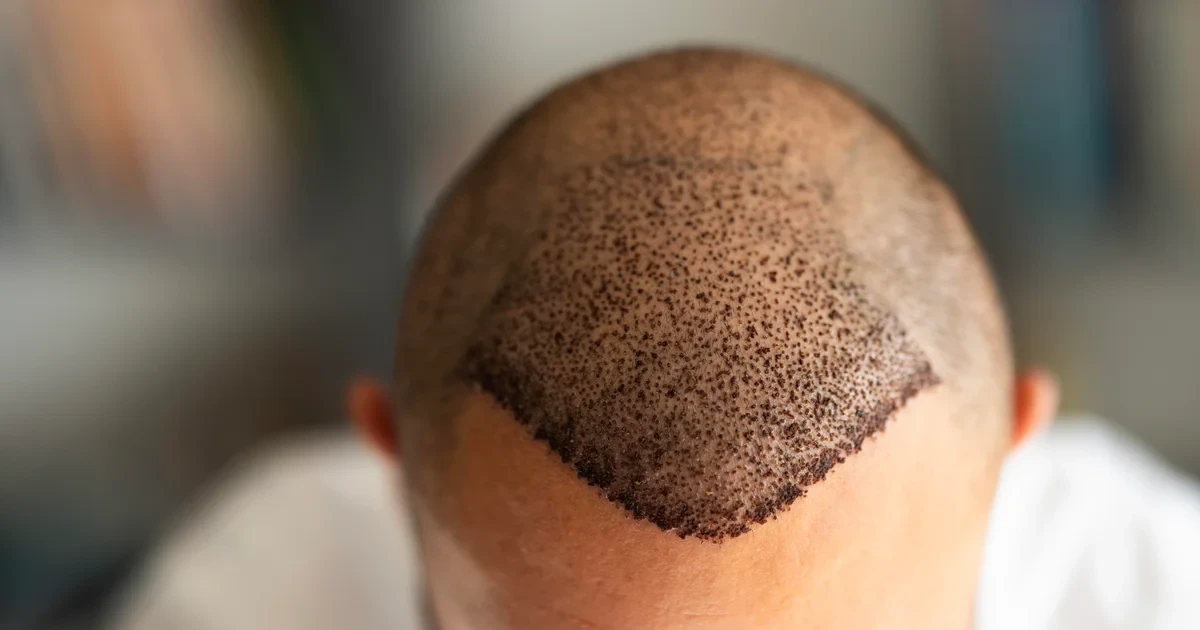
The procedure begins with planning and design — drawing the new beard line, density map, and the direction every hair should follow. Local anaesthesia is then applied so the donor and recipient areas are numb throughout. With FUE, the surgeon uses a tiny punch (typically under a millimetre in diameter) to extract follicular units one at a time from the back or sides of the scalp, leaving only minuscule dot-like marks rather than a strip scar.
Those harvested grafts are then implanted into the face. Many clinics, including ours, favour the DHI method for facial work, using a Choi implanter pen that loads each graft and places it directly into the skin in a single motion. DHI gives the surgeon fine control over the depth, angle, and direction of every single hair — control that is essential on the face, where hairs must lie flat and grow downward rather than standing up as they do on the scalp.
The defining feature of a great beard transplant is angle and direction. Beard hairs do not emerge perpendicular to the skin; they grow at an acute, almost grazing angle, and they fan in characteristic directions across the cheeks, moustache, and chin. The surgeon must replicate these patterns graft by graft. Get the angles right and the result is invisible; get them wrong and the beard looks tufted or bristly. This is why facial hair restoration is as much craft as medicine.
Where does the donor hair come from?
The donor hair for a beard transplant almost always comes from the scalp — specifically the back and sides of the head, the same permanent donor zone used in scalp hair transplants. This hair is resistant to the hormone that causes hair loss, and once moved to the face it keeps the growth characteristics of its original location.
You might wonder why scalp hair works on the face at all. The answer lies in a principle called "donor dominance": transplanted follicles retain the traits of the area they came from, not the area they're moved to. Scalp hair from the safe donor zone is permanent and grows continuously, so when placed in the beard region it behaves the same way — which is exactly why a transplanted beard needs regular trimming, as we'll explain later.
The back and sides of the scalp are chosen because the follicles there are plentiful, robust, and genetically protected against thinning. A skilled surgeon also selects grafts with the right calibre and hair count: facial hair, especially in the moustache and along the beard line, looks most natural when built from single-hair and two-hair grafts rather than thick multi-hair clusters. Careful graft selection is part of what makes the final beard look soft and natural rather than dense and pluggy.
In most cases the scalp provides everything needed. Occasionally, when scalp donor supply is limited or a particular texture is desired, hair from elsewhere on the body may be considered, but the scalp remains the first-choice and most reliable source for facial work.
What facial areas can be transplanted?
Almost any part of the facial hair region can be transplanted: the full beard, the cheeks, the jawline and beard line, the chin and goatee, the moustache, and the sideburns. Transplants can also conceal scars within these areas — from acne, surgery, injury, or previous procedures — by growing hair through and over them.
Each area has its own demands. The moustache and the area just above the upper lip are particularly sensitive and require especially fine, careful work. The cheeks and jawline cover larger surfaces and define the overall shape of the beard. The chin and goatee anchor the lower face. Sideburns frame the face and connect the beard to the hairline. A facial hair transplant can address one of these zones in isolation or rebuild the entire beard as a unified whole.
Because needs vary so widely from one face to the next, the right plan is always individual. Some men want only to fill two patchy spots on the cheeks; others want a complete beard built from very little existing growth. The sections below break down the most common areas in detail.
Beard transplant for a patchy or thin beard
A beard transplant is one of the most effective solutions for a patchy or thin beard, because it adds hair exactly where growth is missing. The surgeon fills in bald spots, connects disconnected patches, and increases overall density so the beard reads as full and even rather than spotty.
Patchy beards are extremely common and usually genetic — some men simply have fewer active follicles in certain facial zones, no matter how long they let the beard grow. No amount of waiting, oiling, or brushing creates follicles that aren't there. A transplant addresses the root cause by physically adding follicles to the sparse areas.
The goal with a patchy beard is blending: new grafts are woven in among your existing hairs at matching angles and densities so there's no visible seam between transplanted and native hair. Because you already have some growth to work with, results in patchy cases often look seamless once everything matures. How many grafts this takes depends entirely on how much area needs filling and how dense you want it — something best assessed in person.
Moustache transplant
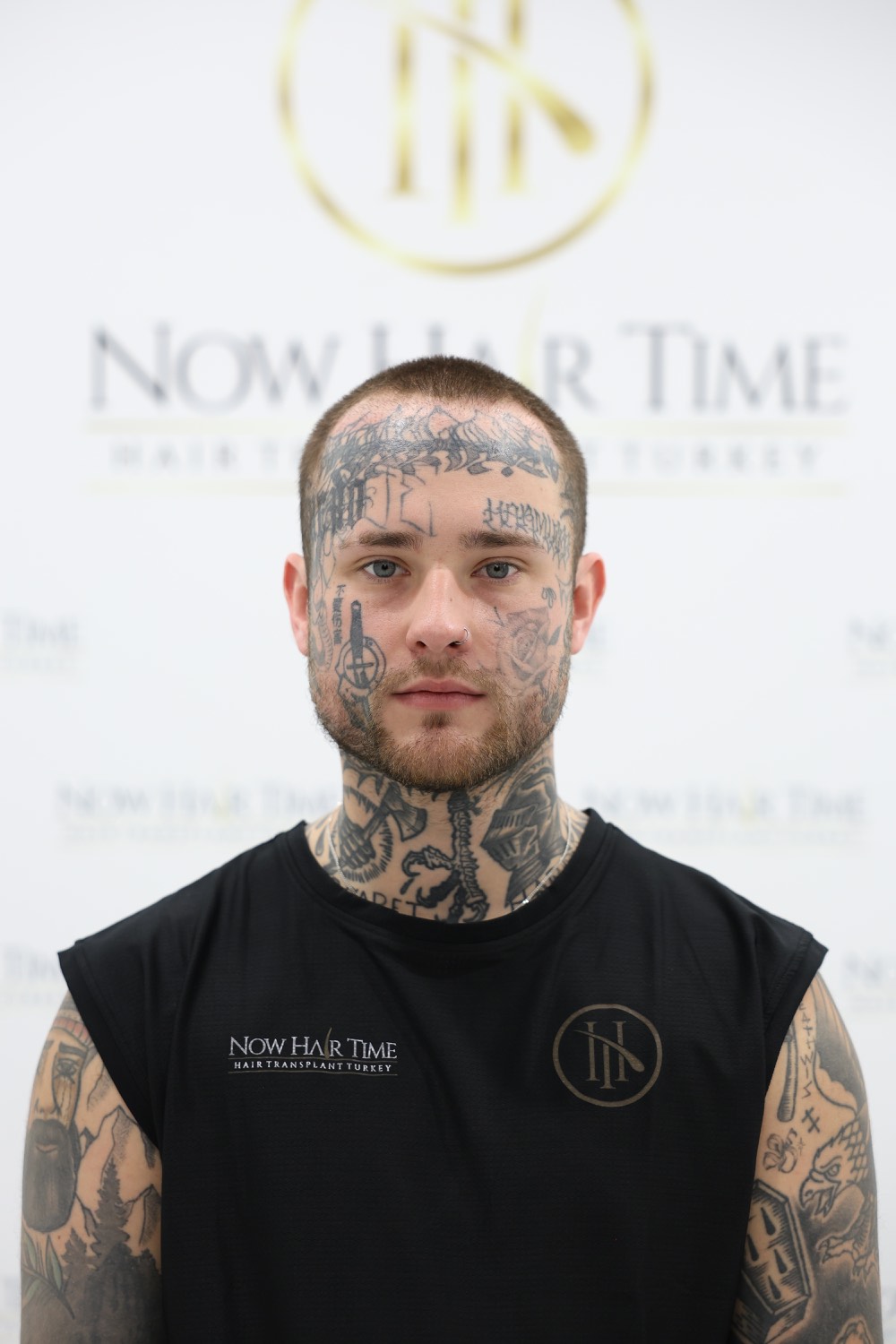
A moustache transplant restores or thickens hair on the upper lip by implanting fine grafts at the very flat, downward angle characteristic of moustache growth. Because the upper lip is a small, mobile, and sensitive area, it needs fewer grafts than a full beard but a high degree of precision.
The moustache is one of the most technically delicate facial zones. The skin is thin and moves constantly with speech and expression, the hairs grow at an extremely acute angle pointing down over the lip, and any irregularity is immediately visible because it sits at the centre of the face. For these reasons, moustache work is usually built almost entirely from single-hair grafts to keep the result soft and natural at the border.
Men seek moustache transplants to fill gaps under the nose, to thicken a sparse moustache, to connect the moustache to the beard, or to rebuild the area after scarring. Relative to a full beard, the graft requirement is modest, but the artistry required to make a moustache look natural is among the highest of any facial area.
Cheek and jawline beard transplant
A cheek and jawline beard transplant builds density and definition across the larger surfaces of the lower face. Cheek work fills in sparse or hollow areas higher on the face, while jawline work sharpens and strengthens the beard line that frames the chin and lower cheeks.
The cheeks and jawline together shape the entire silhouette of a beard, so design here has a big impact on the final look. The surgeon maps where the beard should begin on the cheek (the cheek line), how sharply or softly it should fade, and how clean and defined the jawline should appear. A strong, well-placed beard line can dramatically improve facial structure and the impression of a defined jaw.
Because these areas cover more surface than the moustache or sideburns, they typically require a higher number of grafts to reach a full look — though the exact figure depends on your starting density and how bold you want the result. Cheek and jawline grafts are placed to follow the natural sweep of beard growth, fanning back toward the ears along the jaw and downward across the cheeks.
Sideburn transplant
A sideburn transplant restores or reshapes the hair in front of the ears that connects the hairline to the beard. It's used to rebuild naturally sparse sideburns, to extend or thicken them for a fuller frame, and to repair sideburns lost to scarring — including donor scars from previous procedures or incisions from a face-lift.
Sideburns play a quiet but important framing role: they bridge the scalp hair and the beard, and their shape strongly affects how the whole face is framed. Some men have naturally short or thin sideburns; others lose definition there with age. A transplant can lengthen, thicken, or reshape them to suit the face.
Sideburn restoration is also a common repair procedure. Certain surgeries near the temples and in front of the ear — including face-lift incisions — can disrupt or scar the sideburn area, and scalp-strip donor harvesting in older hair transplant techniques sometimes affected this zone too. Implanting grafts at the correct downward, slightly forward angle rebuilds a natural sideburn and camouflages the underlying scar.
How many grafts does a beard transplant need?
The number of grafts a beard transplant needs varies widely depending on which areas are treated, how much native hair you already have, the size of your face, and how dense you want the result. As a relative guide, a moustache or a small patch needs comparatively few grafts, while a complete beard built from very sparse growth needs substantially more.
It's genuinely impossible to give an honest universal number, because two men asking for a "full beard" can need very different amounts. A larger face requires more grafts to cover the same visual density than a smaller one. Someone with decent existing growth who just wants thickening needs fewer grafts than someone starting nearly bare. And the density target matters: a natural, moderate look uses fewer grafts than a very thick, heavy beard.
The table below gives a relative sense of how the major facial areas compare, without inventing precise figures. Your surgeon will count the actual grafts during a consultation by examining your face, your donor supply, and your goals together.
| Facial area | Relative graft need | Notes |
|---|---|---|
| Moustache | Low | Small, delicate area; mostly single-hair grafts for a soft result. |
| Sideburns | Low to moderate | Depends on length and thickness desired; framing area. |
| Goatee / chin | Moderate | Anchors the lower face; density goal drives the count. |
| Cheeks | Moderate to higher | Larger surface; varies a lot with existing growth. |
| Jawline / beard line | Moderate to higher | Defines the beard's shape; more area means more grafts. |
| Full beard (sparse start) | Higher | Combines all zones; the most graft-intensive plan. |
Because graft counts translate directly into the look you'll get and the donor supply you'll use, this is exactly the kind of question worth resolving in person. Book a free consultation and a specialist will give you a realistic graft estimate for your specific face and goals.
How is the beard shape and density designed?
The beard shape and density are designed before surgery by mapping the new beard line, planning the directional flow of every zone, and setting a density target that matches your face and wishes. Natural-looking facial hair depends above all on correct angles — beard hair grows flatter and more downward than scalp hair — which is where the surgeon's artistry is decisive.
Design starts with the lines that frame the beard: the cheek line up top, the jawline below, and the neckline beneath the chin. These boundaries determine the entire character of the beard — sharp and defined or soft and natural. The surgeon works with your facial proportions to place lines that flatter your structure, often discussing styles and showing the plan on your own face before anything begins.
Then comes direction and angle, the technical heart of a natural result. Across the cheeks, hairs sweep in one pattern; on the moustache they point sharply down; on the chin they fan another way; along the jaw they angle back toward the ears. The surgeon recreates these flow patterns and implants each graft at the acute, grazing angle real beard hair uses. Density is layered to feel organic — slightly softer at the edges, fuller in the body of the beard — so it never looks like a uniform, planted block.
This combination of line design, directional planning, and angled placement is what separates a beard that looks effortlessly yours from one that looks "done". It cannot be reduced to a formula; it relies on the trained eye and steady hand of an experienced facial hair surgeon.
Is a beard transplant permanent?
Yes, a beard transplant is permanent. The follicles are taken from the scalp's permanent donor zone, which is resistant to the hormone responsible for hair loss, so once the transplanted hairs settle and regrow they remain for life and continue to grow like the rest of your facial hair.
The permanence comes from donor dominance — the relocated follicles keep the genetic resilience of the donor area. Because they were never destined to fall out, they don't begin thinning after the move. After the initial shedding-and-regrowth cycle (covered in the timeline section), the grafts establish themselves and behave as durable, lifelong facial hair.
It's worth distinguishing the permanent result from the temporary early phase. In the first weeks, the transplanted hairs shed — this is expected and is not the grafts failing. The follicles stay in place beneath the skin and push out new hairs over the following months. That new growth is the permanent beard.
Does transplanted beard hair grow normally?
Yes — transplanted beard hair grows normally, and in fact it keeps growing continuously like the scalp hair it came from. This means a transplanted beard needs regular trimming, because the relocated follicles retain their original scalp growth rate rather than slowing to typical beard length.
This is one of the most useful things to understand before surgery. Because the donor follicles come from the scalp, they bring scalp growth behaviour with them. Where some men's natural beard hairs reach a certain length and seem to stop, transplanted hairs from the scalp tend to grow longer and faster, so you'll trim and shape your new beard much as you would scalp hair on your chin.
Beyond the trimming, transplanted beard hair behaves like any other facial hair: you can grow it out, shave it, style it, comb it, and wash it normally once fully healed. Over time it may also take on a slightly coarser, more beard-like texture as it adapts. The key practical takeaway is simply that your new beard is real, living, growing hair — maintain it as you would any beard, with the small note that it may want trimming a little more often.
Beard transplant healing timeline
A beard transplant healing timeline runs from a few days of tiny scabs and mild redness, through a shedding phase in the first weeks where the transplanted hairs fall out, into new regrowth from around the second or third month, with the fuller, final result developing over roughly six months to a year. Everyone heals at a slightly different pace.
The early days are the most visibly eventful but pass quickly. Small crusts form around each implanted graft and the donor and recipient areas may look pink and feel tender. These scabs flake away within roughly a week to ten days, and redness fades gradually after that. Most men feel socially presentable fairly soon, though a freshly transplanted beard is obvious in the first week.
Then comes the part that surprises people who aren't prepared: shock loss. A few weeks after surgery, most of the transplanted hairs shed. This is completely normal and expected — the follicles remain safely in the skin and are simply resetting before they begin a fresh growth cycle. After this quiet phase, new hairs start emerging, and the beard fills in progressively. The early growth can look uneven; patience is essential, because the final density and texture take months to fully express.
| Time after surgery | What happens |
|---|---|
| Days 1–3 | Tiny scabs form around each graft; mild redness and tenderness; grafts are settling. |
| Days 4–10 | Scabs flake away; do not pick them; redness begins to ease. |
| Weeks 2–4 | Redness continues to fade; the transplanted hairs begin to shed (shock loss) — this is normal. |
| Months 2–3 | The quiet phase; new hairs start to push through; early growth may look sparse or uneven. |
| Months 4–6 | The beard fills in noticeably; density and coverage improve month by month. |
| Months 9–12 | The fuller, final result matures; hairs thicken and take on natural beard character. |
Because individual healing varies, treat this timeline as a general map rather than a guarantee. If anything about your recovery concerns you along the way, your clinic is the right place to ask — a good clinic stays in contact throughout the growth period.

When can you shave or trim after a beard transplant?
You should not shave or trim a newly transplanted beard until your surgeon confirms the grafts are secure — generally you must wait a couple of weeks before even gently trimming with scissors, and longer before using a razor on the transplanted area. Always follow your own clinic's specific timing, as it depends on your healing.
In the very first days the grafts are fragile and anchoring into the skin, so anything that disturbs them — including shaving — must be avoided. Once the scabs have shed and early healing is underway, light scissor trimming usually becomes possible before razor shaving does, because a razor presses and pulls at the skin more aggressively.
The safest approach is simply to ask your clinic for your personal green light at each stage: when you can wet-shave the donor area, when you can scissor-trim the beard, and when you can take a razor to the transplanted region. Rushing this is one of the few ways to put grafts at risk, so it's worth the patience. Once fully healed, you can shave, trim, and style completely normally.
Does a beard transplant hurt?
A beard transplant is not painful during the procedure, because the donor and recipient areas are fully numbed with local anaesthesia beforehand. You may feel the small initial injections that deliver the anaesthetic, but the harvesting and implantation themselves are not felt. Afterwards, most men report only mild tenderness rather than significant pain.
The decision about anaesthesia is made by your surgical team based on your procedure and comfort; local anaesthesia is the standard for facial hair work, keeping you awake but pain-free throughout. The procedure itself is methodical rather than uncomfortable, and many patients are relaxed enough to listen to music or chat during it.
Recovery comfort is generally good. The face may feel tight, tender, or mildly swollen for a few days, and the donor area on the scalp can feel slightly sore, but this is usually well managed with any simple measures your clinic recommends. Compared with many cosmetic procedures, the discomfort of a beard transplant is modest and short-lived.
Beard transplant scars
A beard transplant leaves no linear scar on the face. The FUE harvesting method takes follicles one at a time using a tiny punch, leaving only minute, dot-like marks in the scalp donor area that are typically invisible once the surrounding hair grows over them. The recipient sites on the face heal without meaningful scarring.
This is a major advantage of modern FUE-based facial work over the older strip method, which removed a band of scalp and left a linear scar. With FUE there's no strip and no stitched line — just thousands of pinpoint extraction sites that fade as they heal. Kept at a normal short length, the donor scalp shows no obvious sign of the procedure.
On the face itself, the implantation sites are extraordinarily small — each just large enough to seat a single follicular unit — so they close and heal without leaving visible scars. This is part of why facial hair transplantation has become so popular: it restores a beard without trading it for a noticeable mark elsewhere.
What are the risks and side effects?
The risks and side effects of a beard transplant are generally minor and temporary: redness, mild swelling, tenderness, small scabs, and occasionally a little numbness or ingrown hairs in the healing areas. As with any minor procedure there is a small risk of infection, which careful aftercare and a reputable clinic minimise.
Most side effects are simply part of normal healing and resolve on their own within days to a couple of weeks — the scabbing, pinkness, and tightness described in the timeline. Temporary numbness or altered sensation in the treated area can occur and usually settles over time. Occasionally an ingrown hair appears as the new growth emerges, which typically clears by itself.
More significant complications are uncommon when the procedure is performed properly, but no surgery is entirely without risk. The most reliable way to keep risk low is to choose an experienced clinic, follow the aftercare instructions precisely, and report anything unusual promptly. Because individual medical circumstances differ, the specific risks for you — and any medications or precautions — are something your surgeon will discuss directly during your consultation and assessment.
Beard transplant vs minoxidil and other beard-growth methods
The honest difference is that a beard transplant permanently adds new follicles where none exist, while minoxidil and similar products can only stimulate follicles you already have. For a genuinely patchy or bald beard area, no topical can create hair that isn't there — a transplant is the only method that physically adds follicles.
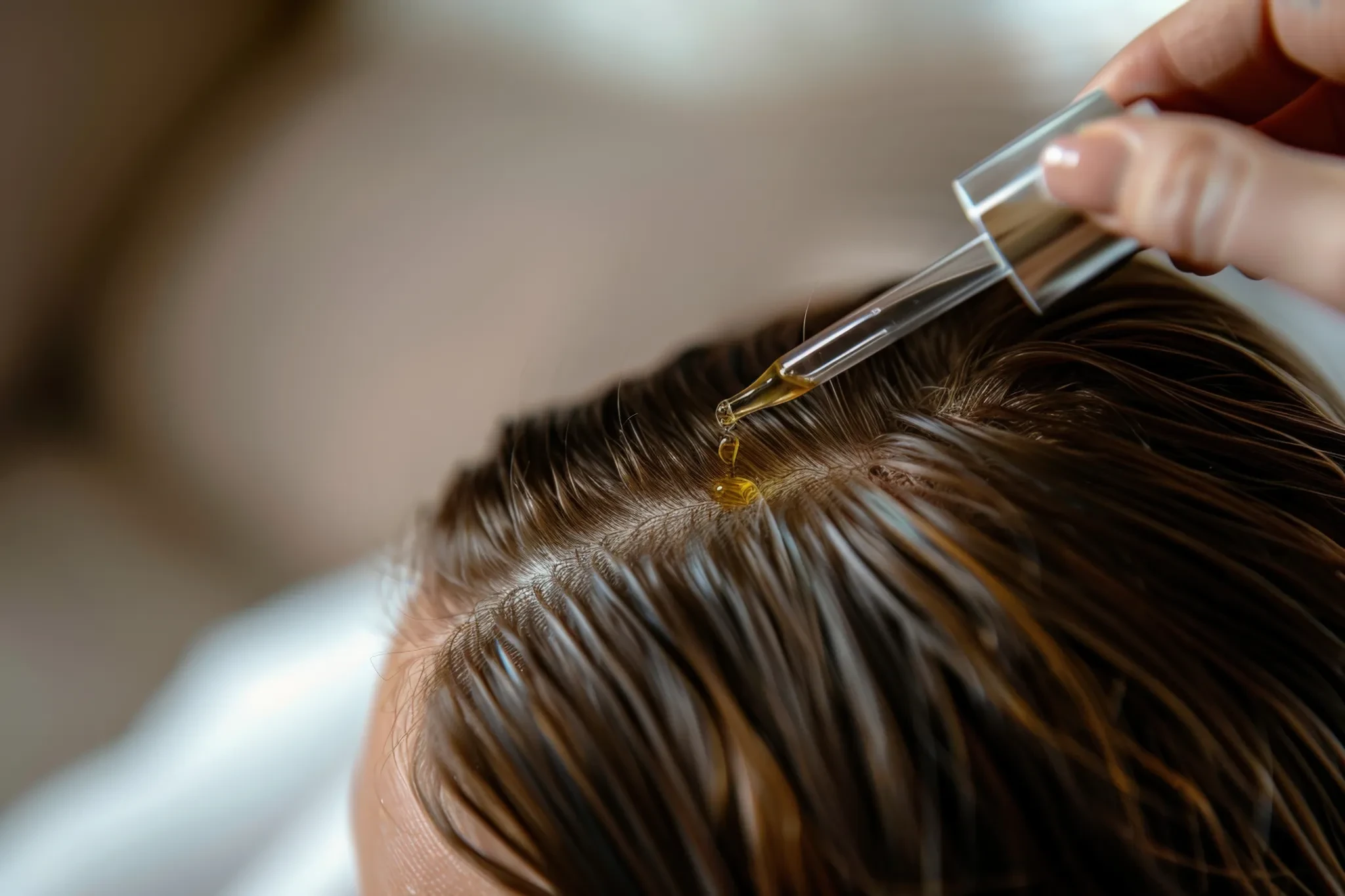
Minoxidil, supplements, derma-rolling, and beard oils all work (to varying and often modest degrees) by encouraging existing follicles to grow more actively. If your patchiness is mild and you have dormant-but-present follicles, these may help. But their effects depend on continued use, results vary a great deal between individuals, and they cannot fill an area that has no follicles at all. The moment you stop, any gains driven by stimulation tend to fade.
A transplant is a one-time procedure with a permanent, predictable result, whereas non-surgical methods are ongoing commitments with uncertain outcomes. Many men find the two approaches answer different problems: topicals for a slight density boost in an already-growing beard, a transplant for true gaps, bald patches, or building a beard from very little. The table below lays out the trade-offs.
| Aspect | Beard transplant | Minoxidil / topical methods |
|---|---|---|
| How it works | Adds new permanent follicles to the face | Stimulates follicles you already have |
| Fills true bald spots | Yes — creates hair where none grows | No — cannot create new follicles |
| Permanence | Permanent once healed | Depends on continued use |
| Effort over time | One procedure, then normal grooming | Ongoing daily application |
| Predictability | Planned, designed result | Highly variable between individuals |
| Best for | Patchy, bald, or absent beard areas | Mild thickening of existing growth |
This isn't medical advice about whether you personally should use any product — that's a conversation for a professional who knows your situation. It's simply an honest comparison of what each approach can and cannot do.
Can you use beard hair as a donor for a scalp transplant?
Yes — the relationship runs both ways. Just as scalp hair can be moved to the face, beard hair can be used as a donor source for scalp transplants, particularly to add density or supplement a limited scalp donor area. Beard grafts are most often used on the scalp as a complement to scalp donor hair rather than a complete replacement.
Beard hair tends to be coarse and grows reliably, which makes it a useful additional donor when the scalp's own supply is insufficient for the area that needs covering. Surgeons frequently combine scalp and beard (and sometimes other body) hair to maximise the total grafts available for an advanced scalp restoration, placing the coarser beard hair where its texture works well.
This reverse procedure is part of the broader field of body-hair transplantation. If you're curious about using beard or other body hair as a donor for the scalp — how it's selected, where it works best, and its limitations — our dedicated guide covers it in depth: body hair transplant and donor area.
Who is a good candidate for a beard transplant?
A good candidate for a beard transplant is a man with a sufficient, healthy scalp donor area, realistic expectations, and a stable facial-hair concern — such as a patchy beard, thin or absent growth in specific zones, or scarring — that he wants to correct permanently. General good health and a clear idea of the look you want also matter.
The single most important factor is donor supply. Because the new beard is built from scalp follicles, you need enough healthy donor hair at the back and sides of the head to source the grafts your plan requires. A surgeon assesses this carefully, balancing what your face needs against what your donor area can safely give without compromising the scalp.
Realistic expectations are the second pillar. A transplant can transform a patchy or sparse beard into a full, natural one, but it works within the limits of your donor supply and the patience the growth process demands. Candidates who understand the timeline, accept that the result matures over many months, and want a natural rather than impossibly dense beard tend to be the happiest. Ultimately, suitability is a medical judgement: only an in-person assessment can confirm you're a good candidate, which is what a free consultation is for.
5 factors that affect beard transplant success
The success of a beard transplant rests on five main factors: the surgeon's skill and artistry, the quality and quantity of donor hair, the accuracy of angle and direction during implantation, the quality of aftercare, and the patient's healing and realistic expectations. Each one meaningfully shapes the final result.
1. Surgeon skill and artistry. Facial hair work is unforgiving — angles, direction, density, and beard-line design all depend on the surgeon's experience and aesthetic eye. This is the single biggest determinant of whether a beard looks natural or "planted".
2. Donor hair quality and quantity. A healthy, ample scalp donor area provides the grafts needed and the right hair calibre. Limited or poor-quality donor supply constrains what's achievable, which is why donor assessment is so central.
3. Angle and direction of placement. Beard hair grows flat and downward in specific patterns. Implanting each graft at the correct acute angle and natural direction is what makes the result invisible. Even excellent grafts look wrong at the wrong angle.
4. Aftercare. Following instructions in the critical early days — protecting the grafts, not picking scabs, avoiding shaving too soon, keeping the area clean — directly protects graft survival and the final density.
5. Patient healing and expectations. Individual biology affects how grafts take and how fast they grow, and patience through the shedding-and-regrowth months is essential. Realistic expectations turn a good technical result into a satisfying one.
Beard transplant aftercare: do's and don'ts
Beard transplant aftercare centres on protecting the fragile new grafts during the first one to two weeks: keep the area clean and gentle, avoid touching, picking, scratching, or shaving the transplanted hairs, skip activities that cause heavy sweating or friction, and follow every instruction your clinic gives you. Good aftercare directly protects how well your beard grows in.
In the early phase, the grafts are anchoring into the skin and are easily dislodged, so the watchwords are gentleness and patience. Let scabs flake away on their own, wash only as and when your clinic advises and with the products they recommend, and resist the very natural urge to touch or inspect your new beard constantly. Protect the area from anything abrasive, from intense heat, and from pressure while you sleep.
Equally important is avoiding the things that set healing back: smoking, heavy drinking, vigorous exercise and sweating, sun exposure, swimming, and shaving before you're cleared can all interfere with graft survival in the early days. Your clinic will give you a tailored list, and following it precisely is one of the few parts of the outcome fully within your control. The table summarises the essentials.
| Do (early healing) | Avoid (early healing) |
|---|---|
| Keep the area clean and gentle as instructed | Touching, scratching, or picking at the grafts |
| Let scabs fall off on their own | Shaving or razoring before your clinic clears you |
| Wash only as your clinic advises | Heavy sweating, intense exercise, and saunas |
| Sleep so nothing presses on the treated area | Direct sun exposure and swimming |
| Follow your clinic's personalised instructions | Smoking and heavy alcohol during early healing |
| Stay in contact with the clinic if unsure | Rubbing the beard with towels or rough fabrics |
How much does a beard transplant cost?
The cost of a beard transplant depends on several factors rather than a single fixed price: how many grafts your plan needs, which and how many facial areas are treated, the technique used, and the clinic and country. Because each plan is individual, the most accurate way to learn your cost is a personalised consultation and quote.
The biggest cost driver is the scale of the work. A small moustache or single-patch procedure involves far fewer grafts than building a complete beard, and the graft count largely determines the price. The number of zones treated, the complexity of the design, and the specific method also play a part. This is why an honest article can't quote you a figure — it genuinely varies with your case.
Turkey, and Istanbul in particular, has become a leading destination for hair and beard transplantation, often combining high standards of care with strong overall value compared with many other countries. For how pricing works in this context and the factors that go into it, see our overview of hair transplant cost in Turkey. For a precise, tailored quote for your beard, the best step is simply to request a free consultation — you'll get a graft estimate and a clear price for your specific plan, with no obligation.
What results can you realistically expect?
Realistically, you can expect a natural, fuller, permanent beard that matches your facial hair and grows like the rest of it — provided you have adequate donor supply and allow the full growth period. The mature result typically develops over roughly six months to a year, and when well-planned it looks like a beard you simply grew yourself.
The key word is "natural". A skilled facial hair transplant doesn't aim for an artificially dense, uniform beard; it aims for one indistinguishable from native growth — correct angles, organic density, a flattering beard line, and seamless blending with any existing hair. Patchy beards become even, sparse cheeks fill in, weak jawlines gain definition, and gaps disappear, all while looking entirely yours.
Set your expectations around the timeline, too. The early shedding phase and the gradual fill-in mean the beard you see at one month is not the beard you'll have at twelve. Most men find the wait well worth it, ending with a beard they can grow, shave, and style freely. The realistic, lasting outcome — and the chance to ask a specialist exactly what's achievable for your face — is best explored in a consultation tailored to you.
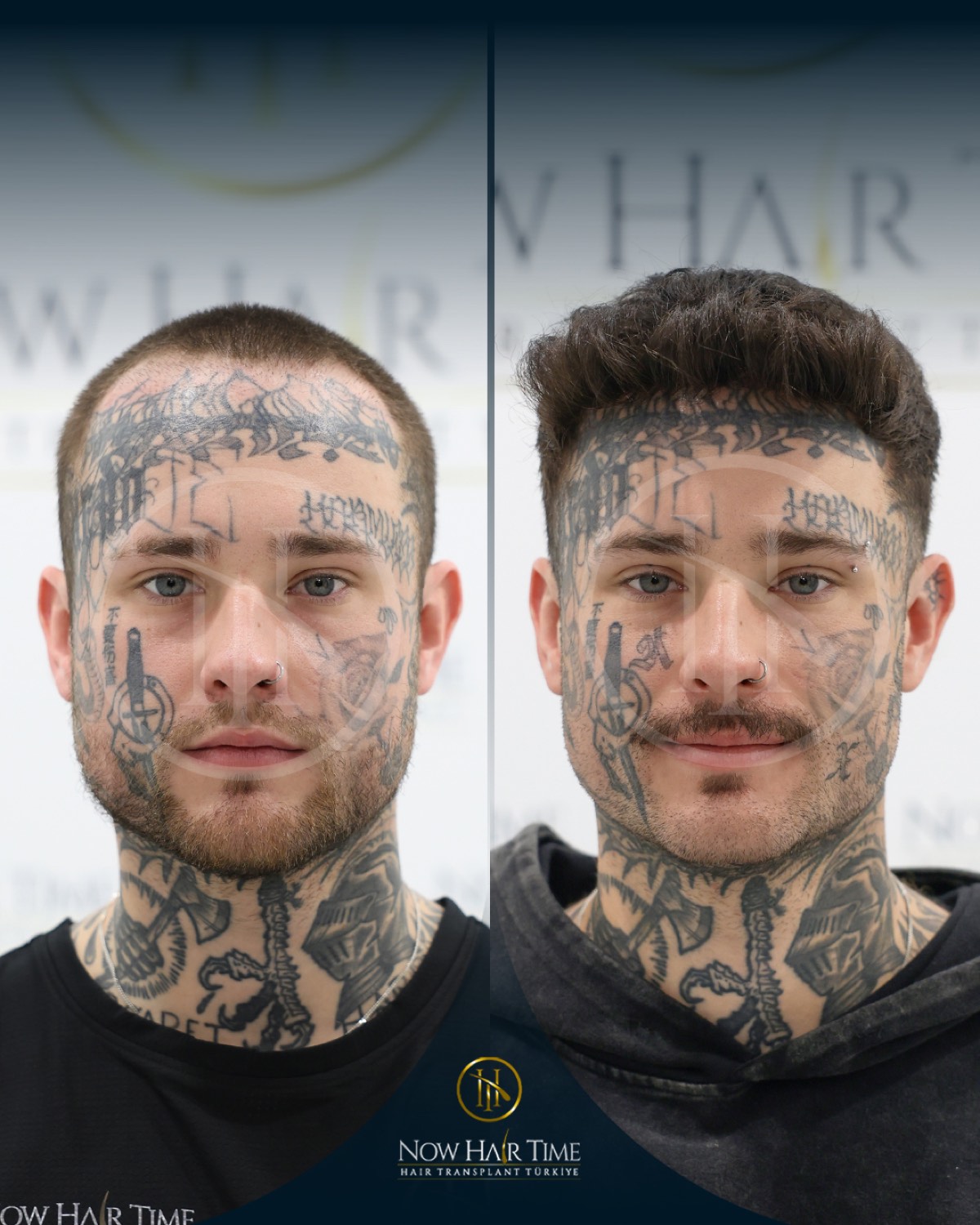
Real patient results
A selection of patients treated at Now Hair Time in Istanbul. Individual results vary from person to person.
Frequently Asked Questions
Is a beard transplant worth it?
For men with patchy, sparse, or absent beard growth that grooming and topicals can't fix, a beard transplant is often considered very worthwhile because it permanently adds real follicles and delivers a natural, lasting result. Whether it's right for you depends on your goals, donor supply, and expectations — a free consultation is the best way to decide.
Will a beard transplant look natural?
Yes, when performed by an experienced surgeon, a beard transplant looks completely natural. The naturalness comes from implanting each graft at the correct flat, downward angle and direction, using fine single-hair grafts at the borders, and designing a beard line that suits your face. Skilled angle and density work is what makes transplanted and native hair indistinguishable.
Can I get a full beard if I can't grow one at all?
In many cases yes — a transplant builds a beard by adding follicles, so it can create growth where you currently have little or none, as long as you have enough healthy scalp donor hair to supply the grafts. The achievable density depends on your donor supply, which a surgeon assesses in person. An inability to grow a beard naturally does not rule you out.
How long until my transplanted beard grows?
The transplanted hairs first shed within the first few weeks, then new growth begins from around the second or third month, with the beard filling in progressively. The fuller, final result generally matures over roughly six months to a year. Patience through the early shedding phase is normal and expected — the follicles stay in place and regrow.
Can I shave normally afterwards?
Yes, once you're fully healed you can shave, trim, and style your beard completely normally. In the early weeks, though, you must avoid shaving the transplanted area until your clinic confirms the grafts are secure — light scissor trimming usually becomes possible before razor shaving. Always follow your clinic's specific timing during healing.
Is a beard transplant permanent?
Yes. The follicles come from the scalp's permanent donor zone, which resists the hormone that causes hair loss, so once the transplanted hairs settle and regrow they last for life. After the initial shedding-and-regrowth cycle, the grafts establish themselves as durable, lifelong facial hair.
Does a beard transplant hurt?
No, the procedure itself isn't painful because the area is fully numbed with local anaesthesia. You may feel the small initial anaesthetic injections, but not the harvesting or implantation. Afterwards most men report only mild tenderness and tightness for a few days rather than significant pain.
Where does the donor hair for a beard transplant come from?
It comes from the scalp — specifically the back and sides of the head, the same permanent donor zone used for scalp transplants. This hair is genetically resistant to thinning, and thanks to donor dominance it keeps its permanent, continuously growing nature after being moved to the face.
Why does transplanted beard hair need trimming so often?
Because the donor follicles come from the scalp, they keep scalp growth behaviour — growing longer and faster than typical beard hair. As a result, a transplanted beard tends to need more regular trimming and shaping than a fully natural beard. This is normal and simply part of having scalp-sourced hair on the face.
Does a beard transplant leave scars?
There's no linear scar. FUE harvesting takes follicles one at a time and leaves only tiny dot-like marks in the scalp donor area that are usually invisible once hair grows over them, and the implantation sites on the face heal without visible scarring. This is a key advantage over older strip-based techniques.
Can a beard transplant fix a patchy beard?
Yes — fixing patchy beards is one of the most common reasons men have the procedure. The surgeon fills in bald spots, connects disconnected patches, and adds density, blending new grafts among your existing hairs at matching angles so the beard reads as full and even. Results in patchy cases often look seamless once matured.
Can beard hair be used for a scalp transplant?
Yes, the relationship works both ways. Beard hair can serve as a donor source to add density to the scalp, usually as a complement to scalp donor hair rather than a full replacement. It's part of body-hair transplantation; our body hair transplant guide explains how beard and other body hair are used as donor sources.
How much does a beard transplant cost?
There's no single fixed price — cost depends on the number of grafts, the areas treated, the technique, and the clinic and country. The most accurate way to learn your cost is a personalised quote. You can read about pricing factors in our hair transplant cost in Turkey guide, then request a free consultation for a tailored figure.
Who should I talk to about whether I'm a good candidate?
A qualified hair transplant surgeon is the right person to confirm your suitability, because it depends on your donor supply, the areas you want treated, and your expectations — all of which need an in-person assessment. At Now Hair Time in Istanbul you can book a free, no-obligation consultation to find out exactly what's achievable for your face.