Hair Loss After Ozempic, Wegovy or Mounjaro
Ozempic and Wegovy contain semaglutide, while Mounjaro contains tirzepatide, and all three medicines can produce substantial metabolic changes that may coincide with increased hair shedding in some people. Hair loss has now been reported with both semaglutide and tirzepatide, although rapid weight loss, reduced calorie intake and nutritional changes may explain much of the shedding rather than direct damage to the hair follicles. So, why can hair loss begin after Ozempic, Wegovy or Mounjaro, and will the hair eventually grow back? The relationship between these treatments and hair growth is explained below.
Can Ozempic, Wegovy or Mounjaro Cause Hair Loss?
Hair loss can occur during treatment with semaglutide or tirzepatide, although current evidence does not show that these medicines directly poison or permanently destroy healthy hair follicles. The connection has become clearer as use of these medications has expanded. Hair loss appears in current safety information for semaglutide and tirzepatide, and weight-management studies have reported more shedding among treated participants than among placebo groups. The mechanism remains important, however. Much of the observed hair loss appears compatible with telogen effluvium, a temporary shedding response that can follow rapid weight reduction, calorie restriction or another significant metabolic change.Why Can Hair Start Shedding During GLP-1 Treatment?
Hair can begin shedding during GLP-1 treatment because major changes in body weight, appetite and nutrient intake can push a larger number of follicles from the active growth phase into the resting phase. Hair follicles continually cycle through growth, transition and rest. When the body experiences substantial physiological stress, it can temporarily shift resources away from processes that are less essential for immediate survival, including continuous hair production. Semaglutide and tirzepatide can considerably reduce appetite in some people. If weight falls rapidly or food intake becomes markedly restricted, that change may provide the biological trigger for increased shedding several weeks later.
Is the Medication or the Weight Loss More Likely to Cause Shedding?
Rapid weight loss appears to be one of the strongest explanations for hair shedding during treatment, although researchers have not completely ruled out medication-specific effects on the hair cycle. Hair loss after major weight reduction is not unique to GLP-1 based treatment. Similar shedding has long been observed after restrictive dieting, severe calorie deficits and bariatric surgery. Current research also shows stronger hair-loss signals with semaglutide and tirzepatide, which leaves open the possibility that medication-related biological effects contribute in some people. At present, the most reasonable explanation is often multifactorial: weight loss, reduced nutritional intake, metabolic change and individual susceptibility may overlap rather than one single mechanism explaining every case.What Does Hair Loss After Ozempic, Wegovy or Mounjaro Look Like?
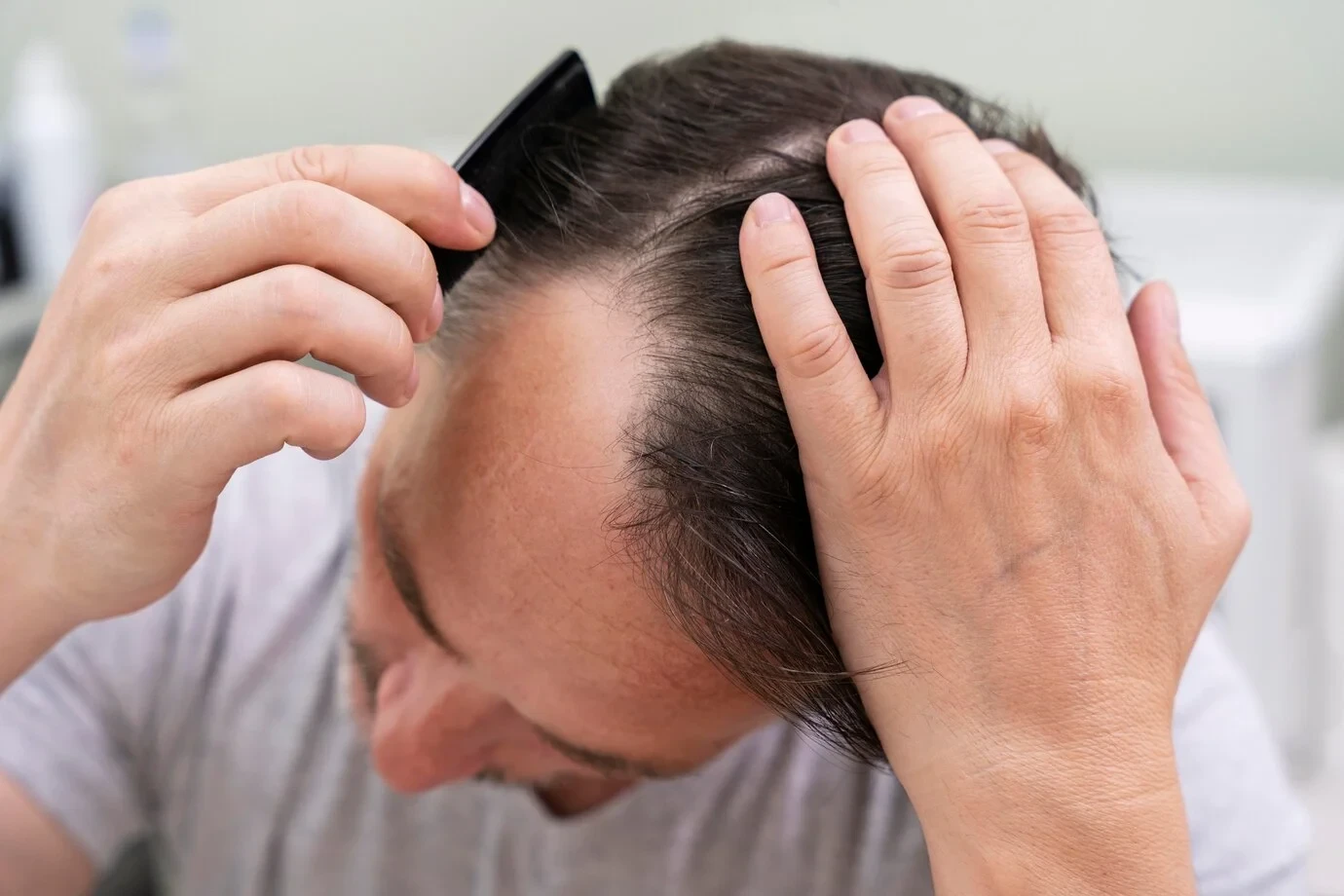
Hair loss associated with substantial weight reduction most often resembles diffuse telogen effluvium rather than a sharply defined bald patch. Typical features can include:- More full-length hairs coming out during washing
- Increased shedding on pillows or clothing
- A noticeably smaller ponytail
- Reduced volume throughout the scalp
- More scalp visibility under bright light
- Shedding that affects both sides relatively evenly
- A central part that appears temporarily wider
- Short regrowing hairs appearing later in recovery
How Long After Starting Treatment Can Hair Loss Begin?
Hair shedding often becomes noticeable two to four months after a significant trigger because telogen effluvium develops with a delay. This timing can make the relationship confusing. A person may increase a dose, lose a considerable amount of weight and feel well, only to notice heavy shedding several months later when the triggering period already feels distant. The same delay occurs after fever, surgery, childbirth and severe dietary restriction. For that reason, evaluating hair loss requires looking backwards rather than focusing only on what happened during the week shedding began. Changes in weight, appetite and nutrition several months earlier may provide more useful information than the most recent injection.Is Hair Loss More Common With Wegovy Than Ozempic?
Hair loss has been documented more clearly in weight-management trials using Wegovy than in the original diabetes trials of Ozempic, even though both medications contain semaglutide. This difference may partly reflect dose, treatment population and magnitude of weight loss rather than a completely different effect of the active ingredient. Current Wegovy data report hair loss in a minority of patients, with higher rates observed at higher weight-management doses and particularly among women. Ozempic also includes alopecia among reported postmarketing adverse reactions. The practical point is that the brand name alone does not determine risk. Dose, weight-loss speed, nutritional intake and individual susceptibility may all influence whether shedding develops.Can Mounjaro Cause Hair Loss?
Hair loss has been reported with Mounjaro, which contains tirzepatide, and alopecia is included among its reported postmarketing adverse reactions. Tirzepatide can produce substantial weight reduction in addition to its effects on blood glucose, making telogen effluvium biologically plausible when weight loss happens quickly. Weight-management studies using tirzepatide have also recorded hair loss, with women reporting the event more frequently than men in clinical trial data. That does not prove that tirzepatide directly damages hair follicles. The strongest emerging explanation still involves the physiological consequences of weight reduction, although current research suggests that a direct or additional medication-related influence cannot yet be excluded.Does Faster Weight Loss Increase the Risk of Hair Shedding?
Faster weight loss can increase the likelihood of temporary shedding because abrupt changes in energy availability create a stronger physiological stress than gradual, well-supported weight reduction. The number on the scale does not tell the whole story. Losing weight while maintaining adequate protein, micronutrients and overall calorie intake creates a different nutritional environment from losing the same amount while barely eating because appetite has disappeared. Hair responds slowly, so the consequences of an aggressive deficit may become visible months later. This also explains why two people taking the same medication and dose can have very different experiences with their hair despite achieving similar metabolic benefits.Which Factors Can Increase Hair Loss During Treatment?
Several factors can overlap during semaglutide or tirzepatide treatment and make shedding more likely or more noticeable. Relevant contributors include:- Rapid weight loss
- Very low calorie intake
- Inadequate protein intake
- Low iron stores
- Restricted or repetitive diets
- Recent illness or surgery
- Major psychological stress
- Thyroid problems
- Hormonal changes
- Existing female pattern hair loss
- Existing male pattern baldness
- Heavy menstrual blood loss
- Previous bariatric surgery
- Persistent vomiting or poor food tolerance
- Severe scalp inflammation
Can Eating Too Little Protein Affect Hair Growth?
Inadequate protein intake can contribute to hair shedding because hair follicles require a continuous supply of amino acids to produce keratin and sustain active growth. GLP-1 based treatments can reduce appetite so effectively that some people unintentionally eat very small meals and stop prioritising protein-rich foods.This becomes particularly relevant during rapid weight loss, when nutritional quality matters even though total food intake has decreased. Adding excessive protein does not automatically stop telogen effluvium once the hair cycle has shifted, but correcting an inadequate diet helps create a better environment for recovery. Protein needs should also take kidney health, overall nutrition and individual medical circumstances into account.
Can Iron Deficiency Make Hair Loss Worse?
Iron deficiency can coexist with medication-associated shedding and may make diffuse hair loss more difficult to interpret, particularly in people who already had low iron stores before starting treatment. Reduced food intake can decrease dietary iron, while heavy menstrual bleeding or gastrointestinal conditions may create additional losses.Simply taking an iron supplement without testing is not the best solution because excessive iron can also cause harm. Ferritin, blood count and other relevant tests may be considered when the history suggests deficiency. The important distinction is that low ferritin does not prove every lost hair comes from iron deficiency, just as taking Ozempic or Mounjaro does not prove the medication explains every episode of shedding.
Can These Medications Reveal Existing Pattern Hair Loss?
Temporary shedding can reveal previously subtle male or female pattern hair loss by reducing overall density around follicles that were already becoming smaller. Someone with early androgenetic alopecia may still appear to have full hair before a telogen effluvium episode. Once a larger number of normal hairs shed, the underlying miniaturised population becomes easier to see.The result may look like a suddenly wider central part, more obvious crown thinning or clearer temple recession. In this situation, the temporary shedding can recover while the underlying pattern hair loss continues independently. That distinction matters because waiting for telogen effluvium to settle will not necessarily address progressive follicular miniaturisation.
Will Hair Grow Back After Ozempic, Wegovy or Mounjaro?
Hair usually has a good chance of growing back when the shedding represents uncomplicated telogen effluvium and the follicles remain structurally healthy. Telogen effluvium changes the timing of the growth cycle rather than destroying the follicle. Once weight, nutritional intake and the underlying metabolic stress become more stable, affected follicles can gradually return to active growth. Regrowth does not become visible immediately because new hairs need time to emerge through the scalp and gain length.Recovery may be less complete when another condition is also present, such as androgenetic alopecia, thyroid disease, iron deficiency or inflammatory scalp disease. These problems require their own management.
How Long Does Hair Recovery Usually Take?
Hair recovery commonly takes several months because the shedding phase must first slow before newly growing strands become long enough to restore visible density. In temporary telogen effluvium, heavy shedding often settles within roughly three to six months once the trigger has stabilised. Cosmetic recovery can take considerably longer because hair grows only gradually.Short regrowing hairs may appear before overall fullness returns, particularly along the frontal hairline or part. A person can therefore be improving biologically while still feeling that the hair looks thin. If shedding remains intense for many months or density continues declining after weight and nutrition have stabilised, another or additional diagnosis becomes more likely.
Should You Stop Ozempic, Wegovy or Mounjaro Because of Hair Loss?
Hair shedding alone does not automatically mean Ozempic, Wegovy or Mounjaro should be stopped, especially when the medication is providing important metabolic or diabetes-related benefits. Stopping treatment without discussing the decision with the prescribing clinician can affect glucose control, appetite, weight management and the condition for which the medication was prescribed. The first step is usually to determine whether the shedding fits telogen effluvium and whether weight loss has been unusually rapid or nutritional intake has become inadequate. Dose, treatment goals and tolerability can then be reviewed in context. Hair concerns matter, but they should be considered alongside the broader medical benefits and risks of treatment.Does Minoxidil Help With This Type of Hair Loss?
Minoxidil is not automatically necessary for temporary telogen effluvium because the follicles can restart growth once the underlying trigger has resolved. It may become more relevant when medication-associated shedding reveals underlying male or female pattern hair loss, where progressive follicular miniaturisation is also present. Starting minoxidil can itself temporarily increase shedding during the early treatment period, which can make an already stressful situation harder to interpret. The decision should therefore match the diagnosis rather than simply reacting to the amount of hair seen in the shower. For straightforward temporary shedding, correcting nutritional problems and allowing the hair cycle to recover may be more important than immediately adding multiple hair-growth products.What Should You Do if Hair Starts Shedding During Treatment?
The best response is to assess the pattern and the previous several months rather than stopping medication or buying supplements immediately. Practical steps include:- Record when the shedding started
- Review how quickly weight has changed
- Check whether food intake has become unusually low
- Prioritise adequate protein and balanced nutrition
- Avoid severe calorie restriction
- Review recent illness, surgery or major stress
- Consider iron or thyroid testing when clinically appropriate
- Take monthly scalp photographs under consistent lighting
- Avoid tight hairstyles and unnecessary chemical damage
- Discuss persistent shedding with the prescribing clinician
- Seek a hair-loss assessment if the pattern becomes progressive
- Avoid taking high-dose supplements without a documented need
When Is Hair Loss Probably Caused by Something Else?
Hair loss is less likely to be explained entirely by rapid weight loss when it creates sharply defined patches, progressive recession, scarring or significant scalp inflammation. Alopecia areata, androgenetic alopecia, traction alopecia and inflammatory scalp disorders can all begin while someone happens to be using semaglutide or tirzepatide.Timing alone does not prove causation. The same applies when shedding starts before medication treatment or continues progressively long after weight and nutritional intake have stabilised. Hair loss can also reflect thyroid dysfunction, iron deficiency, hormonal changes, recent illness or another medication. A broader assessment becomes increasingly important when the appearance does not resemble diffuse, temporary telogen shedding.
When Should Hair Loss Be Medically Evaluated?
Hair loss should be medically evaluated when shedding remains heavy, visible density keeps declining or additional symptoms suggest something more than temporary telogen effluvium. A widening part that continues progressing, clear temple recession, smooth bald patches, scalp pain, heavy scaling, pustules or loss of eyebrow hair deserve closer examination. Evaluation is also useful when shedding accompanies fatigue, menstrual changes, unexplained weakness or symptoms suggesting nutritional or endocrine problems.Severe vomiting or an inability to maintain adequate nutrition during GLP-1 treatment should be discussed promptly regardless of hair loss, because the nutritional consequences extend beyond the follicles. Early assessment helps separate temporary shedding from conditions that need targeted treatment.