How to Verify Turkish Hair Transplant Clinics

Verifying a Turkish hair transplant clinic involves checking its official authorization, medical team, treatment facility and patient care procedures before making a booking. Understanding which documents matter, how to confirm their validity and what questions to ask can help patients make informed decisions about hair transplant in Turkey.
Why Verifying a Hair Transplant Clinic in Turkey Matters
Turkey has become a major destination for international hair transplantation, attracting patients who want access to established surgical techniques and treatment packages that combine medical services with travel arrangements. However, an attractive website, convincing photographs and competitive pricing do not provide enough information to assess whether a facility operates appropriately. Hair transplantation is a surgical procedure that involves anesthesia, follicular extraction and the creation of recipient sites. It requires suitable medical facilities, qualified personnel, infection-control measures and postoperative support.Patients should therefore evaluate the medical operation behind the advertised service rather than focus exclusively on the appearance of the finished hairline. The most useful verification process begins with documents and details that can be checked independently. It then examines how the procedure is organized, who assumes medical responsibility and what happens if complications develop.
Check the Clinic's Legal Identity and Physical Address
The first step is establishing which organization will actually provide the medical treatment. Some hair restoration businesses operate under a commercial name while procedures take place inside a separately registered healthcare facility. This distinction matters because the name appearing on a website may not match the organization holding the medical authorization. Request the registered healthcare facility name, complete treatment address and relevant licensing information.These details should correspond with official records and the documents provided before surgery. If accommodation, transfers and treatment are arranged through different companies, their responsibilities should also be clear. A consultation office, hotel meeting room or administrative headquarters should not be confused with the location where surgery takes place. Patients should know the precise facility in which follicular extraction and implantation will occur before paying a deposit.
Verify the International Health Tourism Authorization Certificate
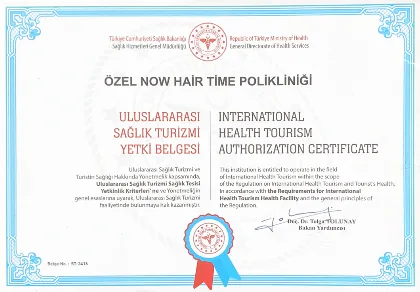
Healthcare facilities providing international health tourism services in Turkey are subject to authorization requirements established by the Turkish Ministry of Health. One important document is the International Health Tourism Authorization Certificate, which identifies facilities permitted to undertake activities within that regulatory framework. Patients can check the Ministry's published lists of authorized healthcare providers. These records are organized by facility categories, making it important to search using the registered medical establishment name rather than relying only on a familiar brand.A certificate displayed on a website should be compared with the official listing and the address where treatment will take place. The certificate number, registered holder and current authorization status deserve attention, particularly when the facility operates under a different public-facing name. International health tourism authorization is an important regulatory check, but it does not independently establish a surgeon's qualifications or guarantee a particular hair transplant result. Those require separate assessment.
Confirm the Hair Transplant Unit's Operating Permission
International health tourism authorization and permission to operate a hair transplant unit are not interchangeable. Turkish regulations governing hair transplantation require the procedure to take place in an appropriately authorized healthcare facility with a permitted hair transplant unit. These rules address the physical treatment environment, necessary equipment, infection prevention and the responsibilities of personnel involved in transplantation. A business that arranges medical travel should not be assumed to hold permission to perform surgery simply because it can organize appointments or accommodation.Patients should ask whether the location has the required hair transplant unit operating permission, known in Turkish as a saç ekimi birimi faaliyet izin belgesi. The document should correspond to the facility where the procedure will be performed. This additional check helps distinguish a properly identified surgical setting from an organization that primarily manages advertising, bookings or transportation.
Identify the Physician and Understand the Medical Team's Roles
A responsible treatment provider should clearly identify the physician overseeing the procedure and explain how medical responsibilities are divided among the team. Patients should be able to review the physician's full name, medical specialty, professional credentials and relevant experience before arriving for surgery. Under Turkish hair transplant regulations, the creation of recipient channels is reserved for appropriately authorized physicians.Qualified healthcare personnel may perform specified extraction and implantation tasks within the applicable rules and medical supervision arrangements. This makes it important to ask who will examine the scalp, assess donor hair, design the hairline, create recipient sites and supervise graft handling. General statements about an experienced team provide less useful information than clearly defined responsibilities.
What Do Now Hair Time's Certificates Actually Demonstrate?
Reviewing a real example can help clarify the difference between authorization, quality management and professional qualifications. The Now Hair Time certificates and accreditations page lists several documents, each relating to a different aspect of its operations. The facility presents an International Health Tourism Authorization Certificate issued by the Turkish Ministry of Health, with certificate number ST-3416. This concerns its authorization to provide international health tourism services and should be assessed against the current official records. The page also lists ISO 9001:2015, a quality management system standard, and ISO 10002:2018, which concerns customer satisfaction and complaint handling. These certifications relate to organizational processes rather than directly measuring graft survival rates or guaranteeing medical outcomes. Two additional credentials concern the named physician rather than the facility itself.Dr. Deniz Dağdelen is listed as holding Turkish Board of Dermatology and Venereology certification from 2019 and European Board of Dermatology and Venereology certification from 2023. These qualifications provide information about specialist training and professional assessment. They should not be confused with the medical establishment's operating permits, and their existence alone does not predict an individual's surgical result. When evaluating any certificate, patients should consider the issuing organization, certificate holder, scope, validity and whether independent confirmation is available. A collection of logos has limited value unless the documents can be connected to the actual healthcare services being offered.
Examine the Treatment Facility and Safety Procedures
A legitimate medical setting should be able to explain how its surgical rooms are prepared, how instruments are sterilized and how staff respond to unexpected medical problems. Hair transplantation is commonly performed under local anesthesia, but reactions to medication, bleeding and other complications remain possible. Patients can request information about preoperative health assessment, infection-control procedures and emergency equipment.A clear explanation of how medical concerns are handled during a lengthy procedure is more informative than photographs of comfortable waiting areas. The operating environment should also support appropriate separation of patients, clean handling of grafts and organized postoperative observation. These practical details affect the quality of the treatment experience even though they may receive little attention in promotional materials. A facility's medical readiness should be assessed independently of hotel standards, transportation arrangements or other travel conveniences.
Evaluate Hair Transplant Before and After Photographs Carefully
Before and after images can help assess hairline design, visible density and the appearance of the donor area. However, they become substantially more useful when photographs show the same patient under similar lighting, camera angles and styling conditions. Look for multiple views, including frontal, overhead and donor-area photographs. A result photographed only from the front may conceal uneven crown coverage or excessive extraction at the back of the scalp.The timing of the photographs also matters. Transplanted hair typically develops over several months, so an image taken shortly after surgery should not be compared with a mature twelve-month result without explaining the difference. Patients with similar hair loss patterns, hair thickness and donor characteristics provide more useful examples than exceptionally dramatic transformations. An impressive photograph should support the assessment, not replace verification of the medical provider.
Read Patient Reviews Without Relying on Star Ratings Alone
Patient feedback can reveal useful information about communication, postoperative support, unexpected charges and how problems were addressed. However, a high average rating cannot establish whether a medical facility holds the required authorization or employs appropriately qualified personnel. Look beyond short comments praising airport transfers or hotel accommodation. Reviews that describe the consultation, treatment day, early healing and several months of follow-up provide more insight into the complete experience.Critical feedback deserves particular attention when it identifies recurring concerns, such as unclear responsibilities, poor communication after surgery or unexpected changes to the agreed price. A single negative experience does not prove that an entire operation is unsafe, but repeated, specific complaints warrant further investigation. It is also worth checking whether the provider responds constructively to patient concerns rather than simply dismissing unfavorable reviews. The way an organization handles complaints may reveal more about its processes than promotional claims about satisfaction.
Review the Consultation and Informed Consent Process
A meaningful hair transplant consultation should examine the cause and distribution of hair loss, the available donor supply and the patient's longer-term restoration goals. It should also address whether transplantation is an appropriate option at the current stage of thinning. Patients should receive a reasonable explanation of the proposed hairline, estimated graft requirements and limitations of the procedure.A large graft count is not automatically advantageous, particularly when removing too many follicles could leave visible donor-area depletion. Informed consent should cover relevant risks, including infection, scarring, temporary shedding, poor graft growth and the possibility of further hair loss in untreated areas. Patients should have an opportunity to ask questions before agreeing to treatment. Pressure to book immediately, refusal to identify the responsible medical personnel or promises of guaranteed density are reasons to reconsider. A responsible consultation makes space for realistic expectations rather than relying on urgency or exaggerated claims.
Check Package Prices, Payment Terms and Medical Records
The total price of a hair transplant should be explained before any significant payment is made. Patients need to know whether the quotation includes the planned graft allocation, medical tests, medication, accommodation, transportation and postoperative appointments. Additional charges can arise from treatment upgrades, extended hotel stays or services that were not included in the original package. A written quotation reduces uncertainty and makes comparisons more meaningful.Cancellation and refund conditions deserve equal attention. Patients should understand what happens if medical findings prevent surgery, travel plans change or additional treatment becomes necessary after the initial procedure. Medical documentation is another important part of transparency. Patients should expect records identifying the procedure performed, relevant treatment details and postoperative instructions. These documents may become essential if they need medical attention after returning home.
Verify Follow-Up Care Before Traveling to Turkey
Hair transplant recovery continues long after the patient leaves Turkey. The scalp usually undergoes an initial healing period of approximately two weeks, while transplanted hair can shed temporarily before new growth becomes visible several months later. A reliable follow-up arrangement should explain when photographs are reviewed, how patients contact the medical team and what happens when symptoms require an in-person examination. Remote communication may help monitor ordinary recovery, but it cannot replace medical assessment for significant pain, spreading redness, fever or unusual discharge.International patients should also understand whether follow-up services are included in the original price and how long communication remains available. If a corrective procedure becomes necessary, the relevant policy should explain the medical assessment process and any additional expenses. Follow-up care is not merely an optional convenience. It provides continuity between the surgical procedure and the extended period during which the scalp heals and the transplanted follicles mature.
Warning Signs That Deserve Further Investigation
Certain practices should prompt patients to gather more information before committing to treatment. Unclear facility ownership, missing authorization details and inconsistent addresses make it difficult to establish who is legally responsible for the medical procedure. Another concern is the absence of a clearly identified physician.A consultation conducted entirely through sales representatives should not replace medical assessment, particularly when significant graft numbers or aggressive hairline changes are being proposed. Claims of guaranteed results, unlimited grafts without donor assessment or completely risk-free surgery also deserve skepticism. Hair transplantation involves biological limitations, and even technically appropriate procedures cannot promise identical outcomes for every patient. Finally, reluctance to provide written prices, medical consent documents or postoperative contact information can indicate inadequate transparency. Patients should resolve these questions before travel rather than assume the necessary details will become available on the day of surgery.