Hair Transplant for Latino Hair Types
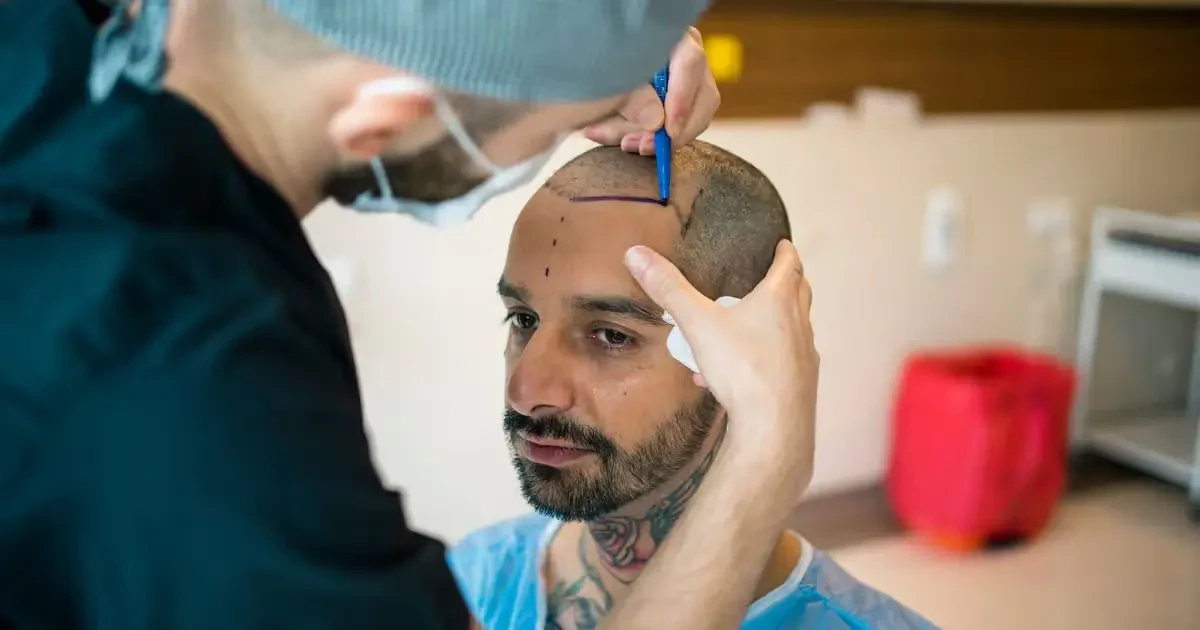
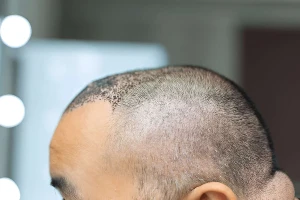
Latino hair cannot be reduced to a single texture or follicle pattern because people from Latin America and Latino communities can have straight, wavy, curly, or tightly coiled hair influenced by highly diverse ancestry. These differences can change how a surgeon evaluates donor density, extracts grafts, designs the hairline, and distributes follicles across thinning areas. So, how does a hair transplant for Latino hair types differ from standard planning, and which characteristics matter most for natural coverage? The key considerations are explained below.
Is Latino Hair a Single Hair Type?
Latino hair is not one biological hair type, because Latino populations include people with widely different genetic backgrounds, follicle shapes, hair diameters, curl patterns, and scalp characteristics.A patient from Mexico may have fine, straight hair, while another patient from Colombia, Brazil, the Caribbean, or Central America may have dense curls or tightly coiled Afro-textured hair. Even members of the same family can have noticeably different textures. For hair transplant planning, individual anatomy matters far more than an ethnic label. The surgeon should therefore evaluate the donor area, hair caliber, curl pattern, follicle direction, density, scalp contrast, and future hair-loss pattern rather than making assumptions based on Latino identity alone.
Which Hair Textures Are Common Among Latino Patients?
Latino patients can present with almost every major hair texture, from fine straight strands to tightly coiled Afro-textured hair. Common patterns include:- Fine or medium straight hair
- Thick straight hair
- Loose waves
- Strong S-shaped waves
- Loose curls
- Tight curls
- Coiled or Afro-textured hair
- Mixed textures across different scalp areas
- Different strand diameters within the same donor zone
- Variable curl patterns between scalp and beard hair
How Does Hair Texture Affect Hair Transplant Planning?
Hair texture affects how much scalp each transplanted hair visually covers, how grafts should be angled, and how easily individual follicular units can be extracted. Straight hair tends to lie closer to the scalp, so visual coverage may depend more strongly on density and shaft diameter. Wavy or curly hair can create greater apparent volume because each strand occupies more three-dimensional space.That does not mean curly-haired patients automatically need fewer grafts. The size of the balding area, existing hair, donor supply, hair caliber, contrast between hair and skin, and future progression still determine the treatment plan. Texture is one part of the coverage equation, not a shortcut for calculating graft numbers.
Does Follicle Shape Matter During FUE?
Follicle shape matters during FUE because the visible direction of the hair above the scalp does not always reveal the exact path of the follicle underneath the skin. Straight hair often has a relatively straight follicular path, although individual variation still occurs. Curly and tightly coiled hair can curve beneath the skin, making extraction technically more demanding. If the punch follows the wrong trajectory, the follicle can be transected before removal. For this reason, surgeons working with strongly curved follicles often adjust punch angle, depth, diameter, and extraction technique throughout the procedure. Experience with the patient's actual follicle anatomy matters more than simply choosing a technique called FUE.Is FUE Suitable for Latino Hair?
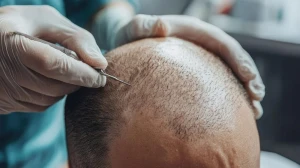
FUE can work very well for Latino patients when the extraction technique matches the patient's donor anatomy and curl pattern. In FUE, individual follicular units are removed from the donor area using small punches. The approach avoids the long linear donor scar associated with traditional strip harvesting, although it still produces many tiny extraction sites.Straight and mildly wavy Latino hair may present relatively routine FUE anatomy. Tighter curls can make extraction more technically complex because the follicle may curve below the skin. The question is therefore not whether Latino hair is suitable for FUE, but whether the surgical team can extract that specific patient's follicles consistently while keeping transection and donor damage under control.
What Makes Curly and Afro-Latino Hair More Challenging to Extract?
Curly and Afro-Latino hair can be more challenging during FUE because the follicle may follow a curved or C-shaped path underneath the skin. Several characteristics can influence extraction:- Curved follicles beneath the scalp
- Greater mismatch between visible shaft direction and root direction
- Increased transection risk
- Tighter follicular spacing in some donor areas
- Curling that begins below the skin surface
- Variable curvature between neighbouring grafts
- Difficulty predicting exact punch trajectory
- Need for frequent adjustments during extraction
- Greater importance of donor-area test extraction
- Potential for visible donor changes if overharvesting occurs
Can DHI Be Used for Latino Hair Types?
DHI-style implantation can be used for many Latino hair types, but it does not remove the extraction challenges associated with curved follicles. The term DHI usually describes implantation with an implanter pen after follicles have already been extracted. In many procedures, those follicles are still harvested using FUE.Therefore, a patient with tightly curled hair does not avoid difficult extraction simply by selecting DHI. Implanter devices can help control graft placement, angle, and direction in suitable cases, but natural results depend on much more than the instrument. Hairline design, graft handling, donor preservation, follicle selection, recipient-site planning, and the surgeon's understanding of curl direction remain central to the final appearance.
How Does Hair Caliber Affect Coverage?
Hair caliber can strongly influence visual density because thicker strands generally cover more visible scalp than very fine strands. Two patients can receive the same number of grafts and still achieve different cosmetic coverage if one has thick, dark, curly hair while the other has fine, straight hair with strong scalp contrast. This is particularly important when planning frontal density. A patient with coarse, wavy hair may achieve substantial visual fullness without extremely dense implantation, while fine hair may require more strategic distribution to create a similar impression. The surgeon should therefore consider shaft diameter alongside density. Counting follicles alone does not accurately predict how dense the finished transplant will appear.Does Curly Hair Need Fewer Grafts?
Curly hair can create greater visual coverage per strand, but it does not automatically mean every curly-haired patient needs fewer grafts. Curl increases volume and can reduce scalp visibility because the hair bends away from the scalp rather than lying completely flat. This effect can make a moderate number of grafts look surprisingly full in some patients. However, graft requirements still depend on the size of the recipient area and the amount of existing hair. A patient with advanced hair loss may still require a large session even with strong curls. Surgeons should estimate graft numbers according to coverage goals, donor capacity, hair caliber, curl pattern, and future progression rather than relying on texture alone.How Is Donor Density Evaluated?
Donor density is evaluated by examining the number, quality, and distribution of permanent-zone follicles rather than simply judging how thick the back of the head appears. The donor assessment should consider follicular unit density, hairs per graft, shaft diameter, miniaturisation, scalp visibility, curl pattern, and the size of the safe donor zone.A visually thick donor can still become depleted if too many grafts are removed from a limited area. This is especially important in FUE, where overharvesting can create a moth-eaten or patchy appearance. A conservative plan preserves enough donor hair for future treatment if pattern hair loss progresses later in life.
How Should a Latino Hairline Be Designed?
A Latino hairline should be designed around individual facial proportions, age, existing hair direction, family pattern, and long-term donor supply rather than using a standard ethnic template. Some patients naturally have flatter frontal contours, while others have more pronounced temporal recessions or rounded hairlines. These variations exist within every population.Trying to create an extremely low or perfectly straight hairline can look unnatural and consume unnecessary grafts. The front should also contain irregularity and gradual changes in density, because natural hairlines are not drawn like geometric borders. The strongest design usually complements the patient's own facial structure while leaving enough donor hair for possible future thinning behind the transplanted zone.
Are Hair Transplants Different for Latino Men and Women?
The surgical principles remain similar, but Latino men and women can present with different patterns of hair loss and therefore require different distribution strategies. Men commonly seek treatment for receding temples, frontal thinning, or crown loss associated with androgenetic alopecia. Women more often present with diffuse central thinning while retaining much of the frontal hairline.Female transplantation can become more complex when the donor area itself shows miniaturisation. Hair length also changes how extraction sites can be concealed. Rather than choosing a plan based mainly on sex or ethnicity, the surgeon needs to determine whether the hair loss pattern is stable, whether donor follicles are healthy, and which areas will benefit most from transplantation.
Can Latino Patients With Pattern Hair Loss Have a Hair Transplant?
Latino patients with male or female pattern hair loss can be good transplant candidates when they have adequate donor hair and a realistic long-term treatment plan. Transplantation moves follicles from a more resistant donor zone into areas affected by thinning. It does not stop untreated native hair from continuing to miniaturise around the transplanted follicles.This distinction becomes especially important for younger patients. A dense low hairline created at age 24 can become difficult to support if extensive hair loss develops behind it over the following decade. The best plan considers both the hair that is missing today and the likely pattern that could emerge in the future.
How Many Grafts May Be Needed?
The number of grafts needed for Latino hair depends on the area of hair loss, donor density, texture, shaft thickness, curl pattern, existing hair, and desired cosmetic coverage. A limited frontal recession may require a relatively modest session, while reconstruction of the frontal zone and mid-scalp can require several thousand grafts. Crown restoration can increase the total further because the whorl pattern covers a large circular surface.A graft count should never be calculated from ethnicity alone. Hair caliber and curl can improve visual efficiency, but donor limitations still matter. The safest graft target is the number that creates useful coverage without exhausting the donor area or compromising future surgical options.
What Can Affect the Final Result?
A natural result depends on the interaction between surgical technique, donor characteristics, hair-loss pattern, healing, and long-term planning. Important factors include:- Donor density and stability
- Hair shaft thickness
- Straight, wavy, curly, or coiled texture
- Hair-to-scalp colour contrast
- Quality of graft extraction
- Follicle transection rate
- Graft storage and handling
- Hairline design
- Implantation angle and direction
- Existing native hair
- Future progression of hair loss
- Recipient-area blood supply
- Postoperative care
- Smoking and general health
- Realistic density expectations
What Should Latino Patients Ask Before Surgery?
Latino patients should ask questions that reveal whether the treatment plan has been built around their actual follicle anatomy rather than a generic package. Useful questions include whether the surgical team has experience with similar curl patterns, how donor density will be measured, who performs extraction and implantation, and how the hairline will be planned around future hair loss. Patients with strongly curly or Afro-textured hair can also ask whether test extractions are used when follicle curvature is uncertain.Before-and-after photographs are most useful when they show patients with comparable texture and hair-loss patterns. A technically realistic consultation should also explain donor limitations instead of promising unlimited graft numbers or guaranteed density.