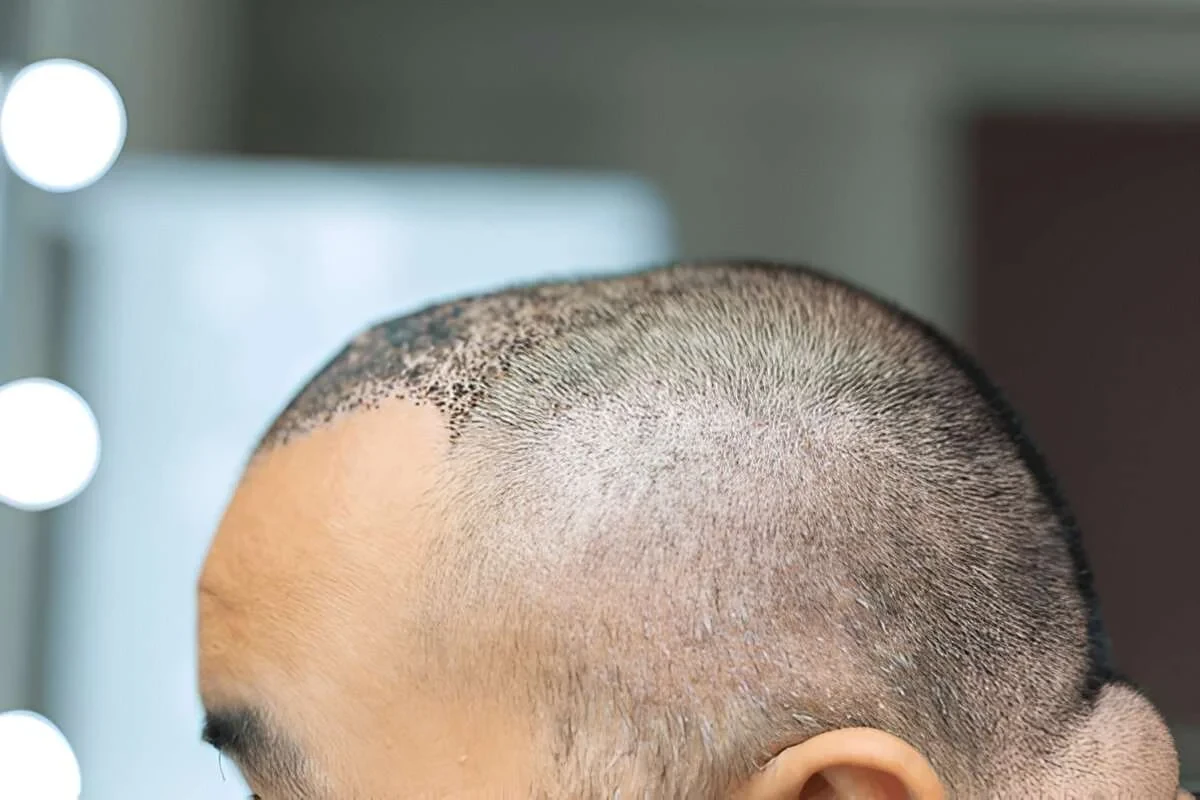
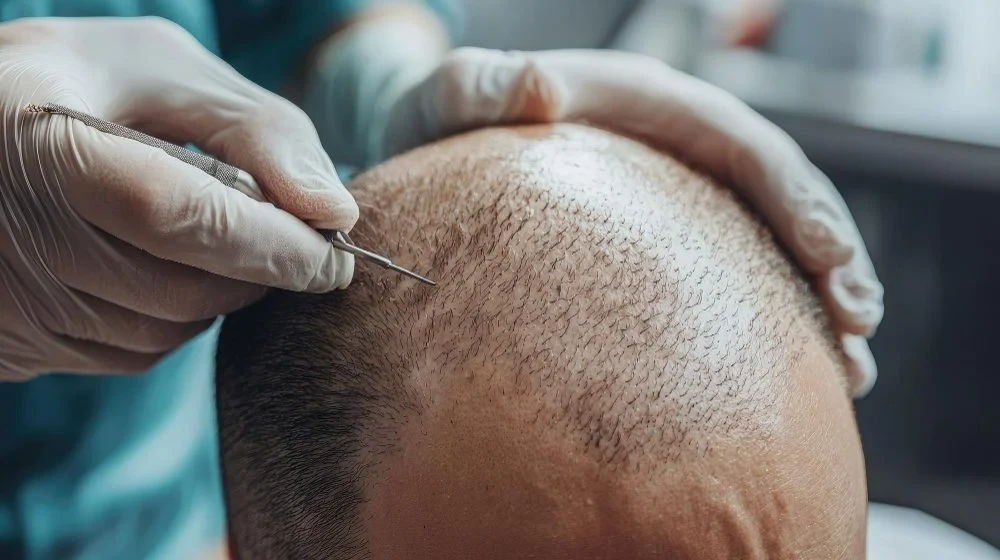
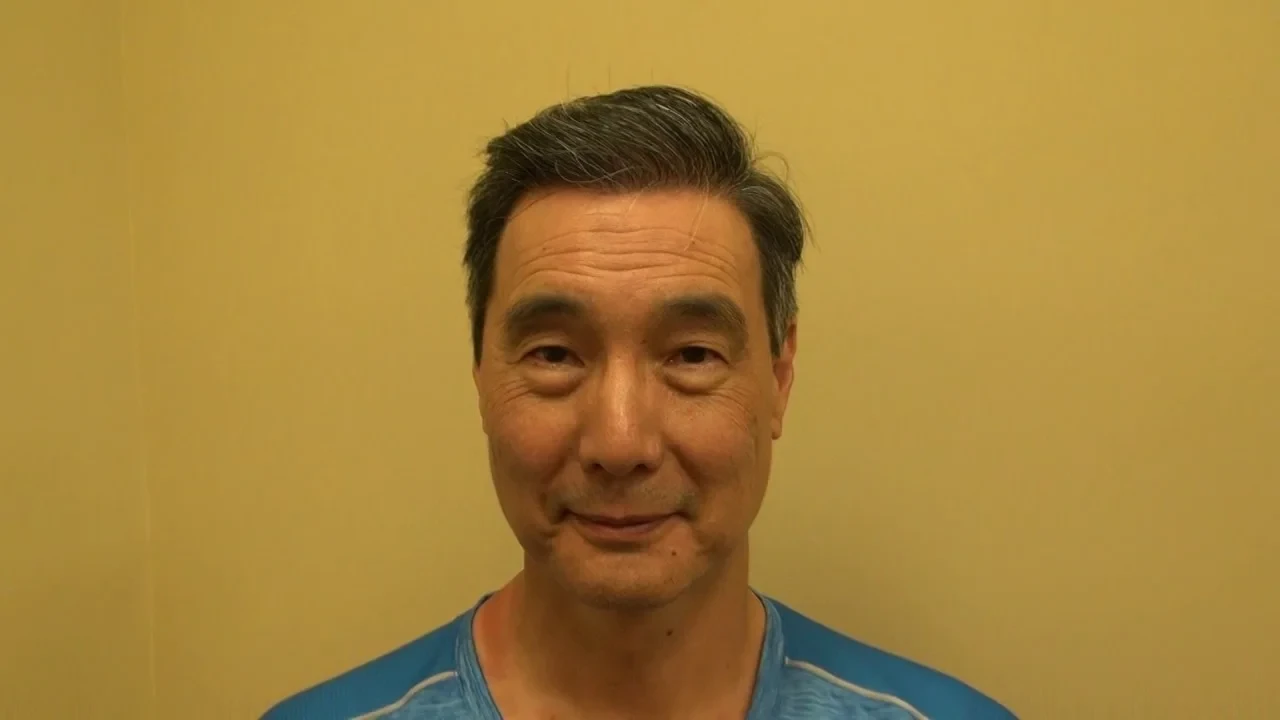
Hairline Design & Forehead Reduction: How a Natural Hairline Is Created
Your hairline is the single most visible feature of any hair transplant. It frames your face, anchors your expression, and is the first thing people notice when they look at you. For this reason, hairline design is widely considered the most important and most artistic part of the entire procedure. Move the line a few millimetres, change the angle of a few hundred hairs, or ignore how a face is naturally proportioned, and a technically flawless transplant can still look obviously "done."
This guide explains, in plain language, how a natural hairline is created: what actually makes a hairline look real, how an experienced surgeon designs one by hand, why "as low as possible" is the wrong instinct, and how a high or large forehead can be reframed either with a transplant or with hairline-lowering surgery. At Now Hair Time in Istanbul, design always comes before a single graft is placed.
What makes a hairline look natural?
A natural hairline is soft, slightly irregular, and never a straight or sharply defined line. The very front is built from single-hair grafts that form a fine, semi-transparent "transition zone," with density increasing gradually behind it. The height suits the person's face and age, and the hairs emerge at a low, forward-pointing angle rather than standing upright.
The biggest giveaway of an unnatural result is regularity. Nature does not draw straight lines. A real hairline has tiny ups and downs along its edge, small clusters and gaps, and a feathered border that fades into bare skin instead of stopping abruptly. When a surgeon recreates these "imperfections" on purpose, the eye reads the result as genuine.
Density is the second factor. In a natural scalp, the frontmost hairs are sparse and fine; behind them, follicular units carrying two, three, or four hairs build fullness. Placing thick multi-hair grafts right at the leading edge produces a "doll's hair" or "plug" look that is very difficult to correct later. Getting the gradient right is what separates an artistic hairline from a merely transplanted one.
Finally, a natural hairline respects time. A hairline that looks perfectly appropriate at 25 can look strange at 50 if it was placed too low, because the rest of the hair naturally recedes and thins around it. Designing for the long term is part of making it look natural for life, not just for the year after surgery.
How does a surgeon actually design the hairline?
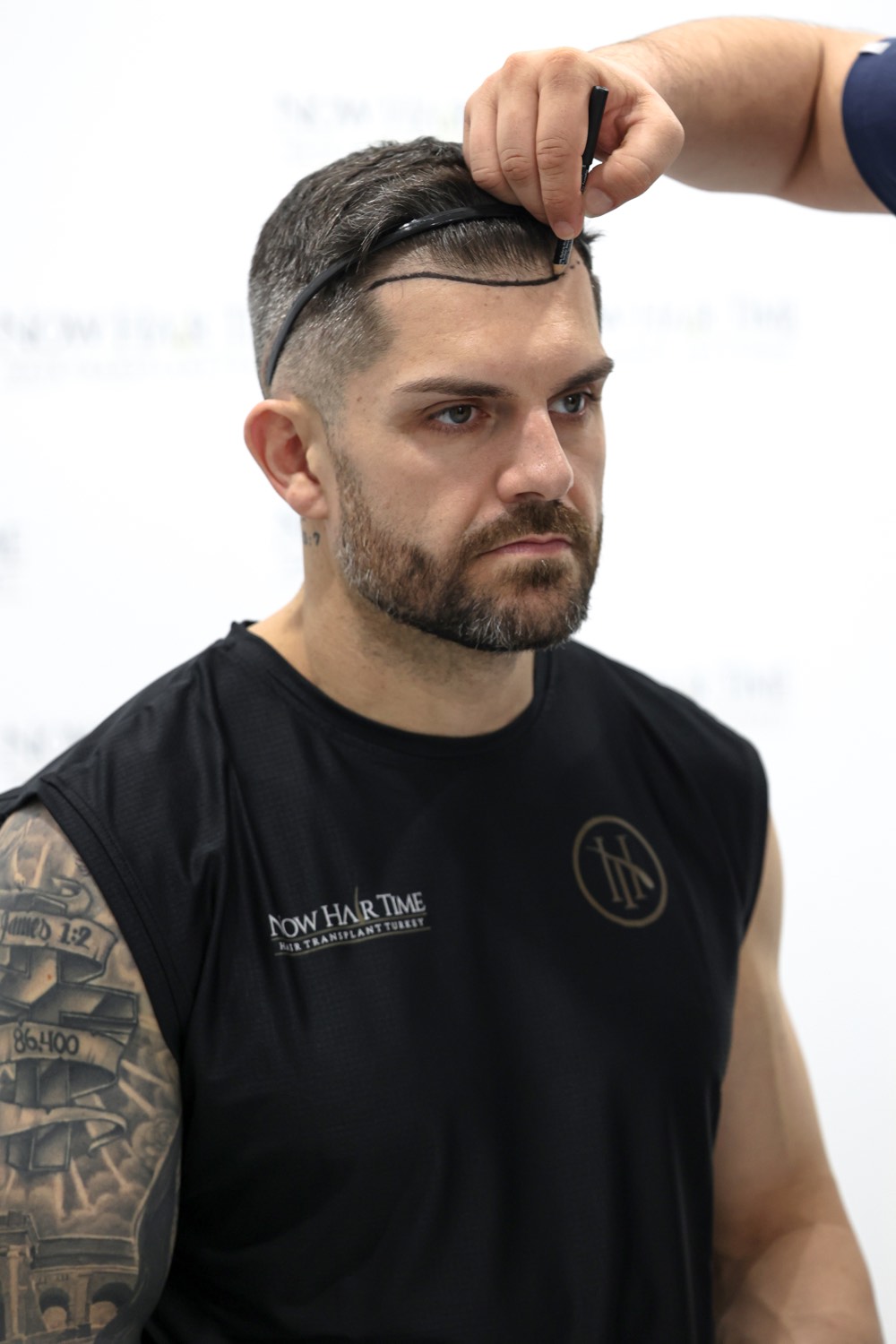
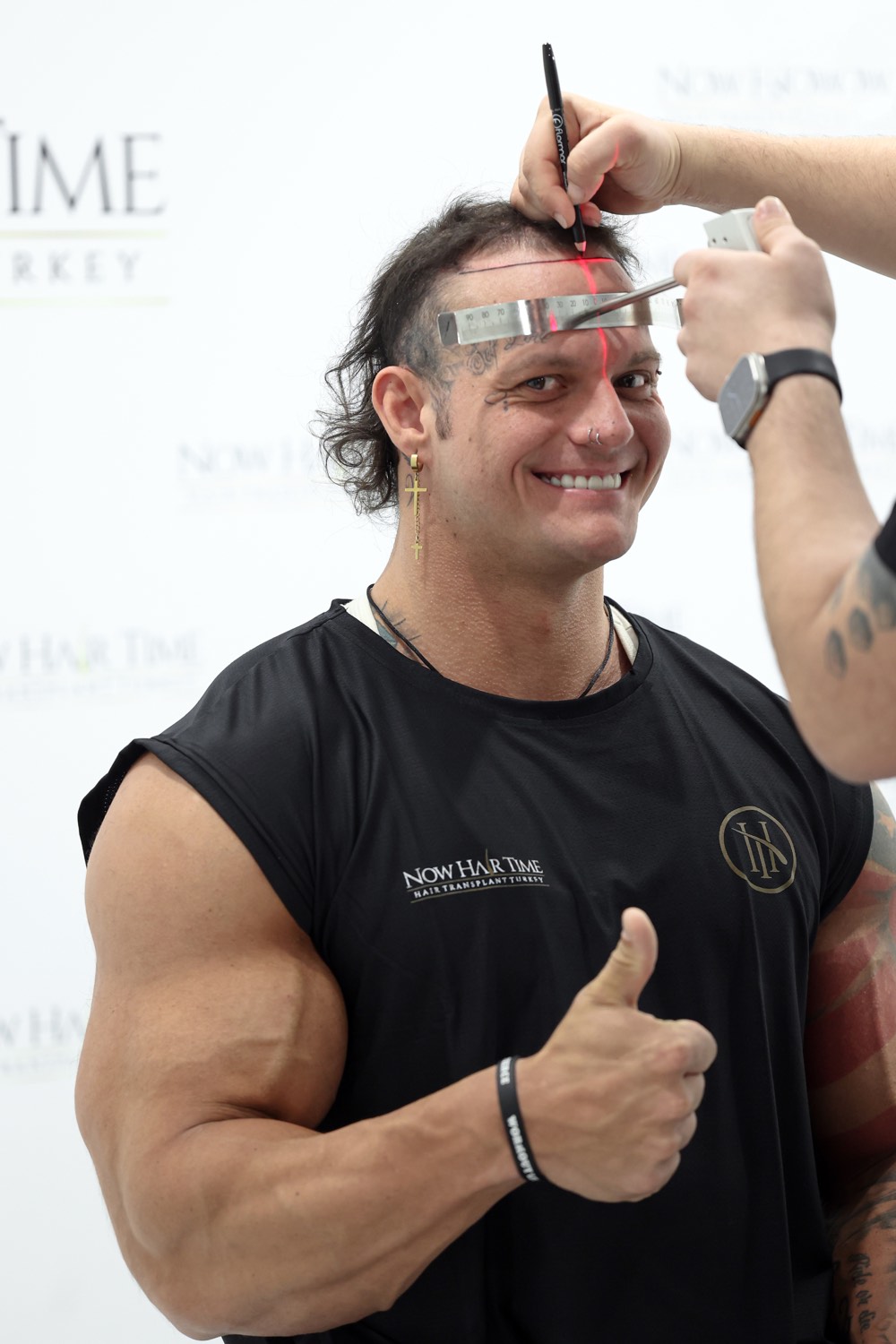
The hairline is designed by hand, with the patient sitting upright, before any anaesthetic is given. The surgeon marks the proposed line with a pen, studies it from the front and side, and adjusts it according to the patient's facial proportions, forehead size, the position of the frontal (forehead) muscle, age, hair characteristics, and goals. Nothing is placed until both surgeon and patient agree on the drawing.
Another point the surgeon checks is the position of the upper edge of the frontal (forehead) muscle. The patient is asked to raise their eyebrows, which contracts the frontal muscle and reveals where its upper border sits; the hairline is then planned so that it is not drawn below this point, because dropping the line lower than the muscle's natural limit tends to look unnatural.
A widely used starting reference is the classic "rule of thirds," the idea that a balanced face divides roughly into three equal vertical sections: from the hairline to the brow, the brow to the base of the nose, and the nose to the chin. The new hairline is positioned so the upper third looks proportionate to the other two rather than dominating or shrinking the face. This is a guideline, not a rigid formula, and every face is treated individually.
The surgeon also defines the frontal-temporal angles and the temple points, the corners where the hairline meets the sides above the temples. These angles are what give a hairline its masculine or softer character, and small changes here dramatically affect how the whole face reads. Getting the corners and temple connection right is often harder than drawing the central line itself.
Crucially, design also accounts for the future. A good surgeon assesses your pattern of loss and plans a hairline that will still look natural if you continue to lose hair behind it, conserving donor reserves for the years ahead. This is why an honest consultation may recommend a more conservative line than a patient initially wants. You can discuss your own proportions and expectations directly in a free consultation in Istanbul.
Single-hair vs multi-hair grafts: where does each go?
Natural-looking hairlines are built front-to-back with a deliberate gradient of graft types. Single-hair grafts create the soft, irregular leading edge; two-hair grafts add early density just behind it; and three- to four-hair grafts build the bulk of fullness in the mid-scalp and crown. Matching the graft to the zone is the core technical principle of hairline work.
The table below shows how follicular units are typically distributed across the zones of the front. Exact counts vary with each person's donor supply, hair calibre, and goals, but the principle of "fine in front, fuller behind" is universal.
| Zone | Typical graft type | Purpose |
|---|---|---|
| Transition zone (very front edge) | Single-hair grafts | Soft, irregular, semi-transparent border that mimics nature |
| Defining zone (just behind the edge) | Single- and two-hair grafts | Establishes the visible shape and early density |
| Mid-scalp | Two- and three-hair grafts | Builds core fullness and coverage |
| Crown / behind the hairline | Three- and four-hair grafts | Maximum density where it is not directly at the edge |
The "transition zone" deserves special attention. Here the surgeon places single hairs in a scattered, micro-irregular pattern, sometimes with deliberate small sentinel hairs slightly ahead of the main line, exactly as a natural hairline behaves. This is painstaking work and is one of the clearest places where surgical experience shows in the final result.
Why do angle and direction matter so much?
Hair at the hairline does not grow straight up; it grows forward and lies almost flat against the skin at an acute angle. Recreating this natural angle and direction for every graft is essential. If hairs are implanted too upright or pointing the wrong way, the hairline looks bristly and artificial no matter how good the design on paper.
Along the frontal hairline, hairs generally point forward and slightly downward; at the temples they sweep back and down; and in the crown they spiral in a whorl. A skilled surgeon controls the angle, direction, and depth of every single implanted follicle so that, once grown, the hair falls and styles the way nature intended. This control is also what lets the result blend seamlessly with any existing native hair.
The implantation technique influences how precisely this can be done. With the DHI hair transplant method, grafts are placed directly using an implanter pen, giving fine control over the angle, direction, and density of each follicle, which is particularly valuable along the delicate front edge. The FUE technique also achieves natural hairlines in experienced hands; the right choice depends on your hair type, the area to be covered, and the surgeon's assessment. In both methods, the artistry of the operator matters more than the label of the technique.

How low should a hairline be? Why "as low as possible" is wrong
A hairline should be placed at a height that suits your face and respects natural ageing, not as low as it can physically go. A very low, flat hairline may look impressive in the short term but tends to appear unnatural over time and wastes precious donor hair that may be needed elsewhere as loss continues. Age-appropriate height is a hallmark of expert design.
Real hairlines naturally sit higher and mature with age. Almost everyone's hairline recedes slightly from the very low position of childhood into a more mature shape in adulthood, including some recession at the temples. A surgeon who recreates a teenage hairline on an adult, especially a young adult who may lose more hair, risks an island of dense hair stranded on a higher forehead a decade later.
There is also a hard arithmetic to consider. Donor hair is finite. Every graft used to push a hairline 1 cm lower is a graft unavailable for the mid-scalp or crown in the future. A conservative, well-placed hairline protects your long-term appearance and your donor reserve at the same time. This is one of the most common areas where an experienced surgeon will gently steer a patient away from a request that would not age well.
How is a receding hairline (the M-shape) restored?
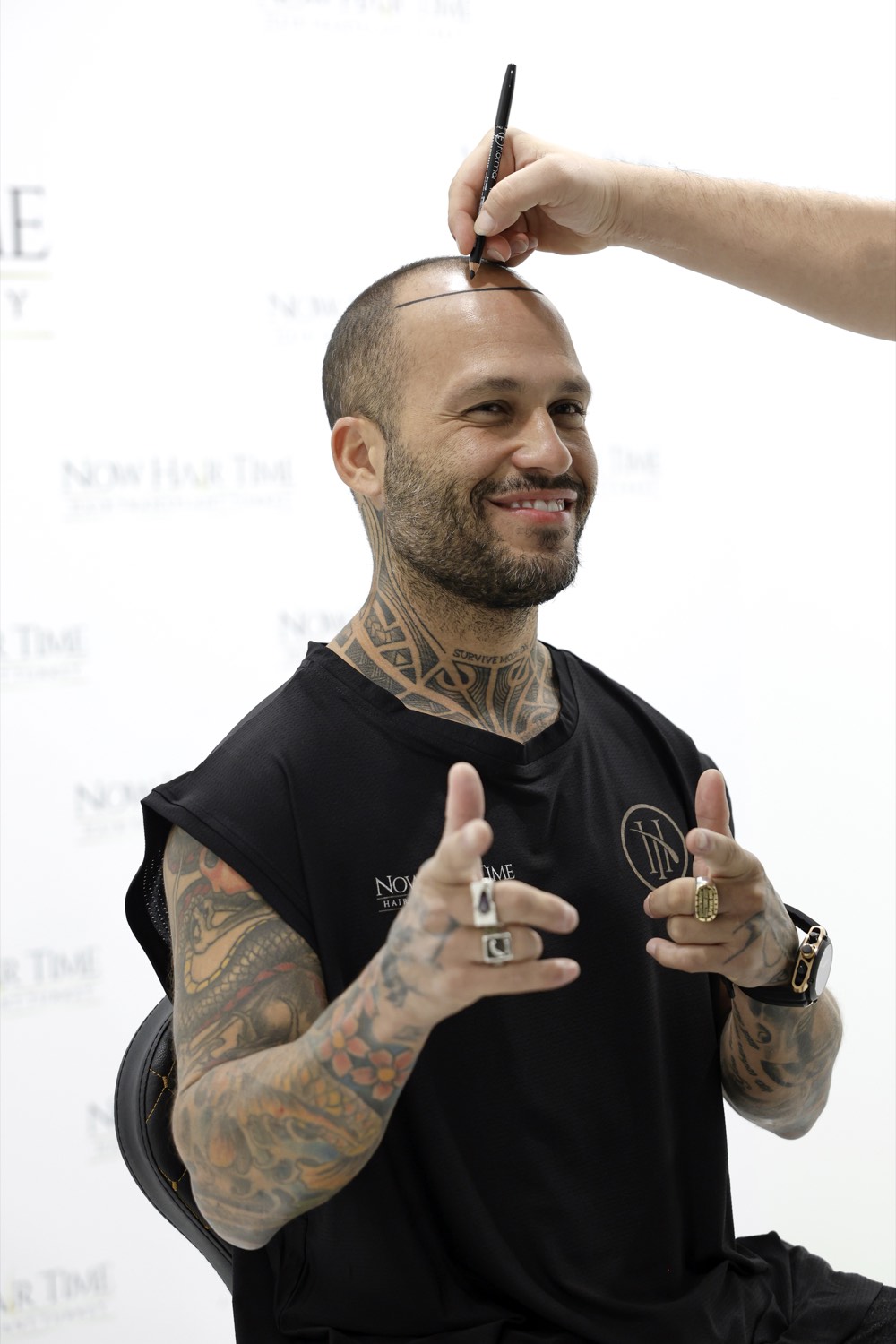
A receding hairline is restored by rebuilding the temple corners and softening the M-shape, bringing the frontal-temporal angles forward to a natural, age-appropriate position. The aim is to restore a balanced frame for the face rather than to erase every sign of maturity, which would look artificial on most adults.
Receding typically begins at the temples, deepening the two corners and creating the characteristic "M" or widow's-peak-like silhouette. Restoring this well is subtle work: the corners must be filled with the correct angle and a soft edge, and the depth of the temple recession must match the patient's age and face. Over-filling the corners to make them perfectly square is a classic sign of an unnatural result.
How much can be achieved depends on the available donor supply and the degree of loss. For some patients, a complete, dense rebuild is realistic; for others, a softer reinforcement that frames the face while conserving grafts is the wiser plan. Seeing real examples helps set expectations, and you can browse genuine before-and-after results to understand what natural restoration looks like.
What about the widow's peak?
A widow's peak, the small V-shaped point of hair at the centre of the forehead, can be preserved, softened, or recreated depending on what looks natural for the individual. It is a normal anatomical feature for many people, so design decisions about it are made case by case rather than by a fixed rule.
If a patient has a natural widow's peak they like, the surgeon can design the new hairline to keep it, maintaining its central point and shape. If it is very pronounced or no longer suits the face, it can be softened into a gentler curve. In some cases a subtle widow's peak is deliberately recreated to avoid an overly straight, artificial-looking line, since a small central variation reads as natural.
The key is restraint. A widow's peak should look like a feature, not a focal point. As with the rest of the hairline, single-hair grafts and careful angling keep it soft and believable rather than sharp and obvious.

High or big forehead: transplant vs surgical forehead reduction?
A high or large forehead can be reduced in two main ways: a hair transplant that lowers the hairline by adding grafts, or hairline-lowering surgery (surgical forehead reduction) that physically advances the existing hairline by removing a strip of forehead skin. They suit different people, and the right choice depends on scalp laxity, hair density, the amount of lowering desired, and individual anatomy.
A transplant lowers the hairline gradually by placing follicles in front of the current line. It builds a soft, natural edge, works even when the hairline is thinning, and carries no scalp incision across the forehead, but the new hair grows in over months and density is limited by donor supply. Surgical forehead reduction can lower a hairline more dramatically in a single operation and immediately, but it requires a sufficiently mobile (lax) scalp, leaves a fine scar at the new hairline that usually settles well, and is generally better suited to people who are not actively losing hair.
| Factor | Hair transplant (hairline lowering with grafts) | Surgical forehead reduction (hairline-lowering surgery) |
|---|---|---|
| How it works | Adds follicles in front of the current hairline | Removes a strip of forehead skin and advances the hairline |
| Result timing | Gradual; grows in over several months | Immediate lowering in one procedure |
| Best for | Thinning or receding hairlines; future loss expected | Stable, dense hairline with a mobile (lax) scalp |
| Scar | No forehead incision | Fine scar along the new hairline, usually well concealed |
| Density at the edge | Soft, feathered, builds over time | Brings existing full-density hair forward at once |
| Limiting factor | Available donor grafts | Scalp laxity and stability of the hairline |
The two approaches are not mutually exclusive; in some cases they are combined, for example advancing the hairline surgically and then using grafts to refine and soften the new edge or rebuild the temples. Which path is appropriate for you is a clinical decision best made after an in-person assessment of your scalp and hair.

How is a female hairline designed differently?
A female hairline is generally designed as a rounded, fuller arch without the temple recession or angular corners common in men. Women typically retain hair at the temples, so the frontal-temporal angles are kept closed and soft, and the overall shape follows a gentle, continuous curve that frames the face in a characteristically feminine way.
Many women seek hairline work to lower or reshape a naturally high forehead, to refine the temples, or to soften an uneven hairline, rather than to treat male-pattern recession. Because the goals and anatomy differ, design priorities differ too: preserving and respecting the rounded shape is essential, and even a small amount of inappropriate temple recession can make a female result look masculine. You can read more about how these procedures are tailored on our female hair transplant page.
When does the designed hairline look final?
The final, designed hairline is usually visible around 12 months after surgery, once the transplanted hairs have completed their growth cycle. The transplanted hairs shed in the first weeks, regrow over the following months, and gradually thicken, so patience through the early stages is essential before judging the result.
In the first days the area is healing and the tiny implant sites are visible; within roughly two weeks the surface settles. The transplanted hairs then typically shed, which is a normal and expected part of the process, before new growth begins at around three to four months. From there, hair steadily lengthens and gains density, with most people seeing the great majority of the result by around a year and final maturity a little after.
Because the outcome unfolds over months, the quality of the original design is locked in on the day of surgery, long before you can see it grow. That is precisely why getting the design right at the outset matters so much: you cannot easily redraw a hairline once the follicles have taken.
Why does choosing an experienced surgeon matter most?
Of every factor in a hair transplant, the surgeon's experience and artistic judgement matter most for a natural hairline. Design is not something a machine or a checklist can produce; it depends on a trained eye reading each individual face and translating it into the angle, direction, density, and shape of thousands of grafts. The technique is only as good as the hands and judgement behind it.
An experienced surgeon balances what a patient wants against what will look natural now and in twenty years, conserves donor hair wisely, and builds the irregularity and soft transition that make a hairline believable. The same number of grafts can produce a beautiful, undetectable result or an obvious one, depending entirely on how they are designed and placed.
At Now Hair Time in Istanbul, hairline design is treated as the artistic heart of the procedure, planned with you before anything is placed. If you are considering a transplant or forehead reduction, the best next step is a personalised assessment of your face, hair, and goals. You can arrange a free consultation to discuss a hairline designed specifically for you.
Real patient results
A selection of patients treated at Now Hair Time in Istanbul. Individual results vary from person to person.
Frequently asked questions
Is hairline design really the most important part of a hair transplant?
Yes. The hairline frames your face and is the most visible result of the procedure, so its design largely determines whether the transplant looks natural or obvious. Even a technically perfect graft placement can look artificial if the line, angles, and density are poorly designed.
Why shouldn't I get my hairline as low as possible?
A very low hairline often looks unnatural as you age and uses up donor hair that may be needed for future loss. Natural hairlines sit higher and mature over time, so an age-appropriate height usually looks more natural for life and protects your donor reserve.
What makes a transplanted hairline look fake?
The most common causes are a straight, regular edge with no natural irregularity, thick multi-hair grafts placed right at the front instead of single hairs, hairs implanted at the wrong angle or too upright, and a hairline placed too low for the person's age and face.
How does a surgeon decide where my hairline should go?
The surgeon marks it by hand with you sitting upright, using facial proportions such as the rule of thirds, your forehead size, age, and hair characteristics, and the frontal-temporal angles and temple points. The design also accounts for possible future hair loss and is agreed with you before any grafts are placed.
Can a hair transplant lower a high forehead?
Yes. A transplant can lower a high forehead by placing grafts in front of the existing hairline to build a new, lower line. The lowering happens gradually as the hair grows, and how much is possible depends on your donor supply and the degree of lowering you want.
What is the difference between a hairline transplant and forehead reduction surgery?
A transplant adds follicles in front of the current hairline and builds in over months, with no forehead incision. Surgical forehead reduction physically advances the existing hairline in one operation by removing a strip of forehead skin; it needs a mobile scalp and leaves a fine, usually well-concealed scar at the new hairline.
Is a woman's hairline designed differently from a man's?
Yes. A female hairline is usually a rounded, fuller arch with closed temple angles and no temple recession, whereas many male hairlines include some temple recession and more angular corners. Preserving the soft, rounded shape is essential to keep a female result looking natural.
Can a widow's peak be kept or removed during a transplant?
It can be preserved, softened, or recreated depending on what suits your face. If you have a natural widow's peak you like, the hairline can be designed to keep it; if it is too pronounced, it can be softened, and a subtle one is sometimes recreated to avoid an overly straight line.
Does DHI create a more natural hairline than FUE?
Both can create natural hairlines. DHI uses an implanter pen that gives fine control over the angle, direction, and density of each graft, which is helpful at the delicate front edge, while FUE also produces excellent results in experienced hands. The surgeon's skill matters more than the technique label, and the best method depends on your individual case.
When will I see my final hairline?
Most people see their final, designed hairline at around 12 months. The transplanted hairs shed in the first few weeks, regrowth begins at roughly three to four months, and density builds steadily over the rest of the year before reaching full maturity.