Afro Hair Types: 4A, 4B and 4C Hair Explained
What Are Afro Hair Types?
Afro hair types generally describe tightly curled and coiled textures, with 4A, 4B and 4C being the most commonly used Type 4 categories. Afro-textured hair covers a broad spectrum rather than one uniform curl pattern. A single head can contain loose coils, tight coils and areas with less clearly defined patterns. The term describes hair characteristics rather than a medical diagnosis or a strict racial category.Modern research increasingly recommends describing curl characteristics directly instead of assuming texture from ethnicity. Type 4 terminology remains useful for everyday communication, but porosity, density and strand diameter also influence how the hair behaves.
How Are Afro Hair Types Classified?
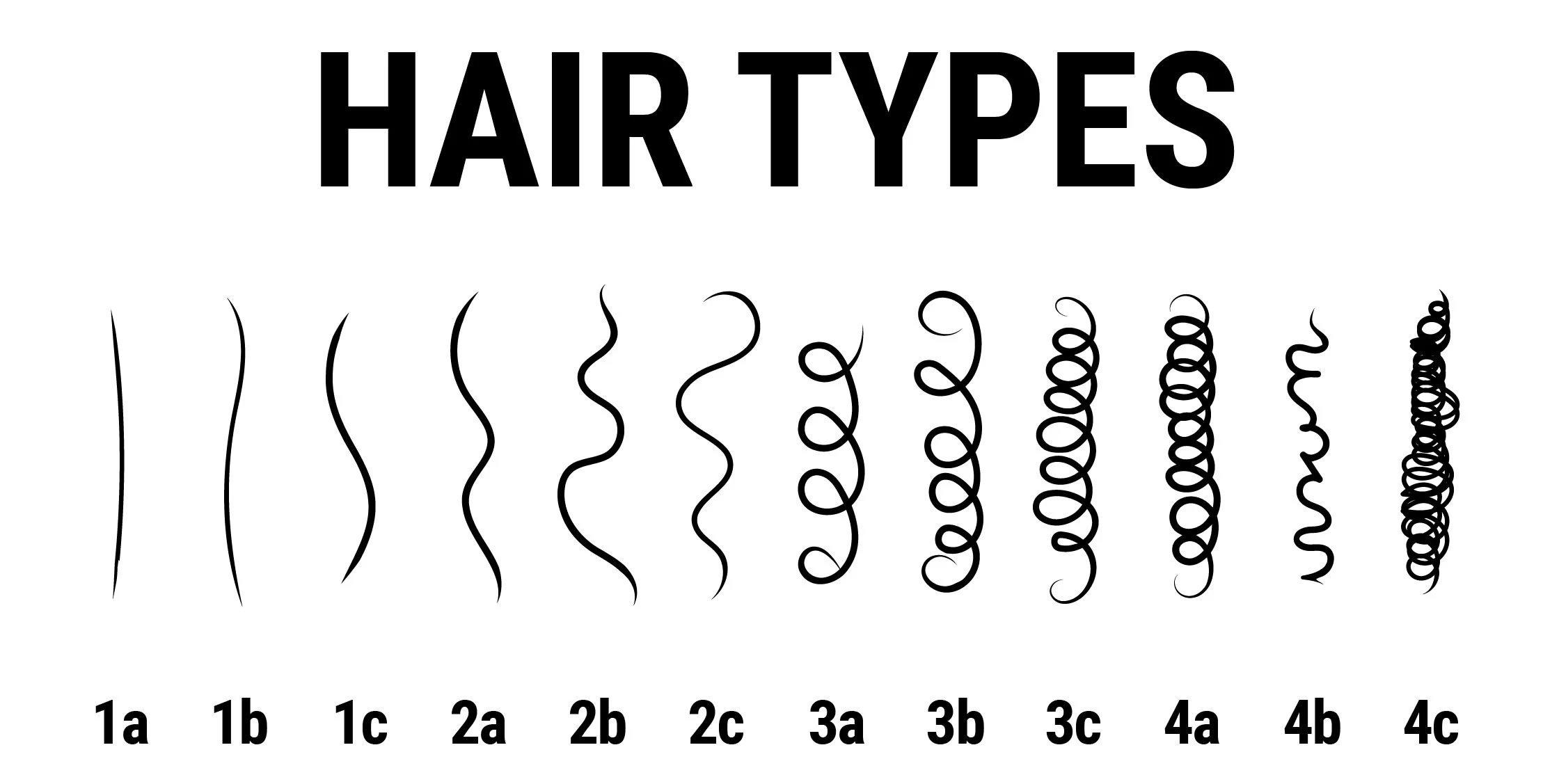
Afro hair is commonly classified by curl pattern, with Type 4 representing coily textures and the letters A, B and C describing increasingly tight patterns. The familiar numerical system begins with Type 1 for straight hair and progresses through wavy and curly textures before reaching Type 4. However, hair typing is primarily a consumer classification rather than a medical standard. Scientific classification systems can use different measurements, including curl diameter, curve shape and fiber geometry. Modern research also highlights limitations within simple letter categories because they overlook density, porosity and variation across different scalp regions.What Is Type 4A Hair?
Type 4A hair usually forms small, clearly visible coils with a relatively consistent spiral pattern from the root through much of the strand. The coils are generally more defined than those associated with 4B and 4C descriptions. When wet or moisturized, the pattern may become particularly easy to identify.Type 4A hair can still experience significant shrinkage, tangling and breakage because each curve creates additional points of mechanical stress. Curl definition does not determine whether individual strands are fine, medium or coarse. Two people with similar 4A patterns can therefore require different routines because their density, porosity and strand thickness differ.
What Is Type 4B Hair?
Type 4B hair usually has tight bends and coils with less uniform spiral definition than the pattern commonly associated with Type 4A hair. Individual sections may appear angular, compressed or shaped more like bends than complete circular coils. The pattern can become difficult to see when the hair is dry because shrinkage draws strands closer together.Type 4B hair can also form knots where neighboring fibers interact repeatedly. This increases the importance of gentle manipulation during detangling and styling. Like every curl category, 4B only describes part of the hair profile. Porosity, density and individual strand diameter must be considered separately.
What Is Type 4C Hair?
Type 4C hair is a widely used term for very tightly coiled hair with substantial shrinkage and limited visible curl definition without close examination or manipulation. The category is common in modern consumer hair typing, although it is not included consistently across every formal classification system. A recent review found important differences between popular and scientific approaches to classifying highly curled hair. Type 4C therefore works best as a practical descriptive term rather than a precise biological diagnosis. Hair placed in this category can vary considerably in density, porosity and strand diameter. Its tightly packed curves can also make shrinkage and knot formation particularly noticeable.What Is the Difference Between 4A, 4B and 4C Hair?
The main difference between 4A, 4B and 4C hair is the visible tightness and definition of the natural coil pattern.- 4A usually shows small but recognizable spiral coils
- 4B commonly appears tighter with less uniform circular definition
- 4C generally describes very tight coils with limited visible definition
- Shrinkage often becomes more noticeable as the pattern becomes tighter
- Strand thickness can be fine, medium or coarse in every category
- Porosity can also be low, medium or high in each type
- Several patterns can exist on the same scalp
Can Someone Have More Than One Afro Hair Type?
One person can have several Afro hair patterns because curl shape often varies naturally between different areas of the scalp. For example, someone may have tighter coils at the crown while showing looser curls around the temples or nape. This variation is one reason simple typing systems cannot fully describe individual hair.A person might identify mainly with 4B while having areas resembling 4A or 4C. Care routines therefore work better when they respond to actual behavior rather than forcing every section into one label. Sections that tangle, dry or shrink differently may need different amounts of moisture and manipulation.
Can Type 3C Hair Be Afro-Textured?
Type 3C hair can fall within the broader Afro-textured spectrum because Afro-textured hair is not limited exclusively to Type 4 patterns. Modern research recognizes substantial variation within tightly curled hair and cautions against linking one specific curl category directly to racial background. Type 3C generally describes very tight, well-defined curls that remain more visibly spiral than typical Type 4 coils.Some people have a combination of 3C and Type 4 patterns across the same scalp. For this reason, Afro-textured hair is better understood as a spectrum of highly curled fibers rather than a rigid boundary beginning at one classification number.
What Determines Afro Hair Curl Pattern?
Afro hair curl pattern is influenced primarily by genetics and the three-dimensional shape and growth characteristics of the hair follicle and fiber. Highly curved fibers develop differently from straighter hair because the follicle and emerging shaft display greater asymmetry. The resulting strand can repeatedly bend and rotate along its length. These structural differences produce coils ranging from relatively open curls to extremely tight patterns.Curl pattern cannot be predicted perfectly from ethnicity because considerable variation exists within populations and families. Chemical straightening and heat can temporarily or permanently alter the visible shaft, but they do not rewrite the genetic pattern produced by new untreated growth.
How Does Shrinkage Differ Between Afro Hair Types?
Shrinkage generally becomes more noticeable as coils become tighter because curved strands occupy considerably less visible length than the same fibers when stretched. Type 4 hair can therefore appear much shorter than its actual strand length. A loose 4A coil may show more visible length, while very compact patterns commonly associated with 4C can contract substantially after drying.Shrinkage itself is not evidence that hair has stopped growing. It reflects the geometry of the curl pattern. Comparing stretched length over time provides a more useful indication of retained length than examining the dry hairstyle alone. Breakage can still reduce length retention independently of shrinkage.
Does Porosity Determine Afro Hair Type?
Porosity does not determine whether hair is 4A, 4B or 4C because porosity describes moisture movement rather than the shape of the curl. Low-porosity hair resists water penetration more strongly, while high-porosity hair generally absorbs and loses moisture more readily. Either characteristic can occur with any Type 4 pattern.Porosity can also change when hair experiences chemical processing, repeated heat exposure or accumulated physical damage. This explains why two people with visually similar 4B hair can respond very differently to the same products. Curl type is useful for describing shape, while porosity provides separate information about how the fiber handles water and conditioning products.
Does Hair Thickness Determine Afro Hair Type?
Individual strand thickness does not determine Afro hair type because fine, medium and coarse strands can occur within the same curl-pattern category. Hair typing systems often focus so heavily on curl shape that strand diameter is overlooked. However, thickness can strongly affect handling and product selection. Fine 4C strands may become weighed down by heavy products, while thicker 4A strands may tolerate richer formulations differently.Density is another separate characteristic and describes how many hairs occupy a given scalp area. Understanding curl pattern, strand size and density together gives a more complete picture than identifying only one letter and number category.
Why Can Afro-Textured Hair Feel Dry?
Afro-textured hair can feel dry because tightly curved fibers make it harder for natural scalp oils to travel evenly from the roots toward the ends. Sebum can coat straighter fibers more easily because the path down the hair shaft contains fewer bends. Highly coiled hair presents a more complicated surface, leaving portions of the strand with less natural lubrication.The ends can become particularly dry because they are the oldest section of the hair. Frequent cleansing with harsh products can intensify this problem. Conditioning and reducing unnecessary removal of natural oils can therefore improve manageability without changing the underlying curl pattern.
Why Is Afro-Textured Hair Prone to Breakage?
Afro-textured hair is prone to breakage because repeated bends, knots and friction create mechanical stress along tightly curved strands. Every curve can become a point where the fiber experiences additional force during combing, stretching or styling. Knots also form when neighboring strands wrap around themselves or one another. Research has documented frequent breakage points after relatively limited manipulation in highly curled fibers. However, breakage should not be described as inevitable.Gentle handling can substantially reduce additional mechanical damage. Repeated traction, aggressive detangling, excessive heat and overlapping chemical processing can all increase damage beyond the hair fiber's natural structural challenges.
How Should Afro Hair Types Be Washed?
Afro hair should be washed often enough to maintain a clean scalp while avoiding routines that repeatedly leave tightly curled strands excessively dry or tangled. The ideal schedule cannot be determined from 4A, 4B or 4C classification alone. Scalp oiliness, styling products, exercise and protective styles also affect washing frequency.During cleansing, concentrating shampoo mainly on the scalp can reduce unnecessary friction through the lengths. Conditioning helps improve lubrication and manageability after cleansing. Hair should be separated gently rather than aggressively piled and rubbed together. A routine that keeps the scalp clean while limiting mechanical damage is more useful than choosing a schedule based only on curl labels.
How Should Afro Hair Be Detangled?
Afro hair should be detangled with minimal tension, working gradually through manageable sections rather than pulling forcefully through knots from the roots. Tightly curled fibers can wrap around neighboring hairs and form single-strand or multi-strand knots. Aggressive combing increases friction at bends and can convert tangles into breakage.Conditioner or another product providing adequate slip can make strands easier to separate. Starting near the ends allows existing knots to be addressed before tension reaches the full hair length. Fingers or appropriate wide-toothed tools can reduce unnecessary manipulation. The objective is not to straighten the curl while detangling, but to separate intertwined fibers with the least mechanical stress.
Can Heat or Relaxers Change Afro Hair Type?
Heat and chemical relaxers can change the visible curl pattern, but they do not change the genetically determined pattern produced by new untreated hair growth. Temporary heat styling alters the shape of existing strands until moisture or washing allows the pattern to return, unless heat damage becomes permanent.Chemical relaxers create longer-lasting changes by altering structural bonds within treated fibers. New growth still emerges with its original curl characteristics. Repeated chemical processing can also weaken the cuticle and cortex, increasing the likelihood of breakage. Overlapping relaxer applications and combining incompatible chemical processes can create particularly severe shaft damage.
Does Afro Hair Grow Differently?
Afro-textured hair grows continuously like other human hair, although shrinkage and breakage can make visible length gain appear slower than the actual growth occurring at the scalp. Older studies have reported differences in average growth rates between broad population groups, but newer research cautions against treating racial categories as uniform biological hair types.Length retention is also strongly affected by mechanical damage. Hair can grow at the scalp while repeated breakage prevents the ends from becoming noticeably longer. For tightly coiled hair, evaluating growth therefore requires separating follicular growth, shrinkage and retained length rather than assuming that limited visible length means the follicles are inactive.