Androgenetic Alopecia: Causes, Symptoms, Diagnosis and Treatment
What Is Androgenetic Alopecia?
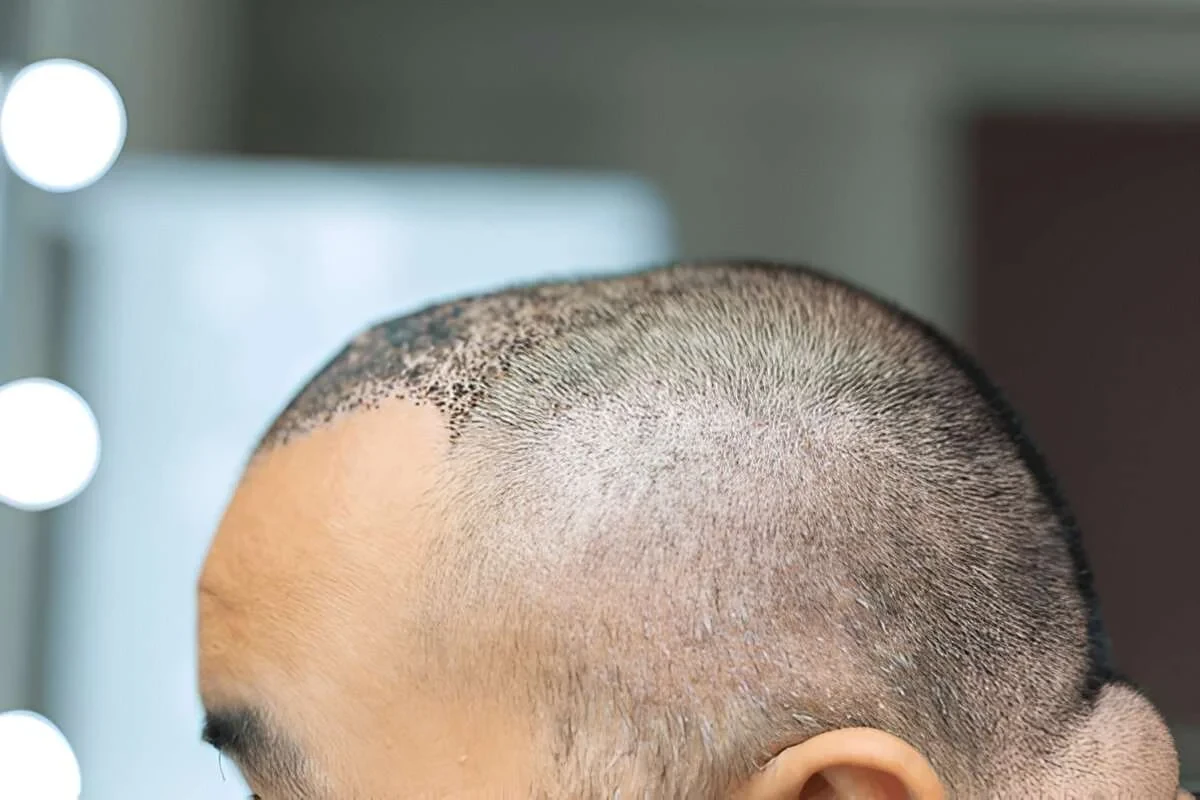
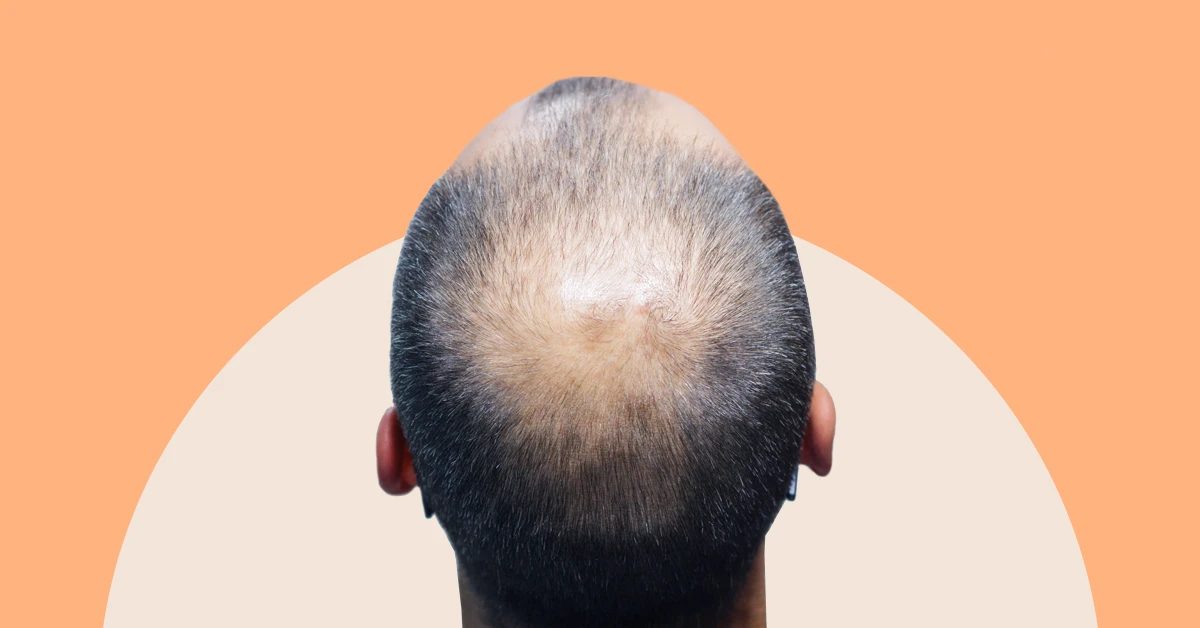
Androgenetic alopecia is a progressive, non-scarring form of hereditary hair loss caused by genetically susceptible follicles gradually becoming smaller over time. It affects both men and women, although the visible pattern usually differs between sexes. In men, recession often develops at the temples, frontal hairline, or crown.Women more commonly develop diffuse thinning across the central and upper scalp. The follicles remain present during much of the process but progressively produce shorter, finer hairs. This transformation is known as follicular miniaturization and represents the central biological feature of androgenetic alopecia.
What Causes Androgenetic Alopecia?
Androgenetic alopecia develops through an interaction between genetic susceptibility, androgen activity, follicle sensitivity, and gradual changes in the normal hair growth cycle. Affected follicles spend progressively less time producing thick terminal hairs. Each new growth cycle can produce a shorter and thinner strand than the previous cycle. Eventually, some follicles generate very fine vellus-like hairs that provide little visible scalp coverage.The condition is therefore different from sudden shedding disorders, where normal follicles release hairs prematurely. Hormonal activity matters, but androgenetic alopecia does not simply mean that someone has unusually high testosterone levels.
What Role Does DHT Play in Androgenetic Alopecia?
Dihydrotestosterone contributes to androgenetic alopecia by acting on genetically sensitive scalp follicles and promoting progressive follicular miniaturization. DHT is produced when the enzyme 5-alpha reductase converts testosterone into dihydrotestosterone. Susceptible follicles respond differently to this androgen than follicles in resistant scalp regions. Over repeated hair cycles, the anagen growth phase becomes shorter and the resulting hairs become finer. This explains why the frontal scalp and crown can thin while parts of the occipital scalp remain relatively preserved. The importance of DHT also explains why treatments that reduce its formation can slow male pattern hair loss.Is Androgenetic Alopecia Genetic?
Androgenetic alopecia has a strong genetic component and can be inherited through genetic influences from either the maternal or paternal side of a family. The condition does not follow a simple single-gene inheritance pattern. Current evidence describes it as polygenic, meaning numerous genetic variants contribute to susceptibility. The androgen receptor gene has a recognized association with male androgenetic alopecia, but many additional genetic regions are involved. Therefore, having a bald father does not guarantee the same outcome, and having no obvious family history does not exclude the condition. Genetic susceptibility interacts with age and androgen activity to determine when hair loss appears and how far it progresses.What Are the Early Signs of Androgenetic Alopecia?
Early androgenetic alopecia usually appears as gradual patterned thinning, increasing scalp visibility, or progressive changes in the hairline rather than sudden patchy hair loss. Typical early signs include:- Recession around the temples
- A slowly moving frontal hairline
- Thinning around the crown
- Increasing scalp visibility under bright light
- A widening central part in women
- Reduced ponytail volume
- Finer hairs in previously dense areas
- Uneven hair shaft thickness
- Progressive rather than sudden change
How Does Male Androgenetic Alopecia Progress?
Male androgenetic alopecia commonly progresses from temple recession or crown thinning toward increasing loss across the frontal, mid-scalp, and vertex regions. The pattern varies considerably between individuals. Some men develop mainly frontal recession, while others first notice a thinning crown. Advanced cases can eventually leave a band of relatively preserved hair around the sides and back.The Hamilton-Norwood system traditionally describes progression through seven main stages, including a specific vertex pattern. Progression is usually gradual and can continue for many years. The eventual pattern cannot be predicted precisely from the first visible signs alone.
How Does Female Androgenetic Alopecia Progress?
Female androgenetic alopecia usually causes progressive thinning across the central scalp while preserving more of the frontal hairline than typical male pattern loss. A widening part is often one of the first visible changes. Thinning can gradually spread across the upper scalp and make the scalp increasingly visible. Some women develop stronger frontal accentuation, sometimes described as a Christmas tree pattern.Complete baldness is uncommon compared with advanced male androgenetic alopecia. The Ludwig and Sinclair systems are commonly used to describe severity. Female pattern loss can begin earlier, but it becomes particularly common during midlife and after menopause.
How Is Androgenetic Alopecia Diagnosed?
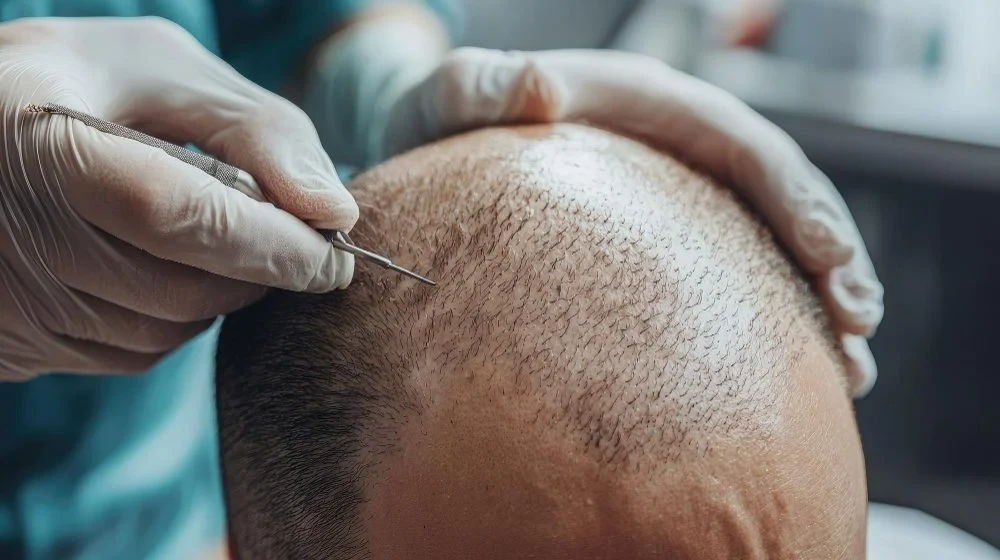
Androgenetic alopecia is usually diagnosed from the pattern of hair loss, medical history, scalp examination, and evidence of follicular miniaturization. In straightforward male cases, the clinical pattern may provide enough information for diagnosis. Women and patients with unusual patterns often benefit from trichoscopy. This examination magnifies the scalp and can reveal variation in hair diameter, increased vellus hairs, and characteristic perifollicular changes. A 2024 systematic review found hair diameter variability to be the most frequent trichoscopic feature. Blood tests may be considered when another cause, such as thyroid dysfunction or nutrient deficiency, is suspected.Is Androgenetic Alopecia Permanent?
Androgenetic alopecia is a chronic progressive condition, but early treatment can preserve existing hair and sometimes improve density while follicles remain capable of producing hair. Without treatment, genetically susceptible follicles usually continue miniaturizing. Once a follicle has remained severely miniaturized for a long period, meaningful regrowth becomes increasingly difficult. This is why treating early thinning generally offers more potential than waiting for advanced baldness. Medical treatments do not permanently eliminate the underlying genetic tendency. Their benefits typically require continued use. Hair transplantation can redistribute resistant follicles into permanently thinned regions, but it does not stop surrounding untreated hair from continuing to miniaturize.How Quickly Does Androgenetic Alopecia Progress?
Androgenetic alopecia usually progresses slowly over years, but the speed and eventual severity vary substantially between individuals. Some people notice only modest changes over a decade, while others experience significant thinning during early adulthood. Early-onset male pattern loss can sometimes progress more extensively than hair loss beginning later. The pattern may also appear stable for periods before becoming more noticeable again. Photographs taken under similar lighting can help identify gradual changes that are difficult to recognize day by day. Because progression is unpredictable, treatment planning should consider future loss rather than only the current bald or thinning area.Can Minoxidil Help Androgenetic Alopecia?
Minoxidil can slow androgenetic hair loss and stimulate some regrowth, particularly when treatment begins before extensive follicular miniaturization has developed. Topical minoxidil is an established treatment for both male and female pattern hair loss. Improvement develops slowly, usually requiring several months of consistent use. Some users initially experience temporary increased shedding before new growth becomes apparent. The treatment does not restore every lost follicle or recreate original adolescent density. Benefits are also treatment-dependent. Hair supported by minoxidil can gradually be lost again after treatment is discontinued. Low-dose oral minoxidil is increasingly used off-label in selected patients following medical assessment.How Does Finasteride Treat Androgenetic Alopecia?
Finasteride treats male androgenetic alopecia by reducing conversion of testosterone into DHT, thereby decreasing an important driver of follicular miniaturization. It is an established oral treatment for male pattern hair loss and is usually taken continuously to maintain benefits. Improvement typically requires months rather than weeks. Current clinical guidance reports that finasteride slows further hair loss in a large proportion of treated men, while some also experience regrowth. Potential adverse effects include sexual symptoms, breast tenderness, and mood-related effects. Treatment decisions should therefore consider benefits and risks. Finasteride requires particular caution around pregnancy because of potential fetal harm.How Is Female Androgenetic Alopecia Treated?
Female androgenetic alopecia is commonly treated with topical minoxidil, while selected patients may also receive prescription antiandrogenic or oral therapies after medical evaluation. Topical minoxidil remains the principal established treatment for women and may reduce progression while improving density. Spironolactone is commonly used off-label, particularly when androgen-related features are present. Finasteride, dutasteride, or low-dose oral minoxidil may also be considered in selected cases.These treatments have different contraindications and monitoring requirements. Pregnancy plans are especially important because several antiandrogenic treatments can harm fetal development. Treatment therefore needs to distinguish female pattern hair loss from other causes of diffuse shedding.
Can Vitamins and Supplements Treat Androgenetic Alopecia?
Vitamins and supplements do not reliably treat androgenetic alopecia unless a nutritional deficiency is contributing separately to hair shedding or reduced hair quality. Correcting deficiencies involving iron, zinc, or other essential nutrients can be important when laboratory or dietary evidence confirms a problem. However, androgenetic alopecia primarily involves genetically influenced follicular miniaturization rather than a general vitamin shortage. Taking additional nutrients when levels are already adequate has not been shown to reverse this mechanism. Biotin deficiency can affect hair, but true deficiency is uncommon. Supplements should therefore not be considered interchangeable with treatments that directly address follicular cycling or androgen-related miniaturization.Can Lifestyle Changes Stop Androgenetic Alopecia?
Lifestyle changes cannot eliminate the genetic mechanism of androgenetic alopecia, although general health measures can reduce additional causes of shedding and support overall hair condition. Adequate protein, essential nutrients, sleep, and management of medical conditions help maintain normal hair production. Avoiding smoking and extreme dieting can also reduce unnecessary stress on the hair cycle.These measures do not prevent genetically sensitive follicles from responding to androgens. Therefore, someone can eat well and remain physically healthy while still developing male or female pattern hair loss. Lifestyle management is best viewed as supportive care rather than a replacement for evidence-based treatment of progressive androgenetic alopecia.