Do Hair Transplants Really Work? A Definitive Guide to Success, Longevity, and Results

Introduction: Answering the Core Question: Do Hair Transplants Work?
Let's address the central question immediately: Yes, modern hair transplants are a highly effective and often permanent solution for hair loss. For the right person, they can be life-changing, restoring not just a hairline but also a profound sense of confidence. However, this confident "yes" comes with a crucial nuance: success is not automatic. It is the result of a carefully orchestrated synergy between the right patient, the right specialist, and the right technique.
The very term "hair transplant"; can conjure images of the past—the unnatural, doll-like "hair plugs" that were common in the 1970s and 80s. It's essential to understand that today's procedures are worlds apart. The evolution of hair restoration has moved from transplanting large, noticeable chunks of tissue to the meticulous, artistic placement of individual follicular units. Modern techniques like Follicular Unit Extraction (FUE) and Direct Hair Implantation (DHI) allow specialists to create results that are so natural they are virtually undetectable from native hair.
This article serves as a definitive guide to understanding what makes a hair transplant "work." We will deconstruct the concept of success, moving beyond simple hair growth to explore the critical factors that determine your outcome. We will establish a realistic timeline for results, delve into the science behind longevity, and ultimately empower you with the knowledge to make a truly informed decision. The goal is to replace uncertainty with clarity, helping you understand if a hair transplant will work for you.
Defining Success: What a "Working" Hair Transplant Truly Means
The effectiveness of a hair transplant cannot be measured by a single metric. A "working" procedure is a multi-faceted achievement that encompasses technical precision, aesthetic artistry, long-term viability, and a significant positive impact on the patient's psychological well-being. When these elements align, the result is transformative.
Aesthetic and Technical Success
At its most fundamental level, a successful transplant must meet specific technical and aesthetic benchmarks. These are the quantifiable measures of a well-executed procedure.
Graft Survival Rate
The primary technical goal is to ensure that the maximum number of transplanted hair follicles survive the transfer process and begin to grow in their new location. This is known as the graft survival rate. In ideal circumstances, with a skilled specialist and a healthy patient, modern techniques can achieve survival rates of 90% or higher .
A successful hair transplant restores a natural, age-appropriate hairline, a key measure of aesthetic success,
Natural Appearance
High graft survival is meaningless if the result looks unnatural. The ultimate aesthetic goal is an undetectable transplant. This is where the specialist's artistry becomes paramount. A successful outcome includes:
A Natural Hairline: A natural hairline is created by following the patient's own facial muscle structure and according to the patient's personal preferences.
Correct Angulation and Direction: Each hair follicle must be implanted at the precise angle and direction of the surrounding native hair. This ensures the hair grows in a natural pattern and lays correctly.
Appropriate Density: The specialist must create a gradient of density, using single-hair grafts at the very front of the hairline and multi-hair grafts further back to create a look of fullness without appearing "pluggy."
Psychological and Social Success
Perhaps the most profound measure of whether a hair transplant "works" lies beyond the mirror. The psychological and social benefits are often the primary motivation for patients and a powerful testament to the procedure's effectiveness.
Beyond the Mirror: Changing Perceptions
Hair loss can significantly impact self-esteem and how one is perceived by others. Groundbreaking research has quantified the positive social impact of hair restoration. A notable study conducted at Johns Hopkins and published in JAMA Facial Plastic Surgery found that men who underwent hair transplantation were perceived by casual observers as being significantly more youthful, attractive, successful, and approachable compared to their pre-transplant selves . On average, men were rated as looking 3.6 years younger after the procedure. This demonstrates that a successful transplant can positively alter social perceptions in a measurable way.
Beyond aesthetics, a successful hair transplant can lead to a significant boost in confidence and a more positive self-perception
Confidence and Quality of Life
The internal change is just as important as the external one. Studies consistently show that hair loss can lead to reduced self-confidence and higher self-consciousness. Correspondingly, successful hair restoration has a powerful positive effect. A 2023 study published in the Journal of Cosmetic Dermatology found that patients who underwent hair transplantation had a statistically significant greater quality of life compared to those who did not . When a patient feels better about their appearance, it can reignite their confidence in social and professional settings, which is a core component of a "working" transplant.
Longevity and Permanence
A common and critical question is, "How long does a hair transplant last?" A truly successful procedure must provide a lasting result.
The Principle of Donor Dominance
The scientific foundation for the permanence of hair transplants is a concept called ";donor dominance." Androgenetic Alopecia (pattern baldness) affects hair follicles that are genetically sensitive to the hormone Dihydrotestosterone (DHT). However, the hair on the back and sides of the scalp (the ";donor area") is typically genetically resistant to DHT. The principle of donor dominance states that when these resistant follicles are moved to a balding area, they retain their genetic resistance to DHT . This is why transplanted hair is considered permanent.
Key Takeaways on Defining Success
Technical Success: High graft survival (often >90%) and a result that is aesthetically natural and undetectable.
Psychological Success: A measurable improvement in perceived youthfulness, attractiveness, and a significant boost in personal confidence and quality of life.
Long-Term Success: Transplanted hairs are permanent due to "donor dominance," but some density reduction can occur over many years, and native hair loss may continue. A successful plan accounts for the future.
The Decisive Factors: What Determines if a Hair Transplant Will Work for YOU?
While the technology is proven, a successful outcome is not a given. It is the result of a delicate interplay of factors, a partnership between the patient's own physiology and the clinic's expertise. Understanding these variables is the most critical step in your journey, as it empowers you to assess your own potential for a successful result.
Factor 1: The Patient - Your Candidacy is Key
The foundation of any successful hair transplant is the patient themselves. A reputable specialist will conduct a thorough evaluation to determine your suitability, as not everyone is an ideal candidate.
Type and Stability of Hair Loss
The most common and ideal indication for a hair transplant is Androgenetic Alopecia (AGA), also known as male or female pattern baldness. This is because AGA follows a predictable pattern and involves DHT-sensitive follicles that can be replaced with DHT-resistant ones. Crucially, the hair loss should be relatively stable.
Donor Area Quality
The donor area is the bank from which all transplanted hair is withdrawn, and it is a finite resource. Its quality is a primary determinant of the final result. Key characteristics include:
Density: This refers to the number of follicular units per square centimeter (FU/cm²). An excellent donor area has a density of over 80 FU/cm², while a density below 40 FU/cm² is considered poor and may limit the achievable coverage .
Hair Caliber: The thickness of the hair shaft is critical. Thicker, coarser hair provides more visual coverage than fine hair, meaning fewer grafts are needed to achieve a look of density.
Laxity (for FUT): For the strip method (FUT), good scalp elasticity is needed to remove the donor strip and close the wound with minimal tension and scarring.
A specialist must carefully manage this finite resource. Using too many grafts to create an aggressive, low hairline in a young patient can deplete the donor supply, leaving no options for addressing future hair loss as they age.
Age and Realistic Goals
While there is no "perfect" age, reputable specialists are often cautious with patients in their early 20s. This is because their hair loss pattern is not yet fully established, making it difficult to plan for the long term. The most important factor is setting realistic expectations. A hair transplant can create a remarkable improvement, but it cannot restore the full density of a teenage scalp. A successful outcome is one where the patient's goals are aligned with what is surgically and artistically possible given their specific characteristics .
Factor 2: The specialist - The Artist and The Technician
If there is one single variable that outweighs all others, it is the skill, experience, and integrity of the specialist. A hair transplant is not just a medical procedure; it is a work of art. The specialist must be both a precise technician and a skilled artist.
The Most Critical Variable
The specialist's role is paramount in every step:
Planning: Designing a hairline that is natural, age-appropriate, and accounts for future hair loss.
Extraction: Harvesting grafts with minimal trauma (transection) to maximize their survival rate.
Implantation: Creating recipient sites at the correct angle, direction, and density to ensure a seamless, natural result.
The difference between an average result and an exceptional one almost always comes down to the specialist's hand. Decades of technological advancement mean little if the person wielding the tools lacks the requisite expertise .
Factor 3: The Method - Choosing the Right Technique
While the specialist is more important than the tool, the technique used plays a significant role in the outcome, recovery, and type of scarring. The three primary methods today are FUT, FUE, and DHI.
The DHI technique utilizes a Choi Implanter Pen to place follicles directly, giving the specialist precise control over depth, angle, and direction
FUT (Follicular Unit Transplantation)
Also known as the "strip method," FUT involves surgically removing a strip of hair-bearing skin from the donor area. This strip is then dissected under microscopes into individual follicular units, which are implanted into the recipient area. Its main advantage is the ability to harvest a large number of grafts in a single session, making it suitable for extensive hair loss. The primary disadvantage is the resulting linear scar in the donor area, which can be visible with very short hairstyles .
FUE (Follicular Unit Extraction)
In FUE, the specialist extracts individual follicular units directly from the donor area using a small, circular punch tool. This leaves tiny, dot-like scars that are typically unnoticeable, even with short hair. FUE is a more time-consuming and technically demanding procedure but has become the preferred method for many patients due to the lack of a linear scar and a generally quicker recovery time .
DHI (Direct Hair Implantation)
DHI, or Direct Hair Implantation, is a method of hair transplantation in which extracted hair follicles are implanted using a specialized, pen-like tool known as a Choi Implanter. This instrument allows the practitioner to create the recipient site and place the graft in a single motion. The technique is designed to provide precision in terms of depth, angle, and direction during implantation. Unlike some other methods, DHI does not require pre-made incisions in the recipient area.
Ultimately, there is no single "best" technique for everyone. The optimal choice depends on the patient's degree of hair loss, donor characteristics, lifestyle, and hairstyle preferences. A good specialist will be proficient in multiple techniques and recommend the one best suited to your individual case.
Factor 4: The Aftermath - Post-Op Care and Lifestyle
The journey to a successful result does not end when you leave the clinic. The weeks and months following the procedure are a critical period where the patient';s actions can significantly impact the outcome. Proper aftercare is not optional; it is a vital part of the process.
The Patient's Responsibility
The newly transplanted grafts are extremely delicate for the first 7-10 days. Following the clinic's post-operative instructions to the letter is crucial for protecting your investment. Key instructions typically include:
Gentle Washing: Using a prescribed shampoo and a gentle pouring technique to keep the scalp clean without dislodging grafts.
Sleeping Position: Sleeping with your head elevated for the first few nights to reduce swelling.
Avoiding Physical Strain: Refraining from strenuous exercise, which can increase blood pressure and risk bleeding.
Sun and Environmental Protection: Shielding the scalp from direct sun exposure, dust, and other contaminants.
No Smoking or Excessive Alcohol: Both can constrict blood vessels and impair blood flow to the scalp, hindering the healing process and compromising graft survival .
Lifestyle's Long-Term Impact
Beyond the immediate recovery period, a healthy lifestyle supports optimal hair growth. A balanced diet rich in vitamins and proteins provides the building blocks for healthy hair. Managing stress is also important, as high stress levels can negatively impact the hair growth cycle. Your daily habits play a significant, often underestimated, role in the final quality and robustness of your hair transplant result .
The Journey to Results: A Realistic Hair Transplant Timeline
One of the most important aspects of a successful hair transplant journey is managing expectations. The final result does not appear overnight; it is a gradual process that unfolds over a year or more. Understanding this timeline is key to avoiding anxiety and trusting the process. Patience is essential.
The First Two Weeks (Recovery)
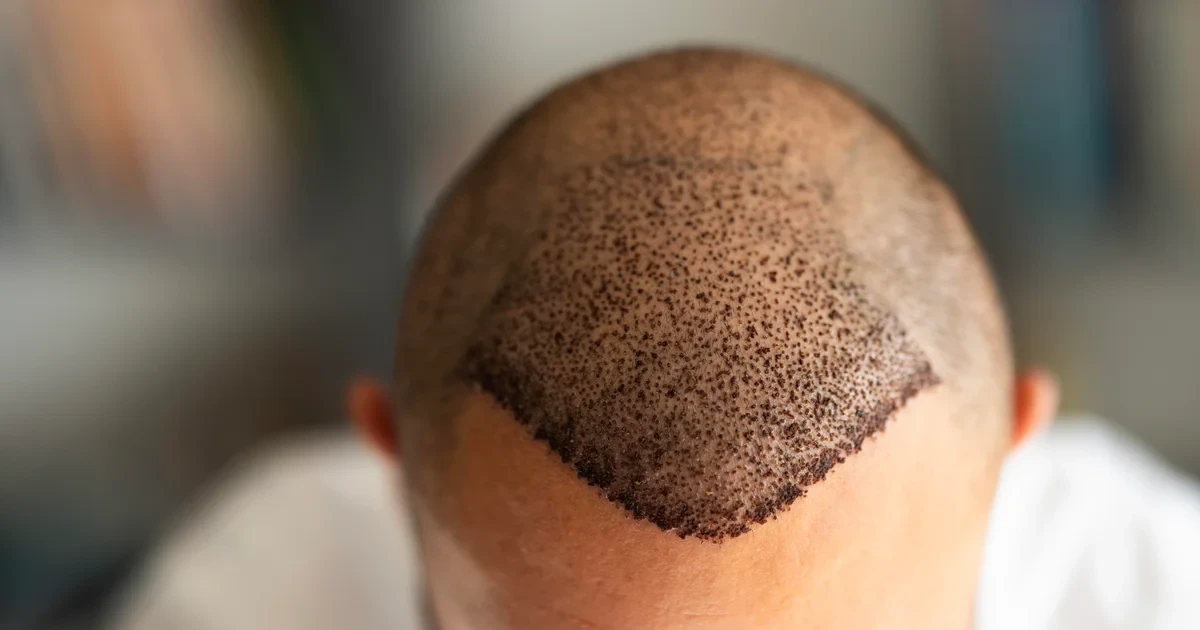
This is the primary healing phase. Immediately after the procedure, the recipient area will be red, slightly swollen, and covered in tiny scabs around each implanted graft. The donor area may also be tender. During this time, it is crucial to follow all aftercare instructions meticulously to protect the fragile grafts. The redness and scabs will typically resolve within 10 to 14 days, after which the scalp starts to look much more "normal" .
The initial healing phase involves redness and scabbing, which gradually subsides over the first one to two weeks, as shown in this FUE healing progression
Weeks 2 to 8 (The "Shock Loss" Phase)
This is often the most disconcerting phase for patients, but it is a completely normal and expected part of the process. Between two and eight weeks after the surgery, the newly transplanted hair shafts will begin to fall out. This phenomenon is called ";shock loss"; or "shedding" . It occurs because the trauma of transplantation causes the follicles to enter the telogen (resting) phase of the hair cycle. It is crucial to remember that you are only losing the hair shaft; the precious follicle, the "factory" that produces the hair, remains safely dormant beneath the skin, ready to begin a new growth cycle.
Months 3 to 6 (New Growth Begins)
After the shock loss phase, the real magic begins. Around the third month, you will start to see the first signs of new hair growth. Initially, these new hairs may be very fine, thin, and sparse, almost like baby hairs. They may also grow at different rates. This is normal. As the months progress, the hairs will gradually become thicker, stronger, and more numerous. By the sixth month, many patients begin to see a noticeable cosmetic improvement and can start to get a real sense of how the final result will look.
Months 6 to 12 (Significant Improvement)
This is the period of the most dramatic change. The hair continues to grow in length and, importantly, to mature in thickness. The density of the transplanted area increases significantly month by month. Most patients see the majority of their results—around 80% of the final outcome—between six and nine months after the procedure . By the 12-month mark, the result is typically excellent and looks full and natural.
By the 8-month mark, patients typically see a significant increase in hair density and coverage as the new follicles mature
Months 12 to 18 (The Final Result)
While the 12-month mark is a major milestone, the hair can continue to mature and thicken for up to 18 months after the surgery. During this final phase, the hair shafts reach their maximum diameter, and the texture fully settles, revealing the absolute final result of the procedure. This is the point at which the full success of the hair transplant can be definitively assessed.
Conclusion: Making Your Hair Transplant Work for You
So, do hair transplants work? The evidence is overwhelmingly clear: yes, they do. For the right candidate with realistic expectations, a modern hair transplant performed by a skilled and ethical specialist is the most effective and permanent solution for restoring hair and confidence. It is a proven medical procedure grounded in science and elevated by artistry.
Success is not a matter of luck. It is a predictable outcome when the right variables are aligned: a suitable patient with stable hair loss and a good donor area, an experienced specialist who prioritizes safety and natural aesthetics, a well-chosen technique, and diligent post-operative care. Your role as a patient is to become educated, understand the process, and do your research to choose a provider who will be your partner in achieving the best possible result.
The Power of the Consultation
The single most important step you can take is to schedule a thorough consultation with a qualified hair transplant specialist. This is your opportunity to get personalized answers and assess the clinic's expertise and integrity. Do not be afraid to ask detailed questions. A great specialist will welcome them. Here is a checklist of essential questions every patient should ask:
Essential Consultation Questions
"Based on my specific hair loss pattern, age, and donor area quality, am I a good candidate for a hair transplant, and why?"
"Which technique (FUE, DHI, etc.) do you recommend for my case, and what are the specific reasons for your recommendation?"
"What are the realistic expectations for density and coverage that I can achieve? Can you show me on my scalp what you plan to do?"
"Can you show me a portfolio of before-and-after photos of patients you have personally operated on who have a similar age, hair type, and pattern of hair loss to mine?"
Choosing a clinic that provides a comprehensive consultation, offers transparent answers, and guarantees that a licensed specialist performs the procedure is the first and most critical step on your journey. By taking this informed approach, you can ensure that your hair transplant is not just a procedure, but a successful, life-enhancing investment in yourself.