Vertex Hair Transplant Success Rate: Graft Survival, Density and Results
What Is the Vertex Hair Transplant Success Rate?
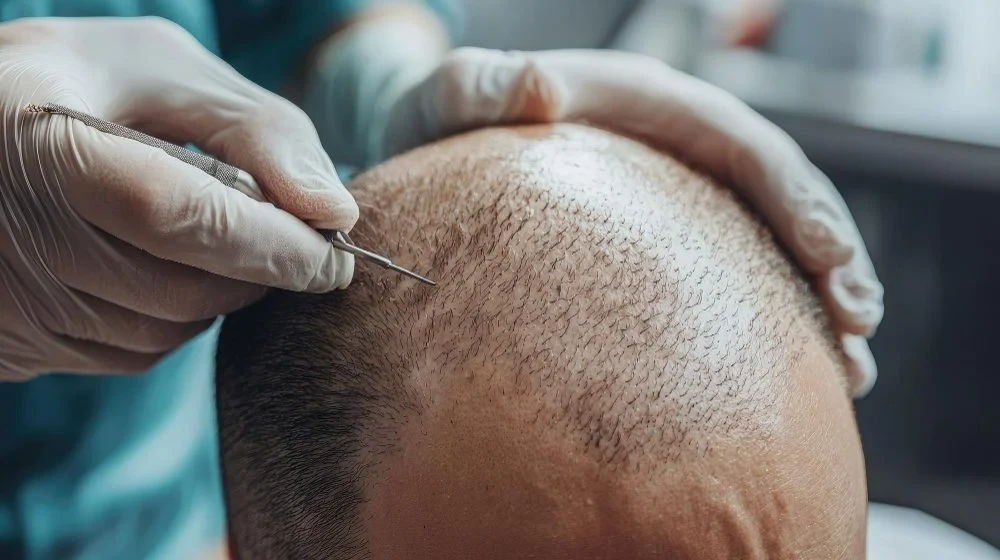
Modern vertex hair transplantation can achieve high graft survival, but there is no scientifically established percentage that applies specifically to every crown procedure. A large FUE study reported overall follicle survival above 90 percent, with survival ranging approximately 89 to 95 percent. More than 85 percent of patients achieved survival above 95 percent after 12 months.Vertex-specific evidence is more limited. Recent individual crown cases reported 12-month survival around 82.4 percent and 89.8 percent. These figures suggest strong potential results while showing why a guaranteed vertex success rate cannot be assigned to every patient.
What Does Success Mean in a Vertex Hair Transplant?
Vertex hair transplant success means achieving good graft survival, visible coverage, a natural whorl pattern, and a result that remains balanced as surrounding hair changes. Graft survival is only one part of the outcome.A procedure can have excellent follicle survival but still appear thin if the treated crown is large. Similarly, dense implantation can look unnatural if the hair directions do not reproduce the existing whorl. Long-term success also depends on preserving enough donor hair for possible future loss. Patient satisfaction therefore reflects survival, density, design, coverage, and stability rather than a single percentage measured after surgery.
Is a Vertex Hair Transplant Less Successful Than a Hairline Transplant?
A vertex transplant is not automatically less successful biologically, but producing convincing visual density is often more difficult than restoring the frontal hairline. The crown commonly requires more grafts because hairs radiate outward from a central whorl. This pattern spreads available follicles across a larger visual area.Published practice guidance describes the vertex as particularly graft-intensive compared with frontal restoration. Frontal transplantation often creates a stronger visual improvement with fewer grafts because hairs can overlap in a more favorable direction. Crown surgery therefore requires careful expectations even when individual transplanted follicles survive normally.
Why Is the Vertex More Difficult to Transplant?
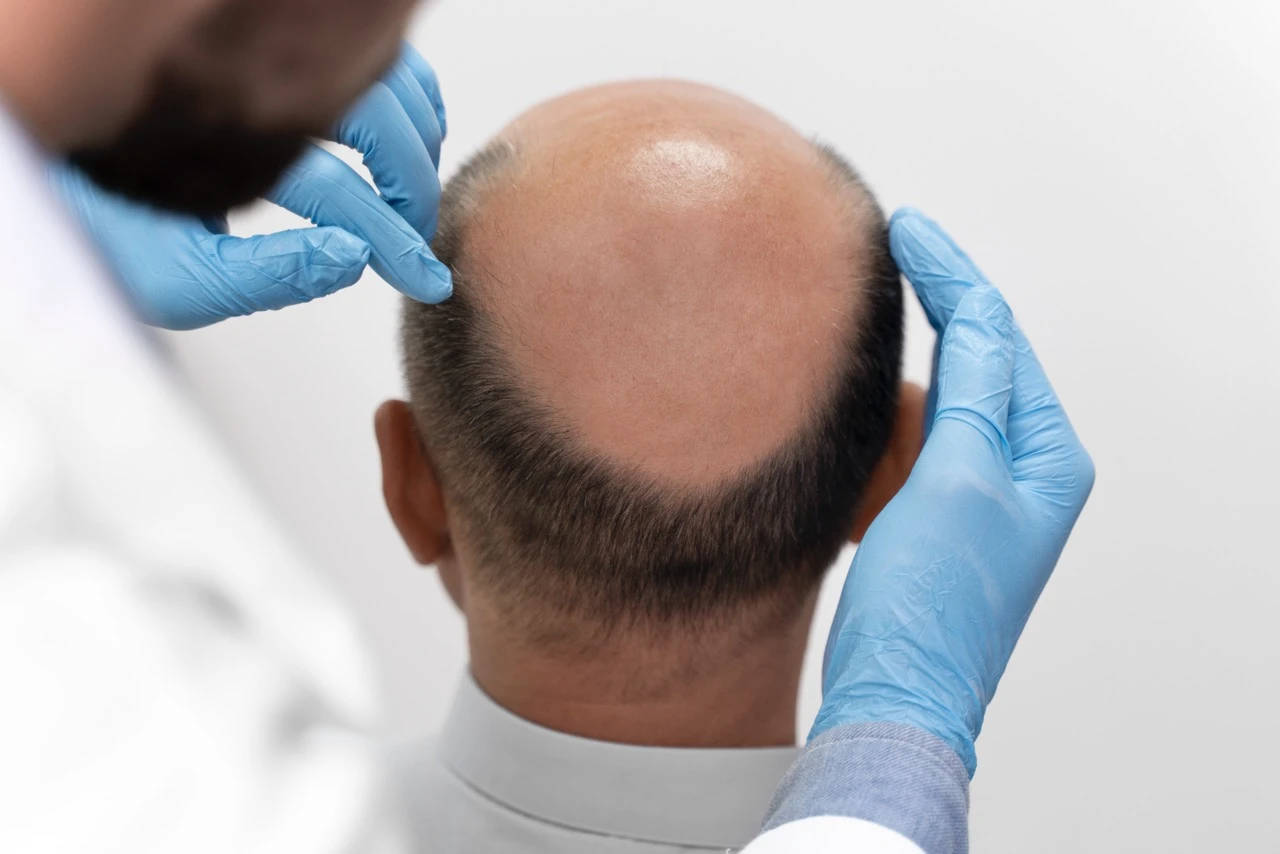
The vertex is more difficult to transplant because its expanding circular shape and changing hair directions consume large numbers of grafts while demanding precise placement. Natural crown hair usually rotates around one or more whorl centers. Implantation must reproduce these changing angles instead of placing every graft in one direction. The area can also expand as androgenetic alopecia progresses.This means today's small crown may become a much larger bald region later. Published guidelines consequently describe vertex reconstruction as challenging and particularly demanding on donor supply. A poorly planned transplant can eventually leave a dense central island surrounded by newer thinning.
How Many Grafts Does a Vertex Hair Transplant Need?
A vertex hair transplant commonly requires roughly 1000 to 3000 grafts, although extensive crown loss can require more than this range. Published experience with advanced hair loss reported an average of approximately 2770 follicular units for vertex coverage. The required number depends on crown size, existing hair, shaft thickness, desired coverage, and available donor supply. A small early vertex may require considerably fewer grafts. A large crown can consume thousands without reaching native density. Because donor follicles are limited, crown coverage should not be plannedindependently from possible future frontal and mid-scalp restoration needs.What Density Can Be Achieved in the Vertex?
Vertex transplantation commonly uses a lower implantation density than the frontal scalp because crown coverage can consume an exceptionally large proportion of available donor follicles. One large retrospective series used approximately 20 to 25 follicular units per square centimetre toward the vertex. Frontal regions in the same series received about 30 to 40 units per square centimetre. Another recent vertex case used approximately 34.8 units per square centimetre and achieved an 82.4 percent 12-month follicle survival rate. The appropriate density therefore depends on donor resources and treatment area rather than one universal target.Why Is Whorl Design Important in a Vertex Hair Transplant?
Whorl design is essential because a successful vertex transplant must reproduce the natural change in hair direction around the crown rather than simply fill the area. The center of the whorl determines how surrounding hairs rotate and overlap.Recipient sites must gradually change direction as implantation moves outward. Technical literature specifically notes that reproducing natural direction and angulation in the vertex is important for an optimal aesthetic result. A correctly designed whorl also creates visual coverage through overlapping hair shafts. Poor directional planning can remain noticeable even when most grafts survive because crown hair is viewed from several angles.
When Does Vertex Hair Transplant Growth Start?
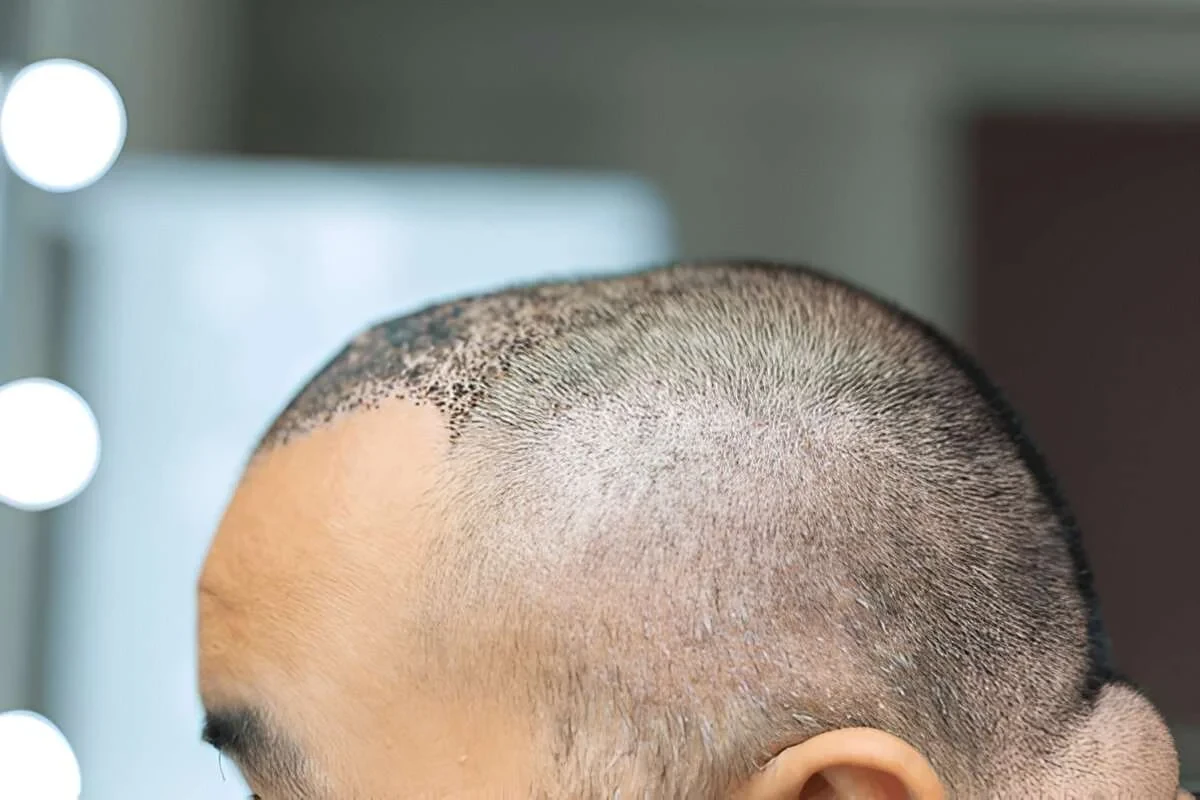
Visible vertex growth usually begins several months after transplantation, while substantial cosmetic improvement develops progressively during the first year. Transplanted hairs commonly shed during the early postoperative period before new growth develops from surviving follicles. A recent vertex case showed substantial temporary hair loss at three months and clearer recovery by six months.Twelve-month survival was 82.4 percent in that case. Another vertex case followed a similar pattern, with progressive improvement between three, six, and twelve months. Early crown photographs therefore should not be interpreted as the final result because the transplanted follicles remain in different growth-cycle stages.
When Can the Final Vertex Result Be Judged?
A vertex hair transplant is usually judged around 12 months, although maturation can continue beyond the first year in some patients. Clinical hair transplantation studies commonly use 12-month survival measurements because transplanted follicles require several growth cycles before density becomes reliably visible. More broadly, hair transplant literature reports final cosmetic results between approximately 12 and 18 months in some procedures. The crown can appear particularly slow because its circular pattern requires broad coverage before the improvement becomes visually obvious. Evaluating success at three or four months can therefore underestimate the eventual result substantially. Density, caliber, and coverage should be assessed after sufficient maturation.Does Age Affect Vertex Hair Transplant Success?
Age affects vertex transplant planning because younger patients may continue losing hair around the transplanted crown for many years after surgery. Clinical guidance recommends considerable caution with crown transplantation in younger men. One management review advises against vertex transplantation below approximately 35 because the crown can continue expanding. Another surgical candidacy review warns that aggressive early crown restoration can consume donor follicles needed later. The transplanted grafts may survive while surrounding native hair continues disappearing. This can create an isolated circular area of transplanted hair. Long-term success therefore depends partly on whether the future pattern of hair loss has been considered before surgery.How Does Donor Hair Affect the Vertex Hair Transplant Success Rate?
Strong donor hair improves vertex transplant results because follicle density, hair caliber, and available graft numbers determine how much crown coverage can realistically be created. Thicker hair shafts provide greater visual surface coverage than fine hairs, meaning fewer grafts may create a fuller appearance. Donor density is equally important because the crown can consume thousands of follicular units.Published clinical guidance describes donor supply as the ultimate limiting factor in extensive hair restoration. Harvesting outside a stable donor zone can also reduce long-term reliability because follicles vulnerable to androgenetic alopecia may later miniaturize after transplantation.
Can Ongoing Hair Loss Affect a Successful Vertex Transplant?
Ongoing androgenetic alopecia can make a technically successful vertex transplant look less successful later because untreated native hair around the grafts may continue thinning. The transplanted follicles can remain while the surrounding crown expands outward. Research on vertex alopecia shows that loss typically begins around the whorl and progresses radially. Progression toward the occipital area can also affect calculations of the permanently safe donor zone. This is why transplant planning should consider future loss rather than the current bald circle alone. Stabilizing active hair loss before surgery can reduce the risk of creating visible gaps around an otherwise successful transplanted area.Does FUE Work Well for the Vertex?
FUE can work effectively for vertex transplantation, with modern studies reporting high follicle survival when graft harvesting, storage, and implantation are carefully controlled. A study involving 158 men treated with FUE reported an overall mean follicle survival of approximately 91 percent. Survival ranged from 89 to 95 percent, and more than 85 percent exceeded 95 percent survival at 12 months.Vertex-specific reports also demonstrate successful FUE growth, although outcomes vary with treated area and technique. FUE therefore does not inherently perform poorly in the crown. The greater challenge is obtaining sufficient visual coverage without exhausting donor resources.
Can Minoxidil Improve Vertex Hair Transplant Results?
Minoxidil can support management of surrounding pattern hair loss, but it should not be interpreted as a requirement for transplanted grafts to survive. A 2026 international consensus found topical minoxidil effective for pattern hair loss in both frontal and vertex regions. The same guidance states that topical treatment can generally restart on transplanted areas around seven to fourteen days after surgery. Oral minoxidil may also be incorporated into selected treatment plans following medical assessment. Its main value around a crown transplant is maintaining or improving vulnerable native hair rather than replacing correct graft handling. Long-term use may be considered when treatment remains effective and tolerated.What Can Reduce Vertex Hair Transplant Success?
Several surgical and biological factors can reduce vertex hair transplant success even when the initial procedure appears technically uncomplicated. Important factors include:- Damaged grafts during extraction or preparation
- Excessive time outside the body
- Poor graft storage conditions
- Inappropriate implantation depth or handling
- Insufficient donor density
- Implantation outside a stable donor supply
- Continued rapid loss of surrounding native hair
- Excessive crown coverage that exhausts donor reserves
- Poor whorl direction and angulation
- Unrealistic expectations about native-level density
Can a Second Vertex Hair Transplant Be Needed?
A second vertex hair transplant may be needed when the first procedure provides insufficient density or when androgenetic alopecia enlarges the surrounding crown over time. Hair transplantation cannot create unlimited donor follicles, so large crowns are sometimes treated conservatively during the first session. One FUE study reported that seven of 158 patients underwent secondary intervention because recipient density was insufficient.Progressive hair loss can create another reason for additional surgery even when the original grafts survive. Whether a second crown procedure is practical depends on remaining donor supply. Using too many grafts initially can make later restoration difficult or impossible.